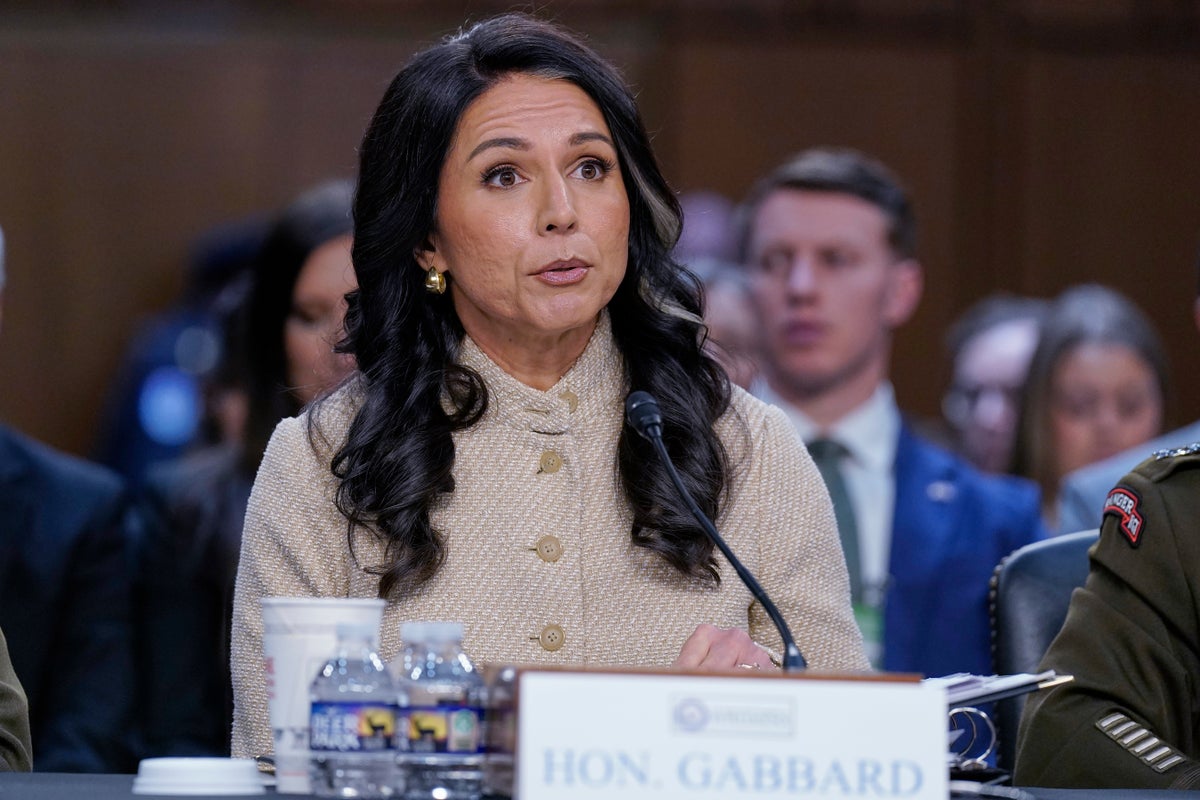
Tulsi Gabbard just set off a firestorm in Washington. During a recent Senate hearing, she flat-out told a senator that it isn't her job to determine what constitutes an "imminent threat" to the United States. It's the kind of statement that makes career politicians short-circuit. Usually, nominees for high-level intelligence or defense positions spend their time trying to prove how tough they are. They want to show they can spot a boogeyman from a mile away. Gabbard took the opposite approach. She leaned into the idea of restraint.
The pushback was immediate. Senators want clear-cut answers. They want to know exactly when a drone strike becomes legal or when a pre-emptive operation is justified. When Gabbard balked at being the one to draw that line, she wasn't just being difficult. She was highlighting a massive, long-standing rift in how the U.S. government handles war powers.
The Definition of Imminent is a Legal Disaster
In the world of national security, the word "imminent" is doing a lot of heavy lifting. Historically, it meant something was about to happen right now. Think of a missile on a launchpad or an army massing at a border. But since the early 2000s, the U.S. government has stretched that definition until it’s almost unrecognizable.
Under various administrations, "imminent" has evolved to mean a threat that might happen eventually, even if we don't know the specific timing or location of an attack. This "elastic" definition is what allows for "signature strikes" and shadow wars in countries where we haven't officially declared war. Gabbard's refusal to play the game of defining it on the fly is a direct challenge to this status quo. She's basically saying that if the definition is this blurry, the executive branch shouldn't just get to make it up as they go.
Critics argue this is dangerous. They say a Director of National Intelligence or a high-ranking official needs to have a firm grasp on these concepts to protect the country. But Gabbard’s supporters see it differently. They see a veteran who has seen the results of "imminent threats" that turned out to be based on bad intel or political convenience.
Why This Specific Stance Stunned the Senate
It’s rare to see a nominee refuse to claim power. Most people heading into these roles want to expand their influence. They want to be the ones in the room making the big calls. When Gabbard told the committee it wasn’t her job to make that determination, she was essentially deferring to a higher legal standard or perhaps to Congress itself.
Senator Chris Murphy and others seemed genuinely caught off guard. The expectation is that a leader in the intelligence community should provide the "ground truth" that informs whether a threat is real. By stepping back, Gabbard is signaling a shift toward a more non-interventionist or at least a more cautious intelligence framework.
This isn't just about semantics. It's about the War Powers Resolution and the Article II powers of the President. If the DNI doesn't define the threat, who does? Does it fall solely on the President? Or does it require a more robust consensus from the broader intelligence community? Gabbard’s stance suggests she doesn't want the intelligence apparatus to be the judge, jury, and executioner.
The History of Intelligence Failures and Stretched Definitions
We've been here before. The Iraq War was built on the idea of an "imminent threat" involving weapons of mass destruction that didn't exist. The 2011 intervention in Libya was framed as a necessary move to prevent an "imminent" massacre. In both cases, the "imminence" was used to bypass traditional hurdles to military action.
Gabbard has built her entire political brand on criticizing these "regime change wars." Her refusal to define "imminent threat" in a Senate hearing is an extension of that philosophy. She's seen what happens when that word is used as a rubber stamp for intervention.
Think about the 2020 strike on Qasem Soleimani. The Trump administration argued he posed an "imminent threat," yet the specific details of that threat remained murky for months. Members of Congress from both parties complained they weren't given the full picture. This is the exact kind of scenario Gabbard is pointing to. If the definition is whatever the person in power says it is, then the law doesn't really exist.
The Practical Impact on Intelligence Gathering
If Gabbard’s view takes hold, it changes how the DNI operates. Instead of providing a definitive "yes" or "no" on whether a threat justifies immediate violence, the role might shift toward providing raw data and diverse perspectives without the policy prescription.
This would be a radical departure. Usually, the DNI is expected to synthesize information into a clear directive for the President. If the DNI stays out of the business of defining the legality of a threat, it puts more pressure on the White House Counsel and the Department of Justice. It also forces Congress to actually do its job and oversee these operations more closely.
Is it a "stunning" admission? Sure. But it’s also an honest one. Gabbard is admitting that these labels are often political rather than purely factual. That honesty is what's making everyone in the room so uncomfortable.
What This Means for Future Foreign Policy
We are looking at a potential shift toward a "Fortress America" style of intelligence. This means focusing on clear, verifiable threats to the homeland rather than trying to manage every brewing conflict across the globe.
The pushback from the Senate shows how much the establishment relies on these flexible definitions. They want the ability to act quickly. They want the "imminence" loophole because it makes the world easier to manage from a desk in D.C. Gabbard is essentially trying to close that loophole, or at least stop being the one who facilitates it.
It's a high-stakes gamble. If an attack happens and the intelligence community was "too cautious" because they were arguing over definitions, the political fallout would be immense. But the alternative—a world where "imminent" means whatever the government wants it to mean—has already led to decades of destabilization.
Take Action on Understanding War Powers
If you want to stay ahead of how these policy shifts actually affect the world, you can't just read the headlines. You need to look at the source material.
- Read the War Powers Resolution of 1973. It’s the foundational document that is supposed to check the President’s power to commit the U.S. to an armed conflict.
- Track the Annual Threat Assessment released by the DNI. Compare how they've defined threats in the past versus how they do it moving forward.
- Look up the Legal Counsel memos from the DOJ regarding targeted killings. They show the "elastic" definition of imminence in black and white.
The debate over Tulsi Gabbard isn't just about one person or one hearing. It’s about whether we want a government that can act on a whim or one that is bound by strict, narrow definitions of when force is actually necessary. It's about time we stopped letting "imminent" be a catch-all for "convenient."


.jpeg?width=1200&auto=webp&trim=0%2C0%2C399%2C0)
