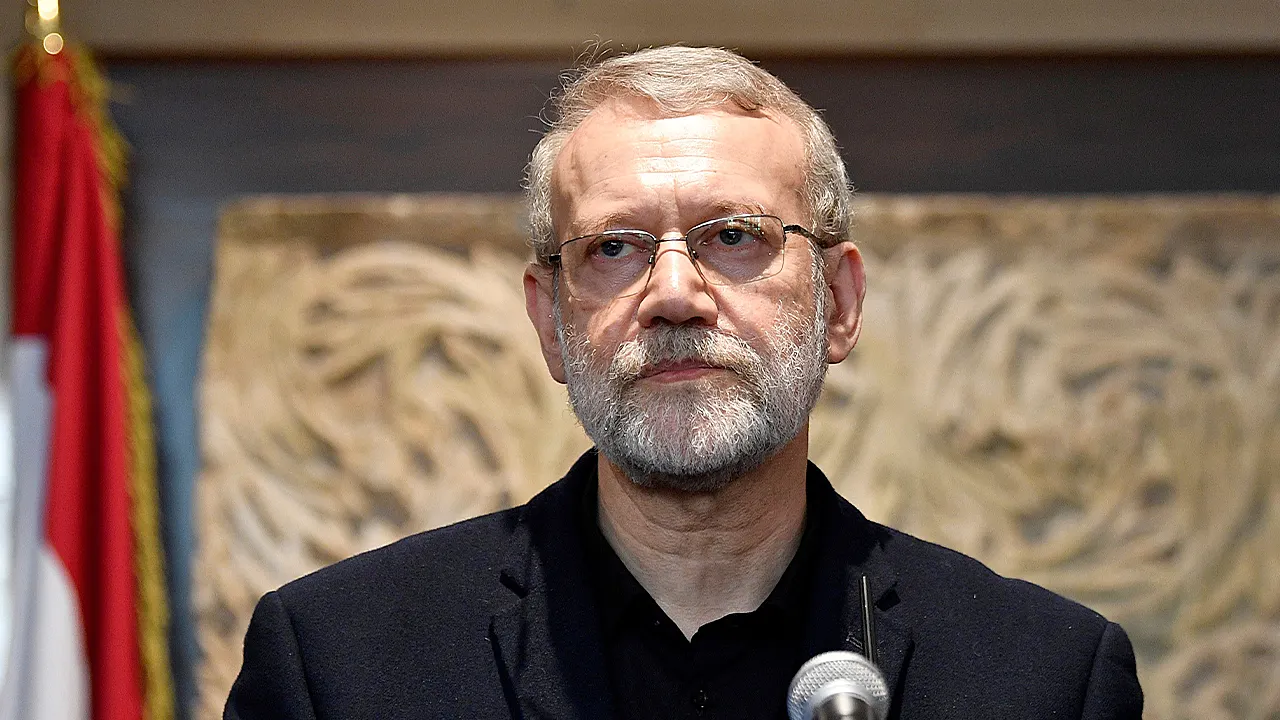
The death of Ali Larijani, a titan of the Iranian establishment and a persistent bridge between the Islamic Republic’s warring factions, marks more than just the passing of a national security fixture. While President Masoud Pezeshkian offers the expected public condolences, the departure of the former Parliament Speaker and Supreme National Security Council chief leaves a jagged hole in the country’s internal diplomacy. Larijani was the ultimate insider. He was a man who understood the intricate, often lethal, mechanics of the Deep State while maintaining the intellectual flexibility to engage with the West. His removal from the board at this specific moment in Middle Eastern history creates a vacuum that neither the hardliners nor the reformists are prepared to fill.
Tehran is currently navigating a period of unprecedented external pressure and internal friction. Larijani functioned as a shock absorber. He was one of the few figures who could walk into the office of Supreme Leader Ali Khamenei and argue for pragmatic restraint without being branded a traitor by the Revolutionary Guard. With his voice gone, the internal debate over Iran’s nuclear trajectory and its regional "Axis of Resistance" loses its most sophisticated mediator.
The Architect of Pragmatic Conservatism
To understand why this death matters, one must look at the specific brand of politics Larijani pioneered. He was never a "liberal" in the Western sense. He was a quintessential product of the 1979 Revolution, a son of a Grand Ayatollah, and a brother to the former Judiciary Chief. Yet, he realized earlier than most that ideological purity is a poor substitute for economic stability and national survival.
During his decade-long tenure as Speaker of the Parliament, Larijani mastered the art of the "calculated concession." He was instrumental in shepherdng the 2015 nuclear deal (JCPOA) through a hostile legislative body. He didn't do it out of a love for Washington. He did it because he viewed the isolation of Iran as a strategic failure. He was a realist who traded in the currency of power, not just slogans.
His career was defined by this tension. He oversaw the state broadcaster, IRIB, during years of heavy-handed censorship, yet later became the preferred envoy for high-stakes missions to Beijing and Riyadh. He was a man of many masks, but every mask served the same purpose: the preservation of the system.
A Legacy of Marginalization
It is a bitter irony that Larijani died while largely sidelined from the formal levers of power. His disqualification from the 2021 presidential election by the Guardian Council was a watershed moment in Iranian politics. It signaled that the system was no longer interested in the "middle way" that Larijani represented. The hardliners wanted a monolith, not a mosaic.
This forced retirement did not diminish his influence behind the scenes. Pezeshkian’s recent rise to the presidency was seen by many as a partial vindication of the Larijani school of thought—a desperate return to pragmatism in the face of a crumbling economy and the threat of total war. Larijani had been acting as an informal advisor to the new administration, providing the institutional memory that the Pezeshkian team lacks.
The "why" of his enduring relevance lies in his connections. Larijani was the connective tissue between the traditional clergy in Qom, the technocrats in Tehran, and the security apparatus. Without him, these groups are increasingly talking past each other.
The Security Vacuum and the Succession Struggle
The timing of Larijani's passing is disastrous for those hoping for a stable transition of power within the Islamic Republic. The question of who will eventually succeed the 86-year-old Supreme Leader is the unspoken engine driving every political move in Tehran. Larijani was a kingmaker, even if he was no longer allowed to be the king.
The Revolutionary Guard (IRGC) has spent the last five years aggressively expanding its footprint in the civilian economy and foreign policy. Larijani represented the old guard of "civilian-security" elites who believed the military should be an instrument of the state, not the state itself. His death removes a significant hurdle for the IRGC's hawks.
- Internal Stability: Larijani had the stature to quell riots or mediate between protesters and the state.
- Foreign Backchannels: He maintained personal ties with diplomats across Europe and Asia that took decades to build.
- Legislative Discipline: No current politician possesses his ability to whip votes or manage the unruly factions of the Majlis.
The Geopolitical Fallout
Regionally, the death of a national security strategist of this caliber resonates in Lebanon, Syria, and Yemen. Larijani was a proponent of "strategic patience." He argued that Iran should build its influence through long-term cultural and political ties rather than just through the provision of drones and missiles.
His absence will be felt most acutely in the ongoing, indirect negotiations with the United States. When the Swiss or the Omanis carry messages back and forth, they look for figures in Tehran who can actually deliver on a promise. Larijani was one of the few who could guarantee that a deal struck at the negotiating table would be honored by the security forces at home.
The current administration under Pezeshkian is now exposed. The President has lost his most formidable shield against the "Super-Revolutionaries" who view any talk of diplomacy as a weakness. If the hardliners decide to push for higher uranium enrichment or a more aggressive stance in the Persian Gulf, there is no longer a heavy-weight conservative to tell them they are making a tactical error.
The End of the Intellectual Elite
Larijani was part of a vanishing breed of Iranian politicians who were as comfortable discussing Kant and Popper as they were the Quran. This intellectual depth allowed him to frame Iranian interests in ways that the world could, if not agree with, at least understand.
The new generation of Iranian leaders is notably different. They are more parochial, more ideologically rigid, and far less experienced in the nuances of international statecraft. They view the world in binary terms: victory or martyrdom. Larijani understood that between those two extremes lies the survival of a nation.
His death is not just a personal loss for the Pezeshkian government; it is a structural loss for the Iranian state. The institution of the "National Security Chief" in Iran is often more about the person than the title. Larijani gave the role its gravity.
The President’s Challenge
Pezeshkian’s condolences were not merely a formality. They were a signal of distress. The President is trying to steer a ship in a storm with a crew that is actively trying to mutiny. Larijani was his most experienced navigator.
The immediate concern is who will take up the mantle of the "rational conservative." There are no obvious candidates. The political field has been so thoroughly purged of moderates and pragmatic conservatives that only the loudest voices remain. This hollows out the state's ability to respond to crises with anything other than force.
Consider the recent escalations with Israel. In previous years, Larijani would have been the one drafting the "proportionate response" that satisfied the domestic appetite for revenge without triggering a regional conflagration. Now, that task falls to men who have spent their entire lives in barracks or extremist seminaries.
The Finality of the Old Guard
The passing of Ali Larijani is a reminder that the revolutionary generation is fading. These were men who built the system from the ground up and, because they built it, felt they had the authority to occasionally break its rules for the sake of its survival.
The new guard feels no such ownership. They are bureaucrats of the revolution, following a script they did not write and are too afraid to change. They lack the confidence to be flexible. Larijani’s death effectively ends an era where "National Security" was a complex game of chess; for the men who remain, it is increasingly looking like a game of Russian roulette.
The streets of Tehran may remain quiet for now, and the official mourning period will pass with the usual rhetoric. But in the corridors where the real decisions are made, the temperature has just dropped. The most effective voice for logic in a room full of firebrands has been silenced.
Watch the appointments that follow. Watch who fills the advisory roles in the Supreme National Security Council. If those seats are filled by the ideological fringe, the trajectory of the Iranian state is clear. The era of the "Grand Bargain" is dead, buried alongside the man who spent twenty years trying to calibrate it.