The headlines are screaming about a regional meltdown. The usual suspects in the press are dusting off their "World War III" templates because Iran launched a choreographed swarm of drones and missiles. They call it an "escalation." They call it a "new era of instability."
They are wrong.
What we are witnessing isn't the breakdown of order. It is the arrival of a highly disciplined, cynical, and predictable new status quo. The media's obsession with the "outbreak of war" misses the point entirely: this isn't a war of aggression. It’s a high-stakes marketing campaign for regional hegemony where everyone—including the targets—knows the script.
The Performance of Power
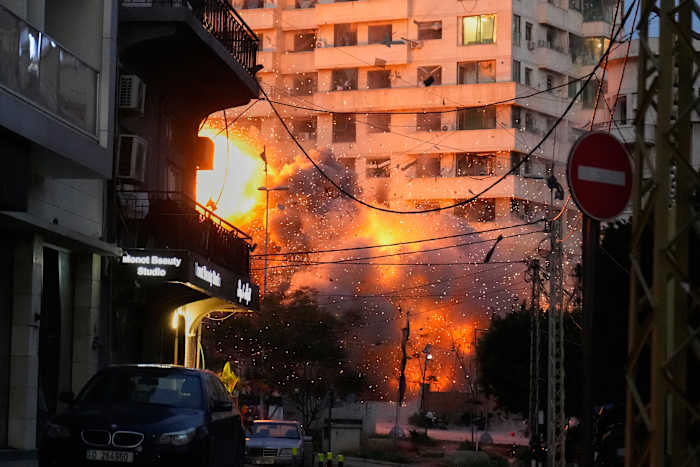
Every time a high-ranking official is neutralized in Damascus or Beirut, the commentary follows a tired loop. "Will Iran retaliate?" "Is this the tipping point?"
Stop asking if we are at a tipping point. We passed it a decade ago.
The Iranian response to the strike on its security chief wasn't designed to destroy Israel or the Gulf monarchies. If Tehran wanted a hot war, they wouldn't telegraph their move seventy-two hours in advance through every diplomatic channel in Oman and Turkey. You don't send a "warning" if your goal is a knockout blow.
You send a warning when you need to save face without losing your head.
The "attack" was a controlled demolition of the old rules of engagement. By firing from Iranian soil, Tehran signaled that the era of "strategic patience" is dead, but it replaced it with something even more calculated: Calibrated Theater. The goal wasn't to kill; it was to prove they could saturate the world’s most sophisticated air defense systems for a fraction of the cost. Israel spends billions on Iron Dome and Arrow interceptors. Iran spends a few million on lawnmower engines strapped to wings. The math of attrition is firmly on Tehran's side, and the markets are starting to realize it.
The Gulf’s Secret Relief
The prevailing narrative says the Gulf countries are terrified. The reality is far more nuanced. While the UAE and Saudi Arabia offer the mandatory condemnations, they are quietly enjoying the shift in the power dynamic.
Why? Because a predictable Iran is better than a desperate Iran.
For years, the Gulf was the primary target of Iranian proxies. Now, the conflict has shifted back to a direct state-vs-state standoff. This gives the Gulf states—specifically Riyadh—the leverage to play both sides. They can keep their defense pacts with the West while simultaneously maintaining the Beijing-brokered detente with Tehran.
I’ve spent enough time in regional boardrooms to know that stability isn't the absence of conflict; it's the ability to price it. Right now, the "Iran threat" is a line item that justifies massive defense spending and keeps oil prices at a comfortable floor. The status quo is profitable. True peace would be a disaster for the current regional economic model.
The Interceptor Trap
Western analysts love to point at the 99% interception rate as a victory for Western technology. This is a dangerous misunderstanding of the economics of modern warfare.
If you use a $2 million interceptor to take out a $20,000 drone, you aren't winning. You are being bled dry. This is the Asymmetric Sinkhole. Iran's strategy is to force the West and its allies to deplete their stockpiles of high-end munitions while Tehran scales up the production of cheap, "good enough" technology.
Consider the physics of the engagement:
- Saturation: If Iran launches 300 projectiles, you need 300+ interceptors.
- Cost Ratio: The cost to the defender is roughly 100:1.
- Replenishment: Western defense industrial bases are currently bogged down by supply chain issues and competing demands from Eastern Europe. Iran's supply chain is localized and sanctioned-proof.
The "failure" of the Iranian attack to cause mass casualties wasn't a failure of Iranian capability. It was a success of Iranian intent. They proved they could trigger the most expensive firework show in history at will, forcing their enemies to burn through billions of dollars in a single night.
The Misunderstood Security Chief
The strike that killed the security chief was portrayed as a decapitation strike. In reality, these figures are more like corporate middle managers in the IRGC's sprawling bureaucracy. The West thinks it is playing chess by removing pieces; Iran is playing Go, focusing on the overall territory.
Killing a general doesn't change the underlying infrastructure of the "Axis of Resistance." That infrastructure is decentralized, funded by illicit oil sales that the West has proven unable (or unwilling) to stop, and rooted in decades of local integration.
The idea that one strike or one retaliatory barrage changes the "balance of power" is a fantasy sold to a public that wants quick resolutions. There are no quick resolutions in a conflict where the primary weapon is time.
Why the "Regional War" Narrative is a Scam
The media pushes the regional war narrative because it drives clicks and justifies military expansion. But look at the data:
- Oil Volatility: Despite the "attacks," oil prices haven't stayed in the stratosphere. The market knows this is a choreographed dance.
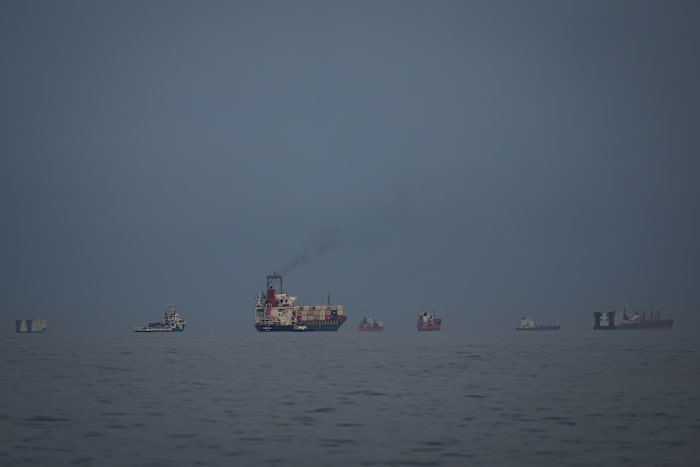
- Trade Routes: While the Red Sea is a mess, the Strait of Hormuz remains largely functional for major tankers. Why? Because Iran needs that route as much as anyone else.
- Diplomatic Backchannels: Even at the height of the missile launches, the "red phones" between Washington, Tehran, and Tel Aviv were glowing.
This isn't an uncontrolled spiral. It’s a managed conflict.
The Real Risk Nobody is Talking About
The danger isn't that Iran and Israel go to war. The danger is that the Global South is watching the West’s hypocrisy in real-time and detaching from the Western-led financial system.
While the US rushes to defend Israeli airspace, it struggles to provide the same level of support to other allies. This perceived inconsistency is doing more damage to Western hegemony than any Iranian drone ever could. We are seeing the birth of a multi-polar Middle East where the US is no longer the sole arbiter of security.
If you are waiting for a return to "normal," you are looking in the rearview mirror. This is the new normal. It’s messy, it’s loud, and it’s occasionally violent—but it is also highly calculated.
Stop falling for the "imminent collapse" headlines. The house isn't burning down; the owners are just renegotiating the insurance policy at gunpoint.
If you want to understand the Middle East, stop reading military maps and start reading balance sheets. The war isn't being fought for territory anymore. It's being fought for the right to dictate the terms of the global energy transition and the future of the US Dollar's dominance in the region.
Iran isn't trying to win a war. It's trying to make the cost of opposing them too high for the West to keep paying.
And so far, they are winning.
The next time you see a grainy video of a missile intercept, don't cheer for the technology. Ask yourself how much that specific flash of light just cost your retirement fund.
Buy the dip, ignore the doomsdayers, and recognize the theater for what it is.
The real conflict is far quieter, much more expensive, and is happening in currency markets while you're distracted by the sky.