The headlines are screaming about a regional wildfire. They want you to believe we are one missed phone call away from a total Middle Eastern collapse. They point to Iranian missiles over Tel Aviv and Israeli jets over Beirut as evidence of an uncontrollable spiral.
They are wrong. Meanwhile, you can find other events here: The Cold Truth About Russias Crumbling Power Grid.
What the mainstream media labels as "lashing out" is actually a highly calibrated, ritualized exchange of kinetic energy designed specifically to prevent total war. We aren't seeing a breakdown of order. We are seeing the most sophisticated, violent negotiation in modern history.
The Myth of the Mad Actor
The "lazy consensus" suggests Iran is a desperate, irrational regime swinging wildly at its neighbors. This narrative serves a purpose—it justifies massive defense spending and simplifies a complex board into a "good vs. evil" comic book. To understand the full picture, we recommend the recent article by NPR.
If you look at the trajectory of the recent strikes, the precision is the point. Iran’s attacks on Israeli infrastructure and its posturing in the Gulf aren't attempts to win a war. They are attempts to set a price. In the world of high-stakes intelligence, we call this "Establishing Deterrence through Demonstrative Failure."
When Iran launches drones that take nine hours to arrive, they aren't trying to surprise anyone. They are sending a telegram written in fire. They are saying: "We can touch you, but we are choosing not to destroy you—today."
Why the "Spillover" Narrative is a Grift
Every time a missile crosses a border, the pundits start talking about "spillover." They act as if war is a liquid that accidentally leaks from one container to another.
War is not a leak. It is a policy choice.
The Gulf neighbors—Saudi Arabia, the UAE, Qatar—are not "victims" of this instability in the way the press portrays them. They are active participants in a hedging strategy. While the media focuses on the smoke over Beirut, the real story is the back-channel communication between Riyadh and Tehran.
The neighbors aren't terrified of a regional war; they are terrified of being forced to pick a side in a war that hasn't started yet. By framing every Iranian move as an "attack on neighbors," Western media misses the nuance of the "Cold Peace." These nations are more synchronized than they have been in decades. They are all reading from the same script: Keep the conflict loud enough to keep the Americans invested, but quiet enough to keep the oil flowing.
The Beirut Distraction
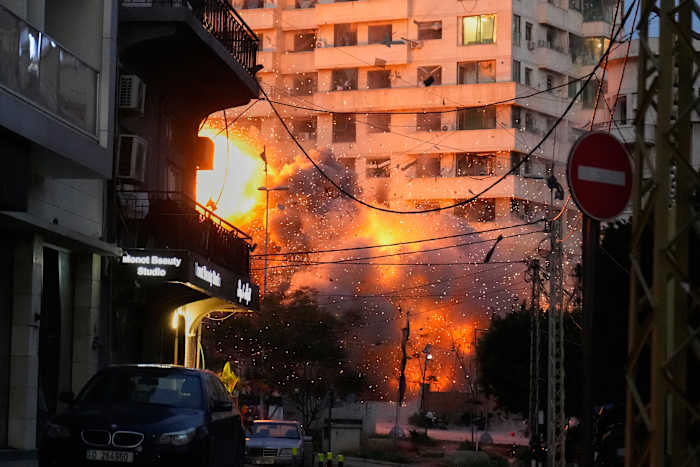
Israel’s hits on Beirut are being framed as a new, dangerous front. It isn't new. It’s a return to the status quo.
The focus on Lebanon is a tactical necessity for the Israeli government to manage internal political pressure, but it’s also a giant neon sign telling Iran where the boundaries are. By striking specific Hezbollah assets, Israel is defining the "Geographic Sandbox."
Imagine a scenario where a truly "unhinged" power wanted to end a conflict. They wouldn't target empty buildings or mid-level commanders. They would target desalination plants. They would target the power grid. They would target the things that make a modern state function.
Nobody is doing that.
The "escalation" is a series of choreographed moves. It’s a violent ballet where both sides know the steps.
The Math of Selective Destruction
Let’s talk about the actual mechanics of these strikes. We see videos of Iron Dome interceptions and we think "chaos."
The math tells a different story.
$$P_d = 1 - (1 - p)^n$$
In this probability formula for missile defense, $P_d$ is the probability of destruction, $p$ is the kill probability of a single interceptor, and $n$ is the number of interceptors fired.
Both sides understand this math perfectly. If Iran wanted to overwhelm the system, they wouldn't send 300 projectiles; they would send 3,000. The fact that they send just enough to be seen—but not enough to break the state—is proof of a calculated restraint that the "experts" refuse to acknowledge.
Stop Asking if War Will Spread
The most common question in the "People Also Ask" boxes is: "Will the Israel-Iran conflict lead to World War III?"
The premise is flawed. It assumes the actors involved want a total victory.
Total victory is expensive. Total victory is messy. Total victory means you have to govern the rubble.
Neither Tehran nor Jerusalem has any interest in governing each other's ruins. The current state of "Permanent Near-War" is actually the most stable outcome for the current regimes. It allows for:
- Internal Consolidation: Nothing silences domestic protesters like a foreign threat.
- Defense Lobbying: High-tech interceptions are the best sales pitch for military contractors.
- Geopolitical Leverage: It keeps the global superpowers tethered to the region, providing aid and diplomatic cover.
The Actionable Truth
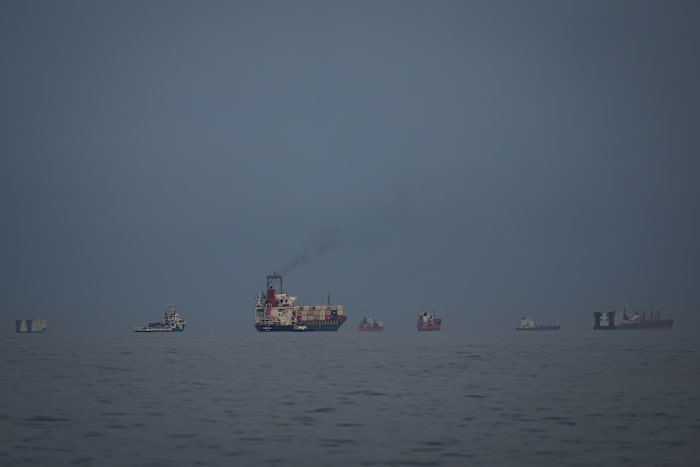
If you are an investor, a policy-maker, or just a concerned citizen, stop looking at the explosions. Look at the insurance rates. Look at the shipping lanes.
If the "regional war" were real, the Strait of Hormuz would be closed. It isn't. If the "collapse" were imminent, the oil markets would be at $150 a barrel. They aren't.
The market knows what the news anchors don't: This is a performance.
I’ve spent years watching these "flashpoints" burn out. The pattern is always the same. High-definition footage of fire, followed by stern warnings, followed by a return to the underlying economic reality.
The real danger isn't the missiles. It’s the fact that we’ve become so accustomed to the theatre that we might miss the day the actors actually decide to change the script. But today is not that day.
Stop reading the play-by-play of the strikes. Start watching the bank accounts of the people funding them. That is where the real war is being fought, and so far, business is booming.
The Middle East isn't "exploding." It’s being managed. And the management is doing a much better job than you’re being led to believe.
Turn off the news and watch the tankers. They aren't stopping, and neither is the money.