The High Price of Perpetual Nostalgia
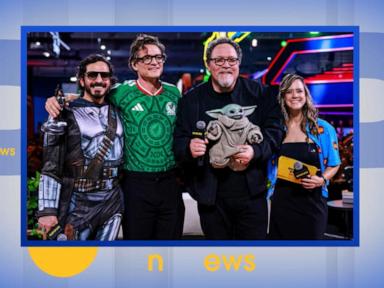
The cast and crew of The Mandalorian and Grogu recently landed in Mexico City to a chorus of cheering fans and flashing cameras. The trades are calling it a "triumphant start" to a global press tour. I call it a desperate smoke screen.
Disney is currently engaged in a multi-million dollar shell game. By flying Jon Favreau and Dave Filoni across the globe to shake hands and pose with plastic helmets, the studio is trying to distract you from a grim reality. Star Wars isn’t expanding. It’s shrinking into a localized, repetitive loop of "remember this character?"
The "lazy consensus" suggests that this film is the shot in the arm the franchise needs to return to the big screen. The data suggests otherwise. Since 2019, Star Wars has been retreating. We’ve seen a steady decline in cultural footprint as the narrative weight shifted from epic cinema to episodic filler. This Mexico City junket isn't about celebrating a new story. It’s about maintaining brand equity in a market that is starting to see through the chrome plating.
The Death of the Event Film
We used to go to the theater to see things we hadn't seen before. Now, Disney wants you to pay $20 to see a 100-minute version of something you’ve already watched for three seasons on your couch.
This is the "Content-to-Cinema" pipeline, and it is a creative death sentence. When you take a streaming series and up-cycle it into a feature film, you aren't elevating the medium. You are admitting that the story didn't have enough gas to sustain another season, so you’re hoping the scale of an IMAX screen will hide the thinness of the plot.
I’ve seen studios blow hundreds of millions on these "safe bets" only to realize that the audience's affection for a character doesn't automatically translate to a theatrical must-see. Look at the diminishing returns on the Marvel Cinematic Universe when they tried to force audiences to do "homework" on Disney+ before seeing a movie. The Mandalorian and Grogu is the ultimate homework assignment. If you haven't kept up with three seasons of Mando, half a season of The Book of Boba Fett, and the entirety of Ahsoka, you’re essentially walking into the middle of a lecture.
The Myth of Global Synergy
The industry loves the word synergy, but let’s call it what it is: Brand Dilution.
By centering the entire cinematic return of Star Wars on a duo we’ve already spent 30+ hours with, Lucasfilm is playing defense. They are terrified of the The Acolyte effect—where trying something new leads to a fractured fan base. So, they retreat to the Beskar-clad safety of Din Djarin.
But here is the nuance the press misses: safety is the enemy of Star Wars. George Lucas succeeded because he was a radical who hated the studio system. He pushed technology to its breaking point to tell a story that felt alien. Favreau and Filoni are doing the opposite. They are using revolutionary technology (The Volume) to tell stories that feel familiar. They’ve turned the galaxy far, far away into a cozy, predictable neighborhood.
Mexico City and the Illusion of Momentum
Why Mexico City? Why now?
International press tours are designed to create a sense of inevitability. When you see a crowd of 5,000 people screaming for a puppet in a different hemisphere, your brain tells you, "This must be important."
It’s a psychological trick. It creates "Social Proof." If the people in Mexico City are excited, then the people in London should be excited, and the people in New York should be buying tickets. But crowds at a promotional event do not equal box office longevity. The Flash had "great" early screenings and fan events. Indiana Jones and the Dial of Destiny had a standing ovation at Cannes. Both died at the box office because the actual product couldn't sustain the manufactured hype.
The industry insiders I talk to are worried. They see the production costs. They see the marketing spend. They know that for The Mandalorian and Grogu to be a "success," it needs to do Rogue One numbers. But Rogue One felt like a movie. This feels like a victory lap for a race that ended two years ago.
The Tech Trap: Why "The Volume" is Killing the Vibe
Let’s talk about the visual language of this film. Every time a director talks about the "groundbreaking" use of StageCraft (the LED wall tech), they are telling you they didn't want to leave the parking lot in Manhattan Beach.
The original trilogy felt vast because they actually went to the desert. They went to the snow. They went to the forest. Modern Star Wars feels claustrophobic because it’s filmed in a digital box. Even with a film budget, the aesthetic of The Mandalorian has become stagnant. It’s too clean. It’s too controlled.
When the cast touches down in Mexico City, they are standing in more "real" environments during their lunch break than they did during the entire production of the movie. That disconnect is visible on screen. It results in a "floaty" quality where actors don't feel anchored to their world. If this movie is going to save Star Wars, it needs to look like a film, not a high-resolution screensaver.
People Also Ask (And Why They’re Wrong)
"Will Grogu finally become a Jedi?"
This is the wrong question. The real question is: "Why is Grogu still a baby after fifty years?" The answer is simple: Merchandising. The moment Grogu grows up, speaks clearly, and loses the "cute" factor, the billion-dollar toy line dies. The narrative is being held hostage by the gift shop.
"Is this the start of a new trilogy?"
Calling everything a "trilogy" is a 20th-century obsession. In the current landscape, this is a "test balloon." If it hits, they’ll churn out sequels until the gears grind. If it underperforms, they’ll pivot back to streaming and pretend the movie was always meant to be a "special event."
"How does this connect to the Dave Filoni 'Heir to the Empire' movie?"
It’s all one big, messy sprawl. The problem is that by trying to connect everything, they’ve made the galaxy feel small. You can’t have a "galaxy at war" if the same five people keep bumping into each other at the same three cantinas.
The Brutal Reality of the "Mando-Verse"
The "Mando-verse" is currently suffering from a severe case of over-serialization. In the 1970s, Star Wars was a lightning bolt because it was a standalone epic that hinted at a larger world. Today, it’s a wiki-entry come to life.
Every character introduced is just a backdoor pilot for another series. Every plot point is a reference to a cartoon from 2008. This isn't storytelling; it’s ecosystem management.
The trip to Mexico City is part of that management. It’s a way to keep the shareholders happy and the hashtags trending. But hashtags don't make a good movie.
The Risk of the "Safe" Bet
The greatest risk Disney is taking is not taking a risk at all.
By leaning into the most bankable characters they have, they are signaling that they have no new ideas. They are cannibalizing the nostalgia of the present to pay for the failures of the past. If The Mandalorian and Grogu fails to cross the billion-dollar mark, it won't just be a "bad movie." It will be the end of the "Mando-era" entirely.
The stakes are higher than a red carpet in Mexico City suggests. If this film doesn't deliver a transformative cinematic experience—one that justifies the price of a ticket over a monthly subscription—then the "Star Wars" name will officially become a legacy brand, like Old Spice or Kodak. It will be something your dad liked, kept alive by aggressive marketing and the occasional shiny new bottle.
Stop watching the red carpet. Start watching the box office metrics. The era of the "unmissable" Star Wars film is over. Now, we are just watching a corporation try to convince itself that a puppet can still move the needle.
The fans in Mexico City are cheering for the past. The rest of us are waiting for a reason to care about the future.
Build a better story, or stop wasting our time with the travel logs.