The glow of a television set in a darkened room used to be a peace offering. It was a flickering campfire where the nation gathered to laugh at the same jokes, regardless of who they voted for that morning. But that campfire has turned into a bonfire. If you look closely at the recent, jagged escalation between the Trump family and Jimmy Kimmel, you aren't just seeing a celebrity feud. You are seeing the final, messy divorce between the political establishment and the late-night comedy stage.
It started with a punchline that landed like a lead pipe.
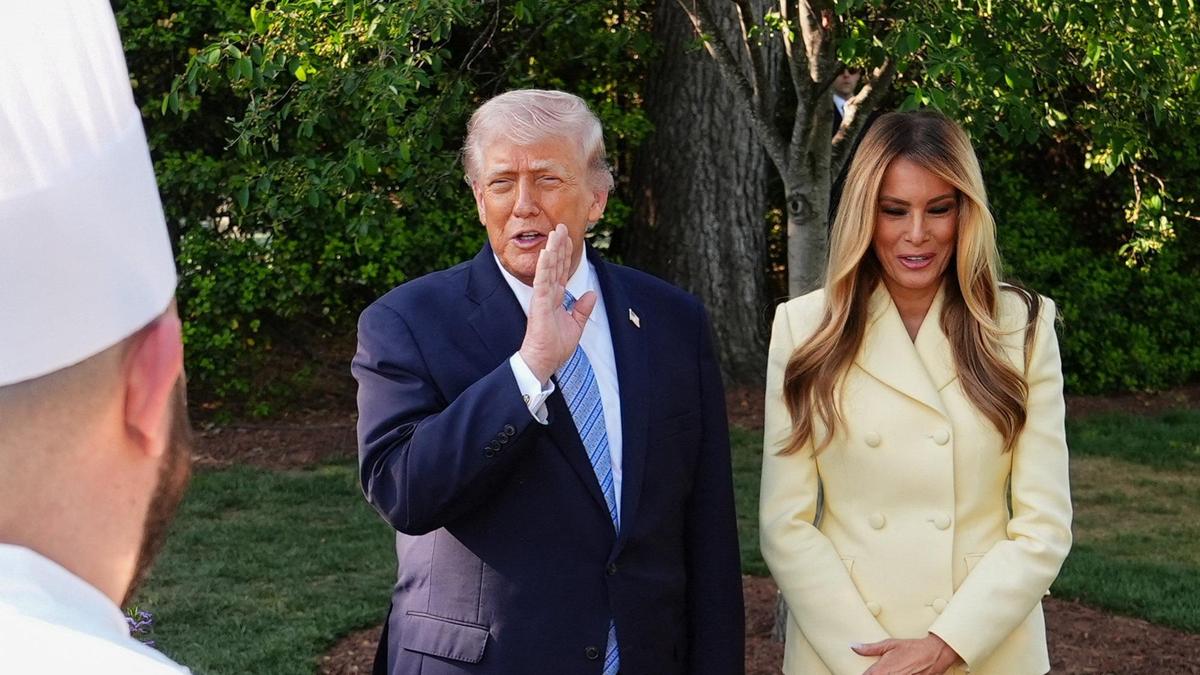
Donald Trump and his wife, Melania, aren't just annoyed. They are demanding an eviction. Their target is the desk at ABC where Jimmy Kimmel has sat for over two decades. The demand is simple and scorched-earth: fire him. This isn’t the usual back-and-forth banter of a thin-skinned politician and a snarky comic. It is a symptom of a deeper, more visceral wound in the American psyche.
The Anatomy of a Grudge
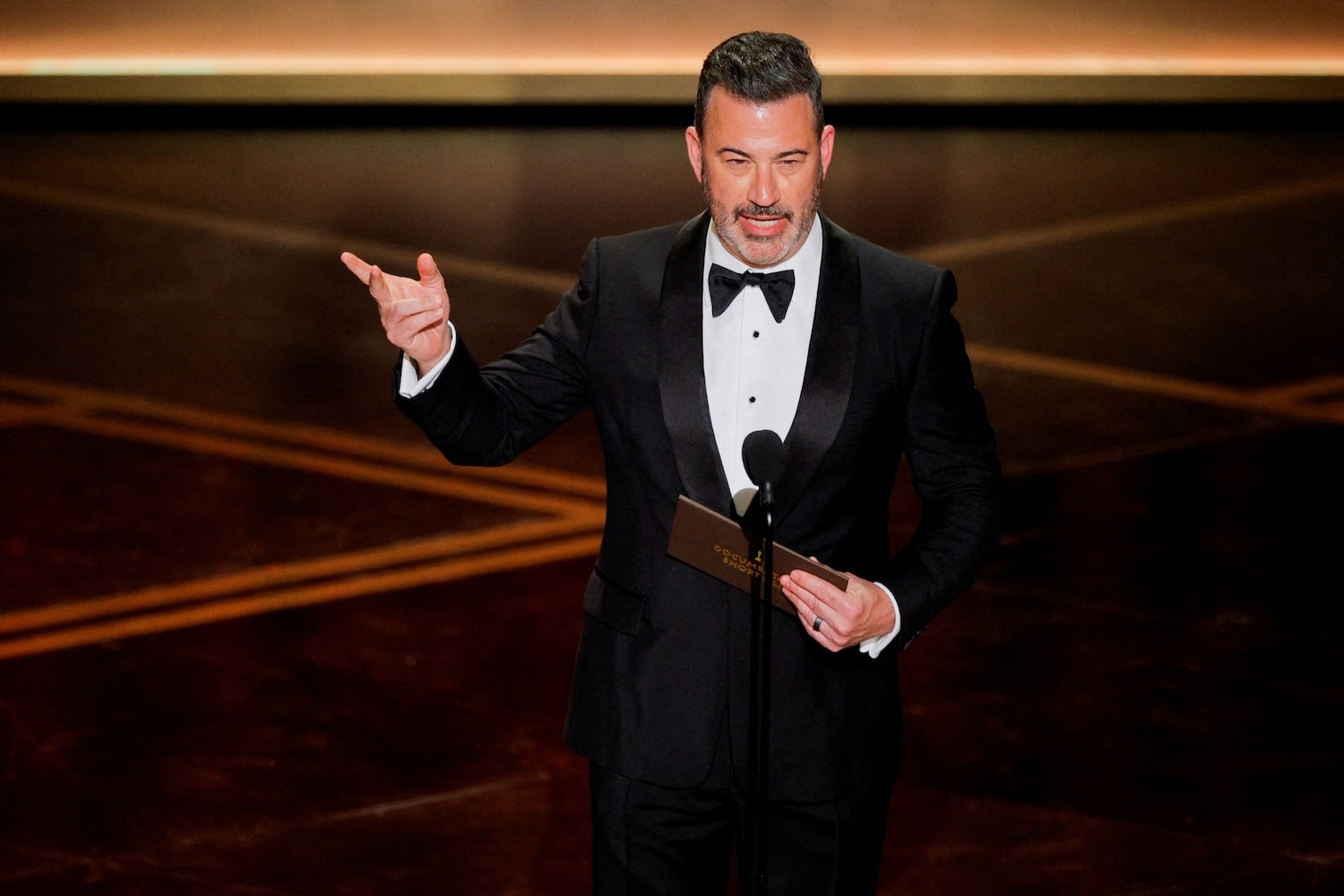
To understand why this specific row boiled over, you have to look at the Oscars. Most people see an awards show as a three-hour marathon of self-congratulation. For Donald Trump, it was a battlefield. During the broadcast, Kimmel didn't just tell a joke; he read a social media post from the former President in real-time, mocking him before a global audience of millions.
Humiliation is a powerful currency.
When you attack a man’s dignity on the world stage, the response is rarely a polite letter to the editor. The Trumps' call for Kimmel’s termination isn't just about one monologue. It is about a decade of accumulated grievances. Melania Trump, often the silent partner in these digital wars, has found herself at the center of Kimmel's sharper barbs. For the former First Lady, the line between "political satire" and "personal cruelty" vanished long ago.
Imagine being in that position.
You are at home, or in a motorcade, or a gilded office, and the person on the screen is dissecting your marriage, your accent, or your very character for the sake of a laugh track. It feels less like comedy and more like a public stoning. This is the human element the "dry" news reports miss. It’s not just "Trump vs. Kimmel." It’s the story of how our public figures have stopped seeing each other as humans and started seeing each other as caricatures to be destroyed.
The Invisible Stakes of Late Night
The comedy club was once a neutral zone. You could walk in, get roasted, laugh it off, and buy the comic a drink afterward. That era is dead. Today, late-night hosts like Kimmel have transitioned from court jesters to de facto leaders of the opposition.
When Kimmel speaks, he isn't just trying to get a chuckle from the guy in the third row. He is signaling to a massive, ideologically aligned audience that the people on the other side of the aisle aren't just wrong—they are ridiculous. They are beneath contempt.
This creates a feedback loop.
- The host tells a partisan joke.
- The audience cheers, validating the host’s moral high ground.
- The subject of the joke feels backed into a corner.
- The subject strikes back with a demand for a firing or a boycott.
The stakes are higher than a time slot. We are talking about the soul of American discourse. When the Trumps call for ABC to fire Kimmel, they are testing the limits of corporate tolerance for controversy. They are asking: "At what point does this host become more of a liability than an asset?"
A House Divided by a Monologue
Think about the average viewer. Let’s call him Elias.
Elias lives in a small town in Ohio. He’s worked at the same plant for thirty years. He likes Donald Trump because he feels Trump speaks for the forgotten man. He also used to like Jimmy Kimmel because Kimmel felt like a regular guy—the "Man Show" guy who liked sports and beer.
Now, Elias sits down at 11:35 PM and feels like he’s being scolded. He feels like the person on the screen thinks he is a fool. The laughter in the studio sounds like it’s aimed directly at his life choices.
On the other side, consider Sarah in Seattle. She sees Kimmel as a brave truth-teller, a man using his platform to hold power accountable when the traditional news media feels too sanitized. To her, every jab at the Trumps is a blow for democracy.
These two people are watching the same show and living in two different universes. The gap between them is the space where the Kimmel-Trump feud thrives. It is a vacuum of empathy.
The Corporate Tightrope
Behind the scenes at ABC, the air must be thin.
Executives aren't just looking at Nielson ratings; they are looking at brand safety. When a former President—and current presidential candidate—directly calls for the firing of your star talent, it creates a PR hurricane. It’s a game of chicken. If the network bows to the pressure, they lose their creative credibility and alienate half the country. If they ignore it, they face a relentless barrage of attacks from one of the most effective communicators in modern history.
The irony is that the conflict fuels the very thing it seeks to destroy.
Every time Trump posts about Kimmel, Kimmel’s ratings see a spike of "hate-watching" and "support-watching." Every time Kimmel mocks Trump, it solidifies Trump’s narrative that the "elites" in Hollywood are out to get him. They are locked in a symbiotic embrace, two giants wrestling in a glass house while the rest of us watch the shards fall.
The Weight of the Words
We often forget that there are real people behind the teleprompters and the smartphones.
There is a version of this story where everyone is tired. Where Jimmy Kimmel wonders if he can ever just tell a joke about a cat stuck in a tree again. Where Melania Trump wishes her name wasn't a punchline for a week. Where Donald Trump feels that the "fairness" he craves is an extinct species.
But the machine doesn't allow for fatigue.
The machine demands escalation. The "Enough is Enough" headline from the Trump camp is a declaration of war, but it’s also a white flag. It’s an admission that the traditional rules of engagement—where you ignore the critics and move on—no longer apply. In the digital age, if you don't swing back, you don't exist.
Beyond the Punchline
As this row continues to dominate the cycle, we have to ask ourselves what we want from our entertainment.
Do we want a late-night host who acts as a priest for our own biases? Do we want a political class that views every joke as a high crime? The friction between the Trumps and Kimmel is a mirror. It shows us a society that has lost the ability to find common ground in humor.
When the joke stops being a bridge and starts being a wall, everyone loses.
The studio lights eventually go down. The makeup is scrubbed off. The social media posts are archived. But the bitterness remains, vibrating in the air like a hum you can’t quite tune out. We are witnessing the slow-motion collapse of the cultural center, and neither a firing nor a public apology is going to fix the foundation.
In the end, it isn’t about whether Jimmy Kimmel keeps his job or whether the Trumps get the last word. It’s about the fact that we’ve reached a point where the only way we know how to talk to each other is through a screen, with a finger hovering over the "delete" or "destroy" button.
The campfire is out. The bonfire is roaring. And everyone is holding a match.