The blue light of a smartphone screen late at night has a way of turning the world into a vacuum. You sit there, thumb hovering over a glass surface, while the silence of your living room is punctured only by the digital echoes of a feud that refuses to die. On one side, a comedian in a tuxedo stands under the hot, unforgiving lights of a global stage. On the other, a former president watches from a distance, fingers poised over a keyboard, ready to strike back.
This isn't just about a joke. It isn't just about a post on a social media platform. It is a collision of two American archetypes: the court jester and the king, locked in a battle where the spoils are nothing less than the emotional bandwidth of the entire country.
The Ghost in the Monologue
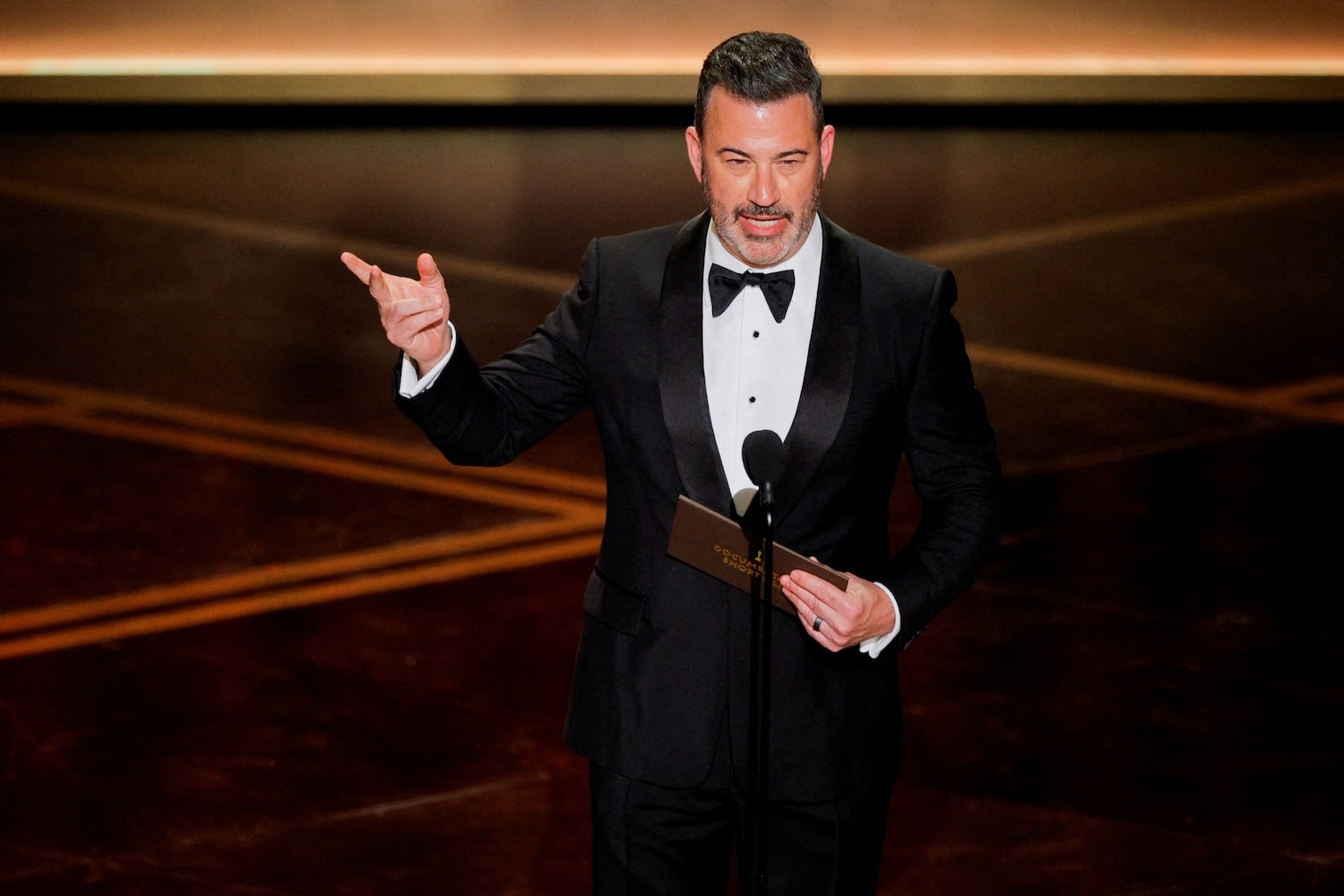
When Jimmy Kimmel stepped onto the stage at the 96th Academy Awards, he wasn't just hosting a ceremony. He was entering a minefield. For years, the tension between Hollywood’s glitterati and the MAGA movement has simmered, a low-frequency hum that occasionally spikes into a roar. Kimmel, never one to shy away from the fray, decided to read a critique live on air.
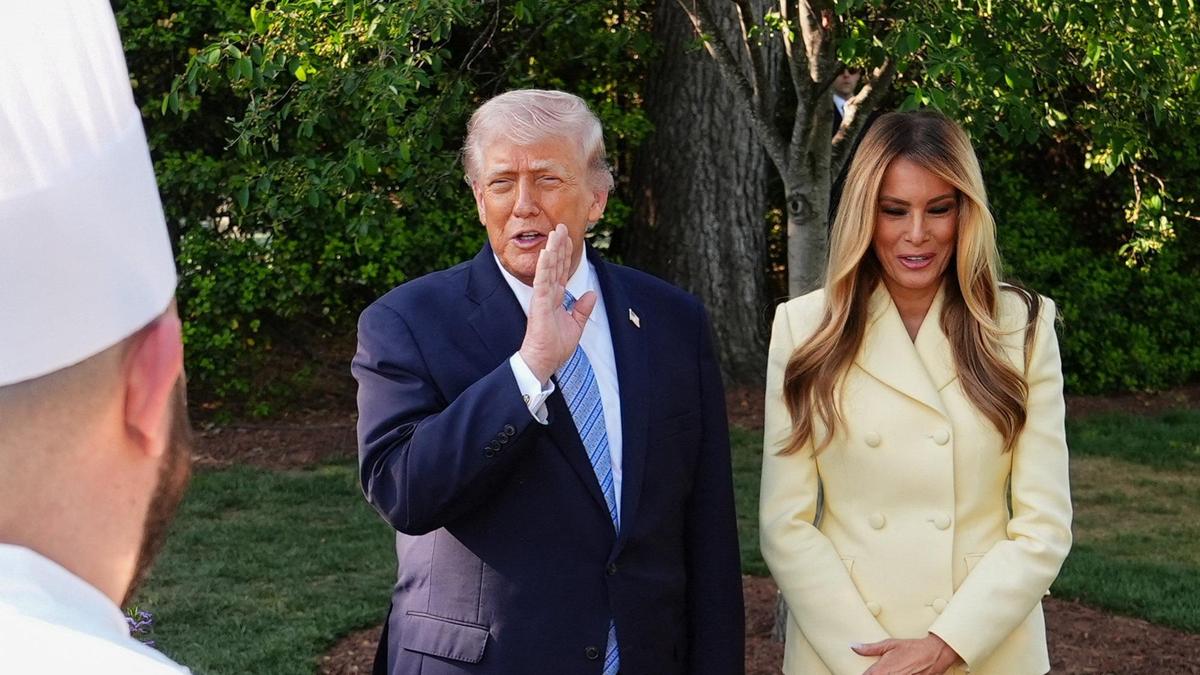
Donald Trump had posted a scathing review of Kimmel’s hosting abilities, calling him "the worst host" and suggesting he be replaced with "talent."
Kimmel looked at the camera, the audience of millions leaning in. He paused. He delivered the punchline: "Thank you, President Trump. Thank you for watching. I’m surprised you’re still—isn’t it past your jail time?"
The room erupted. It was a moment of pure, televised catharsis for half the country and a declaration of war for the other. But the fallout wasn't limited to a single night of laughter. The real story began when the cameras turned off and the rhetoric shifted from the stage to the digital pulpit.
The Weight of a Widow’s Grief
The escalation happened fast. Donald Trump didn’t just want an apology; he wanted a firing. He took to Truth Social to demand that ABC move on from Kimmel, but he didn't stop at the Oscars jab. He dug deeper, reaching back into the archives of Kimmel’s career to find a specific moment from years prior—a joke involving an "expectant widow."
To understand why this matters, we have to look past the political theater and see the human collateral. Imagine a woman sitting in a quiet house, the smell of her late husband’s cologne still faint on a sweater in the closet. She is grieving. She is vulnerable. She is the "widow" being used as a rhetorical bludgeon in a fight she never asked to be part of.
When a politician uses a grieving spouse as a prop to take down a comedian, the comedy stops being funny and the politics stop being policy. It becomes a matter of raw, visceral empathy. The "expectant widow" joke Trump referenced was actually from years ago, involving the wife of a fallen soldier. By resurrecting it, the former president wasn't just criticizing a joke; he was attempting to frame Kimmel as a man devoid of basic human decency.
It is a classic move in the modern playbook: if you can’t win the argument on merit, win it on morality.
The Comedy of Cruelty
Comedy is a fragile thing. It requires a shared understanding of what is "off-limits" and what is "fair game." For decades, the rule was simple: punch up, not down. Punch at the powerful, the arrogant, and the untouchable. Leave the victims alone.
But in our current era, the definition of "up" and "down" has been scrambled. To Donald Trump, he is the underdog fighting a "woke" Hollywood establishment that seeks to silence him. To Jimmy Kimmel, he is the storyteller speaking truth to power.
Consider the mechanics of a late-night monologue. It’s a high-wire act performed five nights a week. The writer’s room is a pressure cooker of caffeine and cynicism. Sometimes, in the rush to find the edge, a comedian slips. They go too far. They touch a nerve that shouldn't be touched. Kimmel has had these moments. Most comedians have.
The question is whether those slips should be career-ending or if they are simply the price of admission for a society that values free speech. When a former president calls for a private citizen to be fired from their job over a joke, the stakes shift from "bad taste" to "state-influenced censorship."
The Invisible Stakes of the Remote Control
We often talk about these feuds as if they are happening in a vacuum, but they are actually happening inside us. Every time we engage with this cycle of outrage, we are giving away a piece of our peace.
There is a psychological cost to the constant friction between our entertainment and our politics. We used to turn on the television to escape the world; now, the world follows us into the living room, screaming for our attention. We are being asked to choose sides in a fight that has no clear winner, only varying degrees of exhaustion.
The demand for Kimmel’s firing isn't just a grievance about a joke. It is a litmus test for the future of public discourse. If the leader of a political movement can successfully pressure a corporation to silence a critic, the boundaries of the "First Amendment" start to feel very thin indeed.
The Echo Chamber and the Truth
In the flurry of posts and counter-posts, the truth often gets lost in the noise. Trump’s claim that Kimmel’s ratings are "dead" or that he is "hated" by everyone doesn't align with the data of late-night dominance. Conversely, the idea that Kimmel is a flawless crusader for justice ignores the times he has stumbled into the very cruelty he critiques.
The reality is messier. It’s a story of two men who are remarkably similar in their mastery of the media. Both know how to trigger an emotional response. Both know how to dominate a news cycle. Both understand that in 2026, attention is the only currency that truly matters.
But while they trade blows, the rest of us are left to navigate the wreckage. We are the ones who have to decide if we want our humor served with a side of bile, or if we are ready for a comedy that doesn't require a casualty list.
The Silence After the Punchline
Think about the moment after a joke fails. That split second of silence when the comedian realizes the room has turned. It’s a cold, lonely feeling. Now imagine that silence being filled not by a lack of laughter, but by the roar of a digital mob.
The feud between Trump and Kimmel is a microcosm of a larger American tragedy: the inability to see the person behind the persona. To Trump, Kimmel is a "loser" and a "tool" of the radical left. To Kimmel, Trump is a "threat to democracy" and a "criminal."
Somewhere in between those two extremes lies a human reality. Kimmel is a father who has spoken movingly about his son’s health struggles. Trump is a man who has spent his entire life building a brand of strength and defiance. When they clash, they aren't just debating ideas; they are protecting their identities.
The demand for a firing is the ultimate power move. It says, "I don't just want to win the argument; I want you to cease to exist in the public sphere."
The Final Curtain
The lights eventually go down. The studio audience goes home. The social media feeds refresh, moving on to the next outrage, the next scandal, the next viral clip. But the resentment lingers. It settles into the floorboards of our culture like a slow-acting poison.
We have reached a point where a joke is no longer just a joke, and a critique is no longer just a critique. They are volleys in a war that has no ceasefire in sight. We are watching two men fight for the steering wheel of the American narrative, while the car hurtles toward a horizon we can't quite see.
In the end, the firing of a comedian or the silence of a politician won't solve the underlying problem. The problem isn't the jokes we tell; it's the way we’ve forgotten how to listen to anything that doesn't sound like an echo of our own voice.
The screen stays lit, the thumb keeps scrolling, and the vacuum keeps pulling us in.
There is no punchline coming to save us.