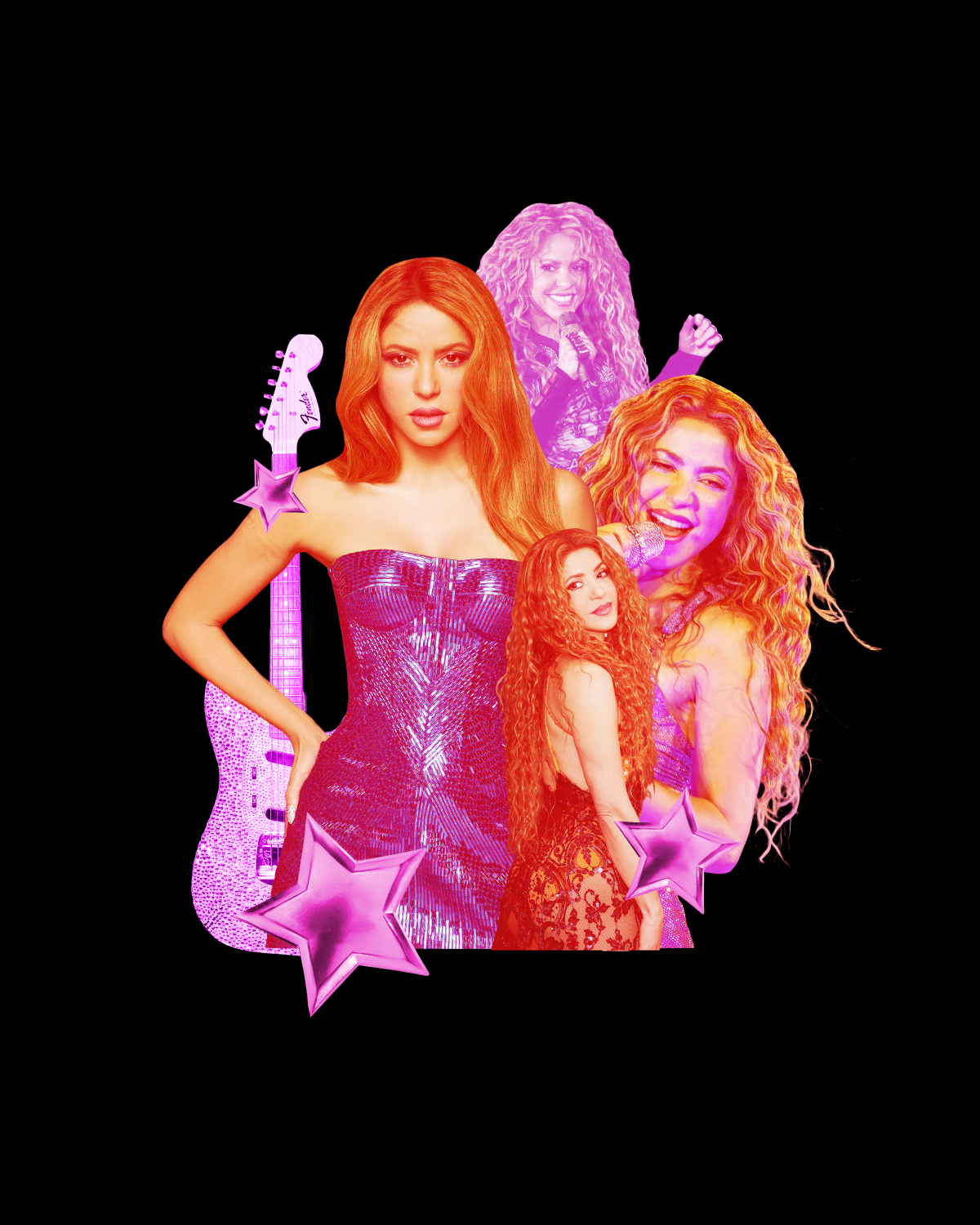
The industry is currently patting itself on the back. The narrative is set: Shakira’s nomination for the Rock and Roll Hall of Fame is a "groundbreaking" victory for globalism, a "highlight" of a storied career, and a long-overdue nod to Latin excellence. It’s a warm, fuzzy story that music journalists love to file because it requires zero critical thinking.
They are wrong.
This nomination isn’t a celebration of Shakira’s legacy. It is the final admission that the Rock and Roll Hall of Fame has abandoned its internal logic to become a generic "Famous People Gallery." By trying to include everyone, the Hall is effectively honoring no one. If everything is Rock and Roll, then nothing is.
The Genre Dilution Trap
The "lazy consensus" suggests that "Rock and Roll" is a spirit, not a sound. That’s a convenient lie used to justify induction ceremonies that look more like the Grammys than a tribute to a specific lineage of music.
Let’s look at the mechanics. Shakira is a polymath. She is a brilliant pop architect, a world-class dancer, and a songwriter who successfully bridged the massive gap between the Latin market and the Anglosphere. But her inclusion under the "Rock" banner isn't about her merit; it’s about a desperate institution trying to stay relevant in a streaming-first world.
When we strip away the branding, Shakira’s peak era—the one the Hall is actually nominating—was built on high-gloss pop-rock and dance-pop. If we use the "spirit" argument to induct her, we have to admit that the term "Rock" has lost all technical meaning.
I’ve watched institutions do this before. They trade their core identity for a spike in social media engagement. They think they are being inclusive, but they are actually just being vague. When you stop defining the boundaries of an art form, you stop protecting it.
The "Global Impact" Fallacy
The most common defense for this nomination is her global reach. "She sold 95 million records," the defenders scream. "She’s the most successful female Latin artist of all time."
True. And also irrelevant.
Success is not a genre. Sales figures are a measure of commercial dominance, not stylistic alignment. By this logic, we should induct McDonald’s into the James Beard Foundation because they’ve sold the most burgers.
The Hall is confusing influence with category. Shakira’s influence on the pop landscape is undeniable. Her ability to blend Lebanese rhythms with Colombian cumbia and American pop changed the Top 40. But that doesn't make it Rock.
What the Critics Miss About "Pies Descalzos"
If you want to make a real case for Shakira’s rock credentials, you have to go back to 1995. Pies Descalzos had the raw, Alanis Morissette-adjacent edge that could actually fit the Hall’s original mission. But the Hall isn't nominating the 1995 Colombian singer-songwriter who played her own guitar and wrote angst-ridden lyrics. They are nominating the "Hips Don't Lie" global icon.
They are rewarding the pivot away from rock, not the adherence to it.
The Museum Problem: Curation vs. Collection
A hall of fame is supposed to be a curated history. It should tell a story of evolution.
- The Blues Influence: Muddy Waters to Chuck Berry.
- The British Invasion: The Beatles to Led Zeppelin.
- The Counter-Culture: The Doors to Pink Floyd.
- The Rebellion: Sex Pistols to Nirvana.
Where does Shakira fit in that timeline? She doesn’t. She exists in a parallel, equally important timeline of Latin Pop evolution. By shoving her into the Rock Hall, the curators are essentially saying that the Latin Songwriters Hall of Fame or the Billboard Latin Music Awards aren’t "prestigious" enough.
It’s a subtle form of cultural condescension. It suggests that for a Latin artist to be truly "canonized," they must be validated by a Western, rock-centric institution, even if their music doesn't fit the criteria.
The Zero-Sum Game of Nominations
Every year, the list of nominees is a finite resource. When the committee selects a pop juggernaut like Shakira, they are actively passing over the architects of the genres they claim to protect.
- Iron Maiden: Still waiting.
- Soundgarden: Still waiting.
- Joy Division/New Order: Still waiting.
- Jane’s Addiction: Still waiting.
These aren't just names; they are the literal DNA of Rock. By prioritizing a "highlight of my life" moment for a pop star, the Hall is telling the fans of actual rock music that the history of the genre is less important than the TV ratings of the induction ceremony.
I've sat in rooms where these decisions are discussed. The conversation rarely centers on "Who moved the needle for guitar-driven music?" It centers on "Who will show up and perform?" and "Who has the largest following on Instagram?"
It is a vanity play masquerading as a tribute.
The Counter-Intuitive Truth
The best thing that could happen to Shakira’s legacy is for her not to be in the Rock and Roll Hall of Fame.
Why? Because she deserves an institution that actually understands what she did. She deserves to be the centerpiece of a Global Pop Hall of Fame where her innovations in rhythmic fusion and bilingual lyricism are studied as the core curriculum, not treated as a "diverse" footnote in a rock story.
If she gets in, she becomes just another name in a diluted list. She becomes the "token" Latin pop star in a room full of aging rockers. That isn't a victory; it's a compromise.
The Economic Reality of the Hall
Let’s be brutally honest about why this is happening. The Rock Hall is a tourist destination in Cleveland. It needs foot traffic. It needs younger demographics.
The average Rock Hall fan is aging out of the travel market. To survive, the institution needs the "She-Wolf" stans to buy tickets. They need the social media mentions.
- The Problem: The Hall is a 501(c)(3) non-profit that operates like a desperate Netflix executive chasing a trend.
- The Risk: In five years, the "Rock and Roll" part of the name will be entirely vestigial. It will be the "Music Video Hall of Fame."
The downside to my stance is obvious: it sounds like gatekeeping. And in a way, it is. But gatekeeping is necessary for meaning. If you open the gates of a "Pizza Festival" to sushi, tacos, and ice cream, you no longer have a pizza festival. You have a food court.
The Rock Hall is currently the world's most expensive food court.
The Premise is Broken
People keep asking: "Does Shakira deserve this?"
That is the wrong question. The real question is: "Does the Rock Hall deserve Shakira?"
By accepting this nomination, she is lending her massive cultural capital to a fading institution that doesn't know what it wants to be anymore. She is the one doing them a favor, not the other way around.
The industry wants you to believe this is a milestone. It’s not. It’s a branding exercise. It’s the sound of a once-mighty genre definition finally collapsing under the weight of its own marketing department.
Stop looking at the nomination as a tribute to her talent. Start looking at it as a symptom of an industry that has forgotten how to categorize greatness because it’s too busy trying to monetize everything.
The Hall isn't honoring Shakira. It’s using her.
And if you can't see the difference, you’re part of the "lazy consensus" that’s letting the history of music turn into a flavorless, identity-free soup.
The guitar is optional, the rebellion is marketed, and the Hall is officially out of ideas.
Turn the lights out on your way out.