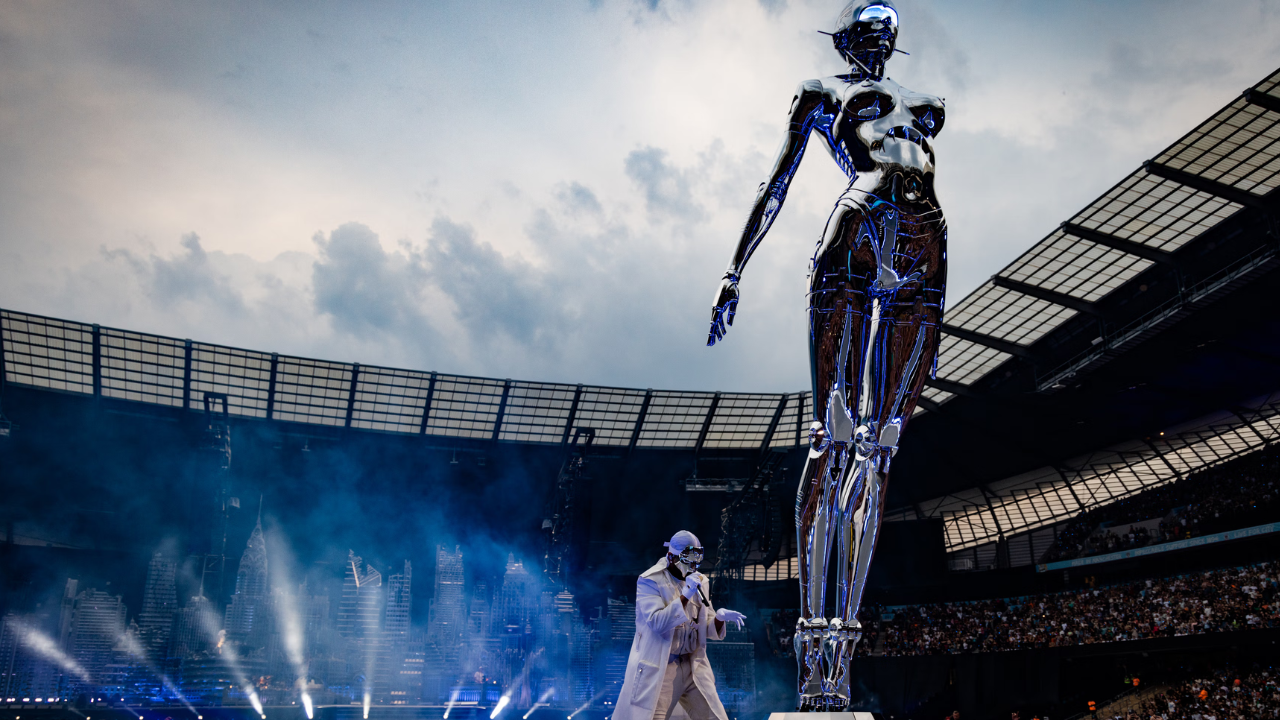
Every music trade publication on the planet is currently patting Abel Tesfaye on the back for raising $8.5 million for charity during his record-breaking stadium tour, including $3 million generated in 2026 alone.
The press releases are breathless. The headlines treat a single-digit million charitable tally alongside a male solo-artist gross revenue record like the second coming of Live Aid.
Stop applauding for five seconds and look at the actual spreadsheet.
When a stadium tour shatters the all-time revenue record for a male solo artist—a threshold that sits north of half a billion dollars in gross ticket sales—an $8.5 million charitable contribution represents roughly one to one-and-a-half percent of the top-line box office. In any other corporate sector, a company boasting record-shattering revenues while donating 1.3 percent of gross receipts would be met with polite nods from tax accountants, not front-page hero worship.
The entertainment press loves a simple victory lap. They take a big tour gross, slap a charitable dollar figure next to it, and declare a moral triumph. That lazy consensus completely misses the real mechanics of modern live touring, how per-ticket charity levies actually work, and why celebrating the raw dollar figure obscures the much harder truth about stadium economics.
The Illusion of the Record-Breaking Gross
To understand why the $8.5 million figure is being misread, you first have to understand what "gross revenue" in live music actually means.
When trade outlets like Pollstar or Billboard report a record-breaking tour gross, they are counting every dollar collected at the primary box office before a single stagehand gets paid. They are not counting the artist's take-home pay.
Stadium tours are capital-intensive beasts. I have watched tour accountants stare at nine-figure gross projections only to realize the net margin was razor-thin after fuel surcharges, steel shortages, and local union overtime rates chewed through the budget. You are moving dozens of semi-trucks across continents, paying hundreds of crew members per diems, insuring custom pyrotechnics, and renting out NFL-sized venues where the building takes a hefty cut of both ticket fees and concessions.
- Gross Revenue: Total face value of all tickets sold before any expenses, taxes, or promoter splits.
- Net Touring Profit: What remains after production costs, venue rentals, marketing, insurance, crew payroll, and promoter guarantees are deducted.
- Per-Ticket Charity Levy: A fixed dollar amount (often $1 to $5) tacked onto or carved out of each ticket sold, usually routed through a donor-advised fund or partner nonprofit.
When The Weeknd’s After Hours til Dawn run crossed into historic territory for a male solo act—surpassing benchmarks previously held by legacy titans—the sheer volume of tickets sold guaranteed that even a modest per-ticket allocation would snowball into millions.
If you sell four million tickets and earmark $2 per ticket for the XO Humanitarian Fund and partner organizations like the World Food Programme, you hit $8 million automatically. You do not need a telethon. You do not need a benefit gala. You just need dynamic pricing and a stadium routing schedule.
That is not a knock on the money reaching people who need it. Eight and a half million dollars buys a staggering amount of emergency food aid and builds real community infrastructure. To pretend otherwise would be cynical.
The problem is how the music industry frames the math. By presenting $8.5 million as an extraordinary, unprecedented sacrifice rather than the predictable mathematical byproduct of selling millions of $250 stadium tickets, reporters confuse scale with generosity.
Who Actually Paid for the $8.5 Million?
Here is the question nobody in music journalism asks when these press releases hit their inbox: Did the artist pay for this out of their net profit, or did the fan pay for it as an invisible surcharge?
In modern arena and stadium touring, charitable contributions almost always operate in one of two ways:
- The Top-Line Carve-Out: Before the promoter and artist split the net box office receipts, a flat fee per ticket is deducted off the top and sent to a designated foundation. Because it comes out before the split, both the artist and the promoter effectively share the cost by reducing the divisible pool of money.
- The Face-Value Pass-Through: The ticket price is simply raised by a dollar or two—or absorbed into the algorithmic swells of dynamic pricing—meaning the concertgoer funds the donation directly while the artist receives the publicity halo.
Imagine a scenario where a stadium tour sells 100,000 tickets across two nights at an average price of $180. That is $18 million in gross box office. If $2 per ticket goes to charity, that is $200,000 raised. Meanwhile, primary ticketing platforms are simultaneously extracting $35 to $50 per ticket in service fees, facility charges, and order processing costs—pulling $4 million out of the exact same fans' pockets for digital infrastructure.
Look at those two numbers side by side. $200,000 for global hunger relief. $4 million in ticketing fees.
Yet the headlines focus exclusively on the $200,000 because the ticketing conglomerates do not send out press releases bragging about their fee extraction. The charity number acts as a shiny distraction from the most aggressive ticket-pricing era in live music history.
Why Stadium Philanthropy Is Outdated
If you want to know how much a touring juggernaut actually cares about social impact, stop looking at the charity press release and start looking at their ticketing policy and their supply chain.
The hardest thing an A-list artist can do in 2026 is not donating $3 million from a massive tour leg. The hardest thing an A-list artist can do is turn off dynamic pricing, restrict speculative resale, and cap upper-bowl ticket prices so working-class fans do not have to take out a buy-now-pay-later loan to sit in the nosebleeds.
Turning off platinum pricing costs a stadium headliner tens of millions of dollars in pure, high-margin profit. Very few artists are willing to leave $30 million on the table to keep tickets affordable, because leaving $30 million on the table does not generate a heartwarming press release. Instead, the industry playbook is simple: maximize every cent of consumer surplus through dynamic pricing, then skim off 1.5 percent at the end to fund a charitable foundation.
This is the exact same model used by multinational tech giants and private equity firms. Extract maximum margin from the market, then issue a press release about your corporate social responsibility arm.
And what about the environmental footprint of a multi-year stadium run? Moving a stadium production across North America, Europe, Latin America, and Australia generates thousands of metric tons of carbon emissions—from diesel generators and freight planes to hundreds of thousands of fans driving to suburban football stadiums.
Bands like Coldplay and Massive Attack have spent years overhauling their touring mechanics—investing in kinetic dancefloors, battery storage systems, and rail-only routing—because they realized that writing a check at the end of a tour does not offset the operational impact of the tour itself. By comparison, writing a $3 million check out of 2026 tour proceeds is the path of least resistance. It requires zero changes to stage design, zero friction with Live Nation or AEG, and zero reduction in artist guarantees.
Dismantling the "People Also Ask" Myths About Touring and Charity
Whenever a massive tour milestone hits the news cycle, fans and casual observers immediately start searching for how these numbers actually work. Most of the answers floating around online are either PR spin or complete nonsense.
Does the artist get a massive tax write-off for tour charity donations?
Not the way people think. If a per-ticket fee is routed directly from the promoter or ticketing agency to a registered 501(c)(3) or international equivalent without ever hitting the artist’s corporate bank account as taxable income, the artist does not get to claim a magical extra deduction on their personal taxes. They simply never paid income tax on money they never received. If the artist takes the tour profits into their LLC first and then donates a lump sum to their own donor-advised fund, they do receive a charitable deduction—which simply offsets the tax liability on that specific slice of income. Nobody gets rich off charitable tax deductions; you always end up with less cash than if you had kept the money and paid the tax. The real value is reputational equity, not a tax loophole.
Is $8.5 million the most a solo artist has ever raised on tour?
No, not even close—especially when you adjust for inflation or look at dedicated benefit runs. Legacy artists like Bruce Springsteen, U2, and Elton John have generated tens of millions of dollars across individual tours through direct food-bank partnerships, auctioned VIP packages, and AIDS foundation initiatives. Even contemporary peers like Taylor Swift quietly handed out $55 million in direct bonuses to her truck drivers, caterers, and crew on a single leg of the Eras Tour—an act of direct wealth redistribution to working people that dwarfed most celebrity charity announcements.
Why did the 2026 leg specifically generate $3 million?
Because ticket prices in 2026 are higher than they were when the tour launched, and late-stage stadium routing targets high-yield international and encore markets where demand is inelastic. When a tour extends into extra years, the fixed costs of building the stage set have already been amortized. The initial steel, lighting rigs, and custom set pieces were paid off during the first fifty shows. By 2026, the tour is running on pure operational margin, meaning per-ticket charitable allocations scale effortlessly alongside higher average ticket prices.
The Honest Caveat: Why Criticizing Charity Feels Wrong (And Why We Must Do It Anyway)
Let’s be brutally fair here. There is a clear downside to tearing apart a $8.5 million charitable milestone.
When commentators nitpick how much a millionaire musician gives away, the predictable blowback from industry insiders is: "Well, what have you done lately? At least he’s giving millions while other headliners give zero."
They have a point. In an entertainment economy packed with artists who guard every basis point of their tour splits like dragon gold, dedicating millions of dollars to global food security through the World Food Programme is undeniably better than pocketing the cash. For families receiving emergency rations funded by that $3 million 2026 tranche, the percentage of gross box office is completely irrelevant. Food is food.
The danger is not in the donation itself. The danger is in allowing low-percentage, friction-free charity levies to become the ceiling of corporate accountability in live music.
When the media treats 1.5 percent of gross revenue as historic generosity, every other stadium headliner realizes they can buy bulletproof cultural goodwill for pennies on the dollar. You do not have to fix broken ticketing monopolies. You do not have to pay local stagehands a living wage without union strikes. You do not have to rein in $600 dynamic ticket prices. You just tack $2 onto the ticket price, slap a foundation logo on the tour poster, and watch the trade press write glowing profiles about your legacy.
What Real Industry Disruption Would Actually Look Like
If an artist at the absolute peak of their commercial power—someone capable of shattering male solo-artist touring records—actually wanted to disrupt the status quo rather than just collect a plaque from a trade magazine, the blueprint is sitting right in front of them:
- Tie charity to net profit, not flat ticket fees. Commit to donating 10 percent of net touring profits after production costs are cleared. That puts real skin in the game and aligns the artist’s financial outcome with the cause.
- Redirect ticketing rebates directly to local communities. Top-tier stadium artists routinely negotiate back-end rebates from ticketing companies—receiving a percentage of those hated "service fees" back under the table. Routing 100 percent of ticketing rebates directly to local housing and food banks in each tour city would double or triple the charitable output overnight without raising ticket prices by a single cent.
- Audit and publish the real numbers. Stop hiding behind vague press releases about cumulative totals across multi-year runs. Publish the exact per-ticket allocation, the administrative overhead of the foundation, and the net percentage of tour revenue donated.
Until stadium touring adopts that level of transparency, treat every record-breaking charity headline with the skepticism it deserves. The Weeknd’s $8.5 million milestone is a testament to the massive scale of modern stadium pricing, not a revolution in artist generosity. Next time a tour announces a multi-million-dollar donation alongside a box-office record, do the division yourself before you applaud.