Most headlines treat the $19.5 million Dark Horse Estate in Franklin, Tennessee, like a celebrity fan shrine. That's a massive misreading of what's actually sitting on 2465 Old Charlotte Pike.
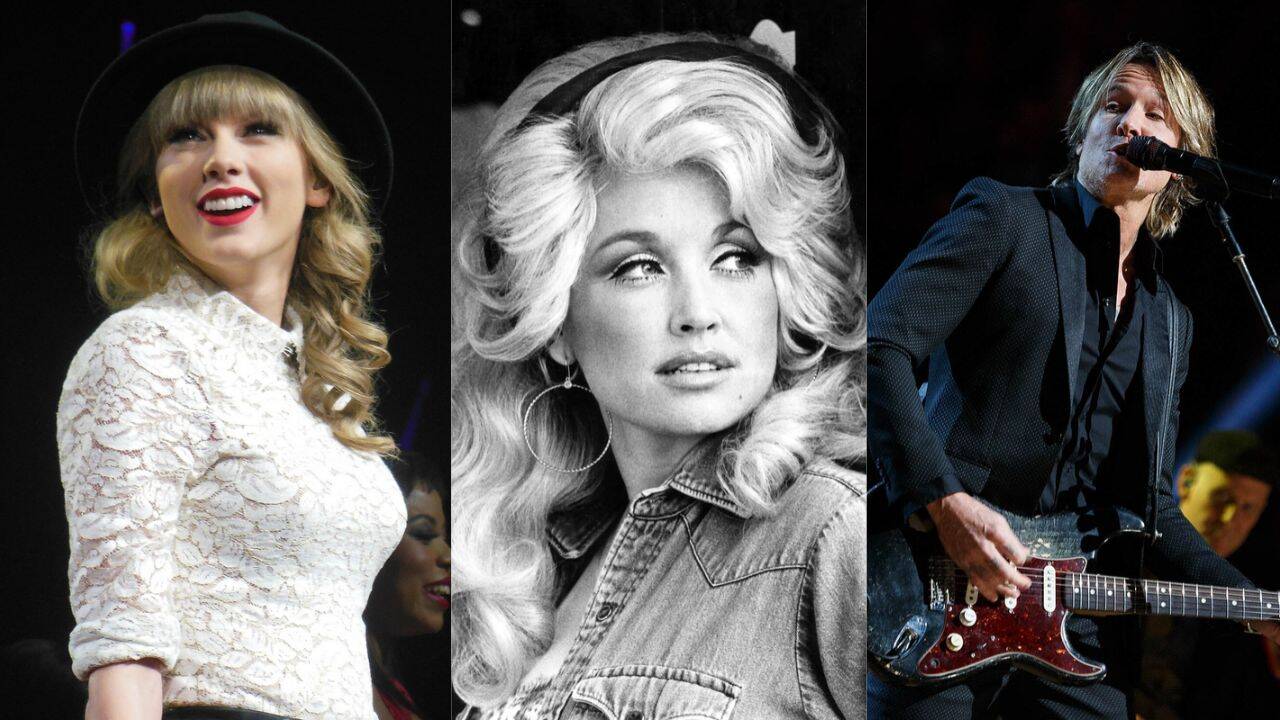
Yes, a teenage Taylor Swift cut tracks for her 2006 self-titled debut album here. Yes, Dolly Parton, Keith Urban, Faith Hill, and Neil Diamond have all walked these halls. Calling this a "Taylor Swift house" misses the point entirely, though. She never owned it. Nobody bought this place to worship pop royalty, and nobody's going to drop nearly twenty million dollars on it just because a future billionaire once sang into a microphone on the property.
What you're actually looking at is a 10-acre, 23,138-square-foot commercial hit factory disguised as a rustic riverfront compound. And if you look closely at the listing history, the numbers tell a much sharper story about Nashville real estate, the changing economics of recording studios, and why this property just took a $4.5 million price cut.
The Real Story Behind Dark Horse Estate
Let's clear up the ownership myth first. Dark Horse Estate wasn't built by a country superstar or a major record label executive. It was built from the ground up in 1998 by Robin Crow, a recording artist, author, and entrepreneur who wanted to escape the sterile, fluorescent-lit grind of Music Row.
Back in the late nineties, Nashville's recording scene was heavily centralized around 16th and 17th Avenues South. Crow bet that major artists would gladly drive thirty minutes south to Franklin if they could track an album in total privacy along the West Harpeth River. He was right. Over nearly three decades, the complex racked up credits on more than 65 gold and platinum albums.
When you tour or study high-end residential studios, you quickly realize most "home studios" in celebrity listings are glorified spare bedrooms with foam glued to the drywall. Dark Horse isn't that. Crow engineered a four-studio commercial operation directly into a residential village.
Here is what the $19.5 million asking price actually covers across those 10 acres:
- Dark Horse Manor: The primary residence, spanning massive living quarters alongside integrated recording spaces, 10 bedrooms, and 14 to 15 bathrooms depending on how the listing portals tally the half-baths.
- Dark Horse Recording: The dedicated, multi-room studio complex connected via covered walkways and a sky bridge so artists don't even have to step out into the Tennessee humidity between vocal takes.
- The Cottage and The Bungalow Apartment: Standalone guest quarters built specifically so producers, session drummers, and visiting songwriters can live on-site for weeks without booking a hotel in downtown Nashville.
- The Party Barn: An entertainment structure designed for album release gatherings, private showcases, and decompression after twelve-hour mixing sessions.
More than 3,000 square feet of covered porches tie these structures together. Crow also planted thousands of trees during his tenure, turning what could have been an exposed plot of Williamson County pasture into a walled-off botanical fortress.
Why the Price Dropped From $24 Million to $19.5 Million
If you've been tracking luxury listings in Middle Tennessee, you already know this isn't Dark Horse Estate's first trip to the market. Crow originally listed the compound with Compass in August 2025 for $24 million.
It sat. For over a year, that $24 million tag didn't find a taker, leading to the November 2026 relisting at $19.5 million.
Why did a legendary, cash-flowing creative compound with an unmatched client roster need a 18.75% discount? Simple. Trophy real estate in Franklin has hit a valuation ceiling, and hybrid commercial-residential properties are notoriously tough to underwrite.
Think about the buyer pool for a property like this. A traditional billionaire looking for a quiet Williamson County family compound doesn't necessarily want a four-studio commercial facility and an audio engineering school—the Dark Horse Institute—operating in their backyard. Conversely, an independent record label or investment group looking for a studio asset rarely wants to pay residential luxury premiums for 10 bedrooms and heated marble floors.
When a property straddles two asset classes, standard bank appraisals get messy fast. Lenders don't know whether to comp it against other $15 million-plus Franklin estates or value it on commercial cap rates. At $24 million, the seller was asking a buyer to pay full retail for both the luxury manor and the music history. At $19.5 million, the math finally starts making sense for a high-net-worth artist, a boutique label, or a family office that actually plans to use both halves of the estate.
What Actually Happened When Taylor Swift Recorded Here
Entertainment blogs love slapping Swift's name into the headline because it guarantees clicks. Fair enough. The connection is real, even if it's routinely exaggerated.
In 2005 and 2006, before "Tim McGraw" hit country radio and changed her life overnight, Swift was a teenager working with producer Nathan Chapman and a tight circle of Nashville session players. Dark Horse Recording was one of the primary tracking locations where early pieces of her 2006 debut record came together. Back then, she wasn't arriving in a motorcade with private security. She was a driven kid sleeping in guest quarters, obsessing over vocal phrasing, and soaking up the vibe of a room where country heavyweights had already cut classics.
That detail matters if you're evaluating the estate's cultural footprint. Dark Horse wasn't a vanity playground for artists who had already made it. It was an incubator.
Look at the range of records made inside those timber-framed rooms:
- Country blockbusters: Dolly Parton, Faith Hill, Alan Jackson, and Carrie Underwood all relied on Dark Horse's acoustic isolation and warm wood-paneled tracking rooms.
- Rock and crossover sessions: Jeff Beck and Neil Diamond brought completely different sonic demands to the exact same consoles.
- Contemporary Christian and indie records: For decades, Dark Horse served as the go-to retreat for bands wanting to lock themselves away from distractions for a month to finish an entire LP in one uninterrupted sprint.
Anyone who has ever spent real time inside a live tracking room knows why acoustic architecture like this can't be replicated on a laptop. You can buy every plug-in on the market, and you still won't get the natural decay of high timber ceilings or the psychological shift that happens when a band steps onto a quiet riverbank property with zero traffic noise.
The Hidden Economics of Buying a Working Studio Compound
If you're analyzing this listing purely as a piece of real estate—or if you're shopping in the upper tier of the Nashville market—there are three practical realities you have to separate from the celebrity PR.
First, operational overhead isn't optional. A 23,138-square-foot complex with multiple buildings, commercial-grade HVAC systems designed to stay dead silent during live vocal takes, and 10 acres of landscaped riverfront requires a full-time maintenance staff. You don't just lock the front door and fly to Colorado for six months without a property manager on payroll. In fact, Crow's decision to sell came down to wanting to spend more time at his second home in Telluride.
Second, studio gear depreciates while Williamson County land appreciates. Vintage consoles, custom acoustic treatments, and isolation booths cost millions to build, yet residential appraisers assign almost zero value to them. The real financial floor under this $19.5 million price tag isn't the mixing desk. It's 10 contiguous riverfront acres in Franklin, one of the wealthiest and fastest-appreciating zip codes in the American South. Even if a buyer tore out every microphone cable tomorrow, raw acreage with West Harpeth River frontage in 37064 carries massive intrinsic scarcity.
Third, zoning and commercial continuity are gold. Trying to get a brand-new, four-studio commercial facility permitted in a quiet residential pocket of Franklin today would be a bureaucratic nightmare. Neighbors would fight the traffic, and county boards would scrutinize every variance. Because Dark Horse has operated continuously since 1998, a buyer inherits a grandfathered creative ecosystem that would be nearly impossible to build from scratch in 2026.
How to Evaluate Celebrity-Linked Real Estate Without Getting Burned
Whenever a property tied to an A-list name hits the market, media coverage distorts how buyers and investors look at the numbers. Whether you're researching Nashville luxury real estate, scouting commercial creative spaces, or just trying to separate real market value from tabloid hype, run every listing through a basic filter:
- Strip out the name-dropping immediately. Ask yourself what the property is worth if the famous guest never stepped foot on the driveway. If the price only makes sense because of a twenty-year-old recording credit, walk away.
- Verify actual ownership versus brief tenancy. Headlines love words like "linked," "connected," and "associated" because they imply celebrity ownership without legally claiming it. Always check county tax records to see who actually holds the deed.
- Separate replacement cost from market value. Custom studios, private theaters, and party barns routinely cost twice as much to build as they fetch on resale. Look at the underlying land value per acre first.
- Check historical price cuts. Tracking the drop from $24 million in 2025 to $19.5 million in late 2026 tells you far more about true buyer demand than any glossy brochure ever will.
Dark Horse Estate earned its reputation through nearly thirty years of real musical output, not through a single famous visitor. At $19.5 million, whoever signs the closing papers isn't buying a Taylor Swift souvenir—they're buying one of the last self-contained creative compounds left in Middle Tennessee.