Silence.
Not the peaceful quiet of an empty cathedral, nor the gentle hush before dawn breaks over a harbor, but the heavy, suffocating stillness that descends upon a press room when the cameras finally click off and the real bargaining begins.
To understand what happened when Xi Jinping, Donald Trump, and Vladimir Putin crossed paths at the APEC summit, you first have to stop looking at the photographs. Standard news coverage loves the choreography of power. Journalists dissect the angle of a jaw, the tightness of a grip, the exact millimeter of space between two tailored suits on a carpeted stage. We are fed a diet of surface optics—smiles that never quite reach the eyes, flags arranged in meticulous symmetry, motorcades snaking through locked-down avenues. Yet if you have ever watched a family fortune evaporate over a quiet dinner table, or stood on a factory floor waiting to hear whether your shift will exist next Tuesday, you know that history rarely happens in the flash of a lens. It happens in the breath between words.
Consider a hypothetical shipping logistics coordinator named Elena, working a night shift in a port terminal in Busan or Seattle. She does not care about diplomatic protocol. She cares about container manifests, fuel surcharges, and whether the semiconductor components sitting in hold number four will clear customs before Friday. For Elena, the Asia-Pacific Economic Cooperation forum is not a backdrop for geopolitical theater. It is the weather system that determines whether her mortgage gets paid. When three leaders whose decisions govern the world’s largest militaries, energy reserves, and supply chains share the same square footage, every micro-expression carries a price tag that lands directly on her desk.
The Architecture of a Staged Encounter
APEC was never designed to be a gladiatorial arena. Founded in 1989 during the twilight of the Cold War, its original promise was stubbornly pragmatic: lower tariffs, smooth out customs paperwork, and let twenty-one Pacific Rim economies trade their way into mutual prosperity. For decades, the summit’s signature image was a collection of world leaders wearing matching local shirts—batik in Indonesia, ponchos in Peru, silk tunics in Shanghai—grinning like reluctant tourists at a company retreat.
That era is dead.
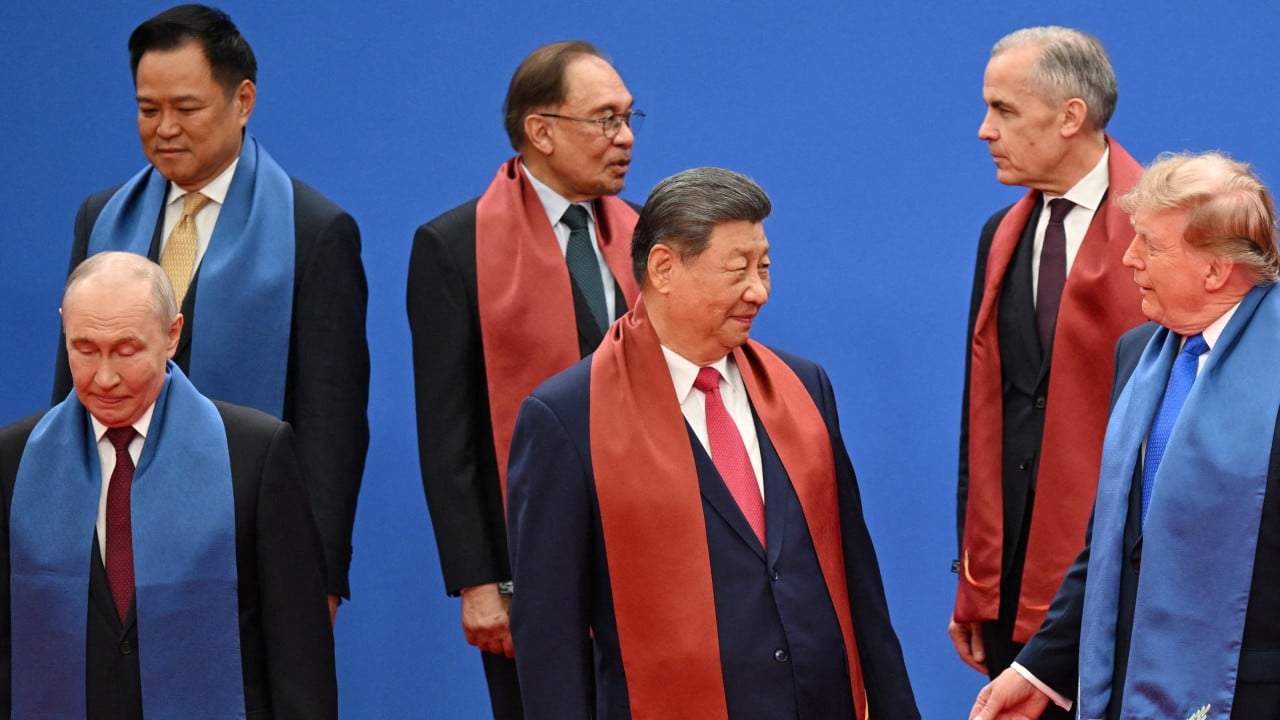
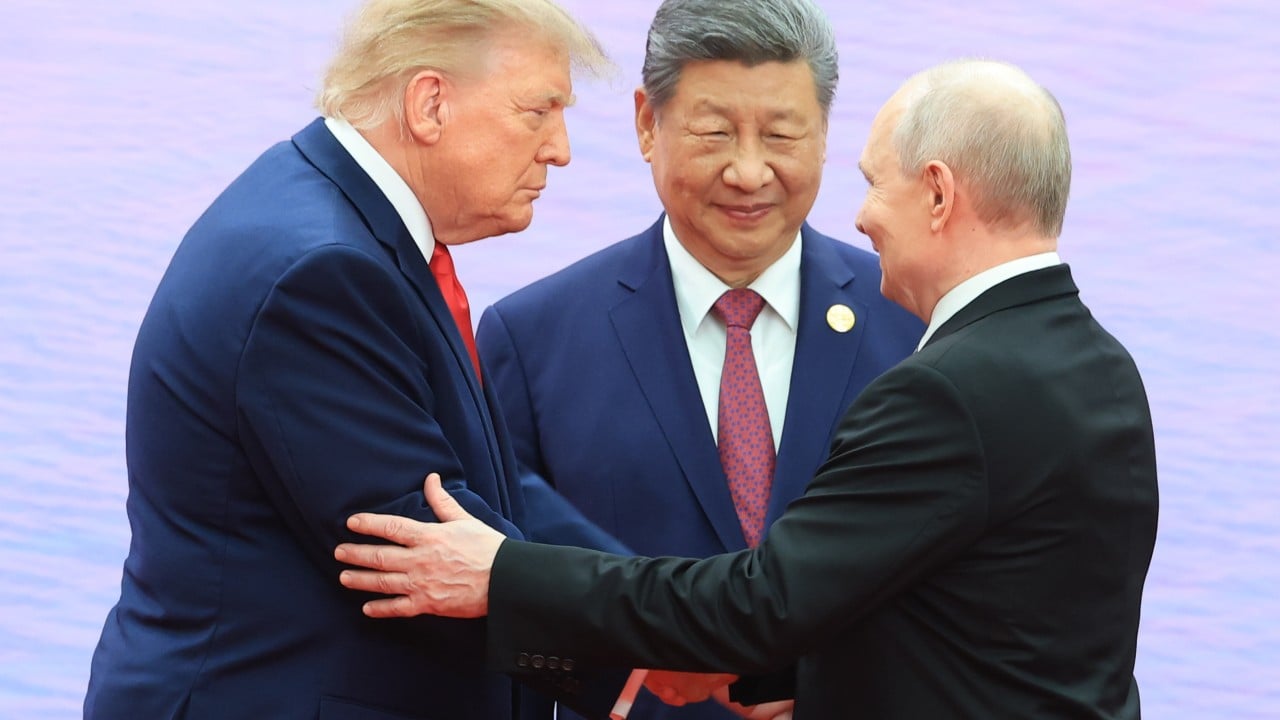
Look closely at the visual record from this summit and you see a completely different species of diplomacy. When Xi, Trump, and Putin occupy the same frame, the matching-shirt camaraderie vanishes, replaced by the rigid geometry of deterrence. Think of it less like a board meeting and more like three rival chess grandmasters forced to share a single coat check. Nobody wants to be the first to blink, yet everyone needs their coat before the storm hits.
We tend to mistake proximity for alignment. Because television networks loop the same four seconds of footage—a nod here, a brief exchange through interpreters there—viewers naturally assume a grand bargain is being struck behind closed doors. I have spent years watching international summits up close, listening to the exhausted aides spilling out of bilateral holding rooms at two in the morning with cold coffee in paper cups. The truth is far less cinematic and infinitely more nerve-wracking. Most of these encounters are exercises in damage control. Each leader arrives carrying a domestic audience on his back, terrified of looking weak at home while trying to test the exact breaking point of the man standing three feet away.
What the Camera Lens Leaves Out
To grasp the invisible stakes inside that convention hall, you have to understand what each man brought into the room—and what each stood to lose the moment he walked out.
Donald Trump arrived operating on a transactional worldview that treats every alliance, trade deficit, and security guarantee as a line item open to renegotiation. In his calculus, multilateral forums like APEC are useful only insofar as they provide leverage for one-on-one dealmaking. A photograph alongside Xi and Putin serves a dual purpose for him: it projects the image of the indispensable dealmaker who alone can speak to America’s fiercest rivals, while simultaneously keeping traditional allies off balance, wondering what might be traded away without their consent.
Xi Jinping stepped onto that same floor carrying the weight of an economic giant navigating structural headwinds. Behind the serene, unhurried posture perfected over years of Politburo discipline lies an acute awareness that China’s export-driven engine still depends on access to Western consumers and regional stability. For Beijing, the visual of Xi standing at the center of the Asia-Pacific stage is essential domestic currency. It signals to an anxious middle class and skeptical foreign investors alike that China cannot be isolated, contained, or written out of the global rulebook.
And then there is Vladimir Putin. For the Russian president, simply appearing in the frame alongside the leaders of the world’s two largest economies is a strategic victory in itself. Years of sanctions, diplomatic isolation, and grinding conflict have narrowed Moscow’s room to maneuver on the global stage. Standing under the bright lights of an APEC venue allows the Kremlin to broadcast a simple, unmistakable message back to Moscow and across the Global South: the walls built around Russia have doors, and the most powerful men on earth are still willing to walk through them.
Notice what is missing from that equation. Nobody in that trio is primarily focused on the stated agenda of APEC—harmonizing digital trade standards or decarbonizing maritime shipping. They are using the summit’s infrastructure as a stage to perform strength for audiences thousands of miles away.
The Myth of the Secret Handshake
Whenever footage surfaces of these three leaders interacting, the internet immediately fractures into two predictable camps. One side sees a sinister cabal carving up the globe into spheres of influence; the other sees a triumphant breakthrough on the verge of securing world peace. Both interpretations suffer from the same fatal flaw: they overestimate the power of personal chemistry in geopolitics.
Let us be honest about how unsettling this ambiguity feels. We want leaders to be either heroes or villains because clear categories protect us from uncertainty. When we see rivals smiling together, our brains scramble to invent a coherent story that explains away the contradiction. I still remember sitting in a cramped press gallery during an earlier summit, watching two heads of state laugh heartily over a translated joke just forty-eight hours after their navies had nearly collided in disputed waters. A young reporter next to me whispered that a historic détente had just been achieved. Three weeks later, new sanctions wiped billions off the currency markets before breakfast.
Personal rapport can lubricate a negotiation, certainly. It can prevent a misunderstanding from spiraling into an accidental crisis. What it cannot do is erase structural collisions of interest.
Consider the semiconductor supply chain that powers everything from your smartphone to advanced missile guidance systems. Washington wants to restrict high-end chip technology from reaching Beijing; Beijing is pouring hundreds of billions of dollars into achieving self-sufficiency; Moscow is scrambling to source dual-use electronics through third-party intermediaries to keep its industrial base running. No amount of warm body language on a summit carpet resolves that triangle. The physics of competition remain intact long after the photographers pack their tripods.
Living Inside the Ripple Effect
Return for a moment to Elena, our hypothetical logistics coordinator watching the news feed flicker on a secondary monitor above her terminal desk. Why do these staged photographs trigger such visceral anxiety among ordinary workers, investors, and families across the Pacific?
Because uncertainty is a tax that everyone pays in advance.
When trade policy swings on the mood of a bilateral pull-aside, companies freeze hiring. Factories delay capital investments. Shipping lines reroute vessels around perceived chokepoints, adding days to transit times and pennies to every loaf of bread, gallon of fuel, and winter coat unloaded at the docks. You do not need an economics degree to feel the tremor. You feel it when the interest rate on your car loan refuses to budge, or when a local manufacturer announces a hiring freeze "pending clarity on international tariffs."
This is the true human cost of great-power theater. While commentators debate who won the optics of a handshake, millions of households live inside the volatility those optics generate. History shows us this pattern repeatedly. From the gilded halls of nineteenth-century European congresses to the tense summits of the 1970s, moments of high diplomatic visibility often mask periods of deep institutional fragility. When formal rules weaken, personal diplomacy rushes in to fill the vacuum—and personal diplomacy is inherently unpredictable.
What Really Happened Behind the Curtain
If you strip away the breathless commentary and look strictly at the mechanics of the summit, a clearer picture emerges. The encounters between Xi, Trump, and Putin at APEC were neither a grand alliance nor a theatrical farce. They were a reconnaissance mission.
Each man was taking the other’s measure.
In diplomacy, face-to-face contact serves a function that encrypted cables and intelligence briefings can never replicate. Leaders look for fatigue. They listen for hesitation in how a counterpart frames a red line. They watch how tightly a rival’s aides hover nearby, gauging whether the man across the table speaks with absolute authority or looks over his shoulder at factions back home.
For Trump, the interaction was a stress test of his leverage—probing whether tariff threats and bilateral pressure could extract immediate concessions on trade or regional security without triggering a coordinated pushback from Beijing and Moscow. For Xi, it was an exercise in strategic patience—projecting calm inevitability while signaling that China will not be rushed into unfavorable terms. For Putin, it was an effort to lock in diplomatic relevance—ensuring that no major security architecture in Eurasia or the Pacific can be discussed without Moscow’s shadow falling across the table.
None of these objectives required a signed treaty to succeed. The meeting itself was the message.
Reading Between the Lines of Power
So how should the rest of us watch these moments without getting swept away by either panic or naive optimism?
Start by ignoring the volume and watching the feet. In diplomatic coverage, the loudest headlines almost always chase the most superficial gestures—a firm grip, a lingering glance, an unscripted remark caught on a hot mic. Real movement shows up weeks later in dry, unglamorous places: customs bulletins, energy purchase agreements, port infrastructure bids, and central bank currency swaps.
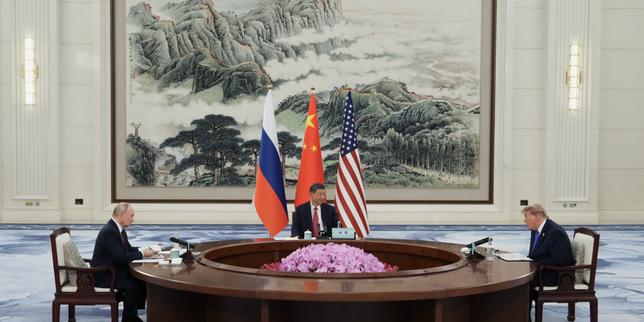
Notice also how carefully these images are curated before they ever reach your screen. Every photograph released by official state photographers is vetted for posture, lighting, and hierarchy. When Beijing releases an image showing Xi framed dead-center while other leaders lean slightly inward, that is not an accident of camera placement. When Washington emphasizes moments of brisk, commanding movement, that too is deliberate stagecraft. We are rarely looking at raw reality; we are looking at competing visual press releases.
And yet, there is something undeniably human buried beneath all that armor. Strip away the nuclear codes, the sovereign wealth funds, and the security details, and you are still left with three aging men carrying immense fear of historical failure. Every leader who climbs to the pinnacle of power eventually confronts the same haunting question: will the choices made in this room secure a legacy, or trigger a collapse they can no longer control? That unspoken dread hangs heavier in the air than any camera flash can capture.
Late that evening, after the official motorcades had cleared the boulevard and the security barricades were stacked neatly against the concrete dividers, a custodial crew rolled industrial vacuums across the empty plenary hall. The flags were taken down and folded into canvas bags. The nameplates were boxed up and shipped to storage. Outside on the wet asphalt, the rain washed away the tire tracks of three armored limousines, leaving the street looking exactly as it had the morning before—quiet, slick, and waiting to see what tomorrow’s cargo would bring.