Two drone strikes in six days hit the exact same glass-and-steel skyscraper in the heart of Saudi Arabia's capital. Eleven people went to the hospital, shattered glass rained down onto the King Abdullah Financial District, and global investors suddenly started asking a very uncomfortable question about Gulf security.
Most news outlets covered the November 2026 attacks on Riyadh's Public Investment Fund (PIF) Tower as just another flare-up in a long regional conflict. They're missing the bigger story. Hitting the 1,263-foot headquarters of Saudi Arabia's sovereign wealth fund isn't random collateral damage. It's a calculated strike right at the financial nerve center of Crown Prince Mohammed bin Salman's entire economic transformation.
What Actually Happened at the PIF Tower
Let's strip away the cable news noise and look at the confirmed facts on the ground.
On November 19, 2026, a suspected Houthi aerial attack struck the PIF Tower in Riyadh's King Abdullah Financial District (KAFD). That first hit damaged several floors about halfway up the building's facade and shattered windows on two neighboring structures, though nobody was hurt. Five days later, on Tuesday, November 24, a second drone struck the exact same tower.
This time, people weren't so lucky. Saudi Arabia's Civil Defense confirmed that 11 people suffered injuries in the Tuesday attack. The wounded included two Saudi citizens alongside nine expatriate workers—four Egyptians, three Nepalis, and two Indians. Coalition spokesperson Turki al-Maliki immediately labeled the strike a "cowardly terrorist attack" and launched an on-site investigation.
Interestingly, while Yemen's Houthi forces quickly claimed responsibility for the November 19 strike, they stayed unusually quiet immediately after the November 24 follow-up. Still, Saudi defense officials and international analysts pointed directly at the Iran-backed group. Photos released by Saudi Civil Defense showed scorched paneling and blown-out glass roughly midway up the 80-story structure.
Why This Specific Skyscraper Matters So Much
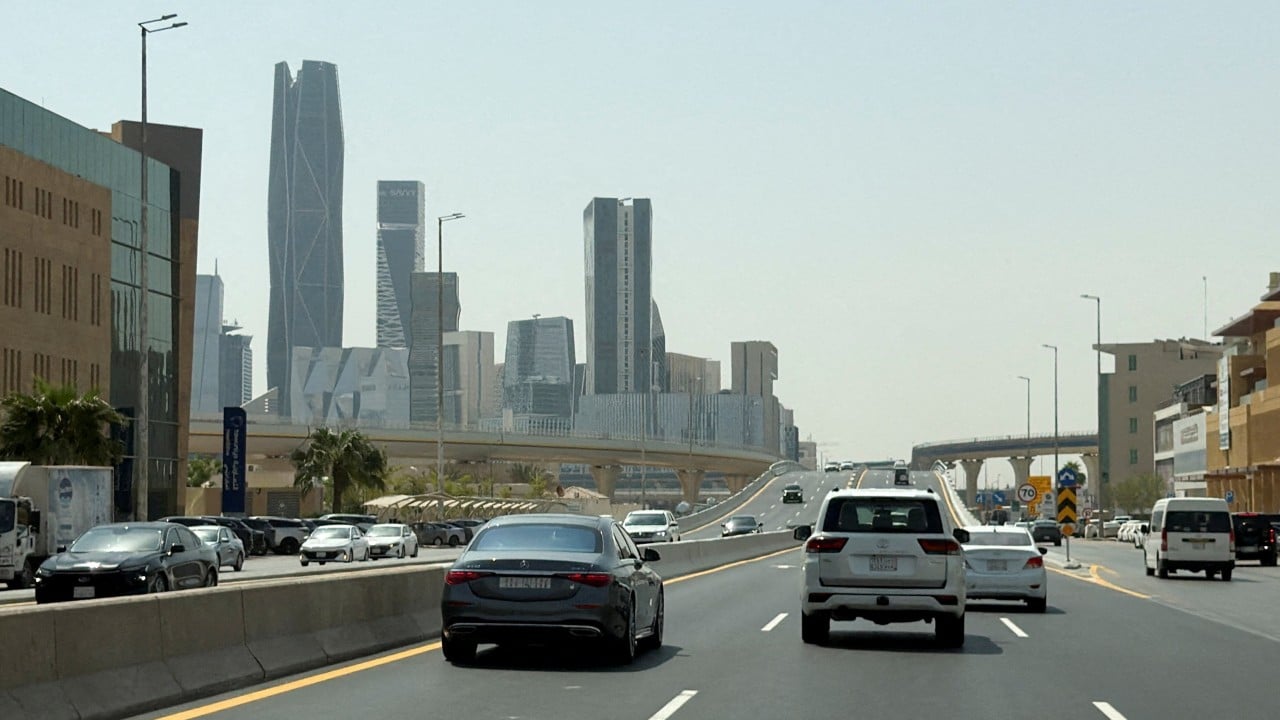
If you've ever walked through the King Abdullah Financial District in northern Riyadh, you know the PIF Tower isn't just another office building. Standing at 385 meters, it dominates the city skyline. More importantly, it's the physical symbol of Saudi Arabia's post-oil future.
The Public Investment Fund manages hundreds of billions of dollars in state assets. Everything from mega-projects like NEOM to global sports acquisitions, tech investments, and domestic infrastructure flows through the executives working inside that glass tower. When you target the PIF headquarters, you aren't firing at a military barracks in the desert. You're sending a message straight to the foreign bankers, consultants, and tech founders Riyadh has spent years trying to lure away from London, New York, and Dubai.
Honestly, the timing couldn't be worse for Saudi planners. A major attack on Riyadh's King Khalid International Airport had already forced a two-week suspension of flights. High-profile gatherings—including the flagship Future Investment Initiative conference, widely known as "Davos in the desert"—were canceled amid the deteriorating security situation. Hitting the PIF Tower twice in less than a week proves the airport strike wasn't an isolated breach.
How Yemen's Frozen War Boiled Over Again
To understand why drones are hitting skyscrapers in Riyadh in late 2026, you have to look at what happened four months earlier.
For roughly four years, a fragile 2022 ceasefire kept major cross-border attacks between the Houthis and Saudi Arabia mostly quiet. That truce collapsed in July 2026 as spillover from the broader US-Iran war reignited Yemen's frozen civil war. Once that lid blew off, the battlefield dynamics shifted fast.
Inside Yemen, Houthi fighters made aggressive territorial gains in mid-November, forcing Saudi-backed Yemeni government forces to pull back from key positions along the Red Sea coast. With momentum on their side locally, the Houthis expanded their long-range strike campaign deep into Saudi territory.
The escalation quickly turned into a brutal tit-for-tat cycle:
- November 16: Saudi Arabia replaced its coalition commander as Houthi forces pushed forward on the ground in Yemen.
- November 19: The first strike hit the PIF Tower in Riyadh, damaging the exterior without casualties.
- November 20: Saudi-led coalition aircraft bombed targets in Hodeidah while the Houthis threatened Jeddah and other Red Sea ports.
- November 24: The second drone hit the PIF Tower, injuring 11 people. That same day, local officials in Yemen's Lahj province reported that a coalition airstrike on buses and trucks killed 26 people, while Britain rolled out fresh sanctions against the Houthis and four senior officials.
It's a classic asymmetric trap. Cheap, long-range drones cost a fraction of the multi-million-dollar interceptor missiles required to shoot them down. Even when air defenses catch ninety percent of incoming threats, the ten percent that slip through generate global headlines and rattle corporate boardrooms.
The Real Economic Fallout for Riyadh
Some defense commentators argue that broken windows halfway up a skyscraper don't change the military balance on the ground. Technically, they're right. The PIF's digital servers, sovereign accounts, and global portfolios aren't sitting on a single desk waiting to be destroyed by a small warhead.
That misses how global capital actually behaves.
International corporations don't make relocation decisions based on military spreadsheets. They make them based on corporate liability, insurance premiums, and whether their executives feel safe taking an elevator to the fortieth floor. Under Saudi Arabia's Regional Headquarters (RHQ) program, Riyadh pushed multinational firms hard to move their Middle East management hubs into KAFD and surrounding districts.
Now put yourself in the shoes of a chief risk officer in Zurich or Singapore. You're watching footage of shattered glass falling onto the plaza outside Riyadh's premier financial tower. Your commercial flights into King Khalid International Airport were just disrupted for two weeks. Major investor summits are getting scrubbed off the calendar. You don't panic and pull out overnight, sure—Saudi contracts are far too lucrative for that. Instead, you quietly pause new staff transfers, hike hardship pay, and keep key decision-makers stationed in Dubai or London a little longer.
And it's not just Saudi Arabia feeling the heat. Around the same time, Bahrain's Interior Ministry reported that an attack hit a civilian industrial facility there, sparking a fire and injuring two workers. Across the Gulf, energy infrastructure, shipping lanes, and urban business districts are all pricing in higher geopolitical risk.
What You Should Watch Next if You Track Gulf Markets
If you're an investor, regional analyst, or business operator with exposure to the Middle East, don't get distracted by daily social media rumors about building collapses or exaggerated casualty counts. Stick to concrete indicators that show whether this crisis is stabilizing or spiraling.
First, track aviation and conference schedules in Riyadh. Commercial flight reliability at King Khalid International Airport and the rescheduling of canceled financial summits will tell you way more about real security confidence than official press releases.
Second, watch Red Sea port activity around Hodeidah and Jeddah. The Houthis have explicitly threatened Saudi Red Sea ports following coalition strikes in Yemen. Any disruption to Jeddah's container terminals or maritime insurance rates will hit regional supply chains immediately.
Third, pay close attention to diplomatic backchannels between Riyadh, Washington, and Tehran. Because the July 2026 breakdown in Yemen stemmed directly from the wider US-Iran conflict, Saudi Arabia can't solve its drone problem purely through airstrikes in Yemen. Until regional de-escalation cools the broader confrontation, high-profile buildings in Riyadh will remain prime psychological targets.
Check the Firstpost coverage of the PIF Tower damage to see visual reporting on the exterior impact and shattered windows across the skyscraper's upper floors.