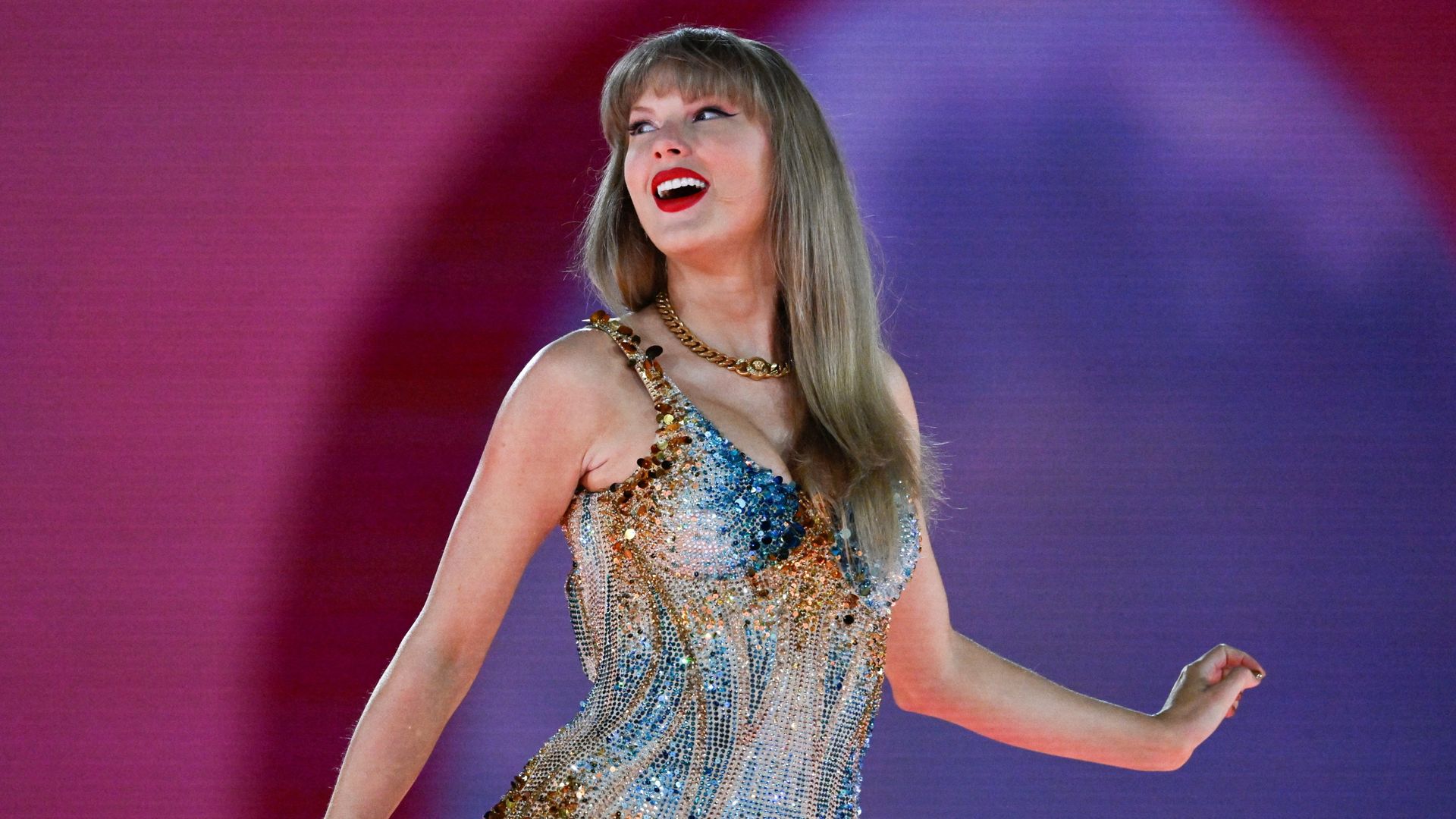
The headlines are vibrating with the "bold" news that Taylor Swift has filed to trademark her voice and image. The media is currently tripping over itself to frame this as a heroic stance for artist rights in the age of AI. They’ll tell you this is a defensive maneuver against deepfakes and unauthorized digital clones.
They are wrong. Meanwhile, you can read related stories here: The Myth of the Fallen Star and the Systemic Failure of Cultural Deification.
This isn't a shield; it’s a land grab. If you think this is about preventing a few weird AI covers on TikTok, you are fundamentally misunderstanding the mechanics of intellectual property and the endgame of the modern celebrity machine. Swift isn’t protecting her art. She is commodifying the very concept of a human likeness in a way that should terrify anyone who values a free and open culture.
The Myth of the Vulnerable Megastar
The "lazy consensus" suggests that Taylor Swift is a victim of technological progress, forced to use the legal system to keep her identity from being scavenged by silicon valley vultures. To see the full picture, we recommend the recent analysis by Vanity Fair.
Let’s look at the reality of the legal landscape. We already have right of publicity laws. We already have the Lanham Act. We already have common law protections against "passing off." If someone uses Swift’s voice to sell diet pills, she can already sue them into the stone age. She has the best lawyers on the planet. She isn't vulnerable.
So why the trademark? Because a trademark isn't about "protection." It’s about exclusive commercial control.
By moving into trademark territory, she is attempting to move the goalposts from "don't use my face to lie to people" to "I own the aesthetic frequency of my own existence." Trademarks, unlike copyrights, can be renewed indefinitely. This is a bid for eternal ownership of a brand that just happens to be a person.
The Death of Fair Use and Parody
When you treat a human voice as a registered trademark, you create a massive chilling effect on creative expression.
Think about how trademark law works compared to copyright. Copyright has a (theoretically) robust framework for fair use. You can critique a song. You can parody a lyric. But trademark law is a bludgeon. It’s designed to prevent "consumer confusion."
- The Scenario: A satirist creates a digital avatar that sounds like Swift to comment on the absurdity of billionaire carbon footprints.
- The Result: Under a trademark regime, Swift’s legal team doesn't have to prove the work isn't "transformative." They just have to argue it dilutes the brand or creates confusion in the marketplace.
By trademarking her "likeness," she is effectively trying to bypass the First Amendment protections that usually apply to public figures. She is trying to turn herself into a logo. And you can't "parody" a logo if the logo owner decides it hurts their quarterly earnings.
The Fallacy of Artist Rights
We love to root for the artist against the machine. But Taylor Swift is the machine.
When a multi-billion-dollar entity files for these kinds of expansive rights, it isn't a win for the indie musician in their bedroom. It’s the opposite. It sets a legal precedent that only the wealthiest 0.001% can afford to enforce.
I’ve seen the way intellectual property creep works in the music industry. It starts with "protecting the stars" and ends with patent trolls and major labels suing teenagers for using a specific vocal fry. If Swift successfully trademarks the "sound" of her voice, where does that leave the thousands of singers who naturally share that register?
We are heading toward a future where "sounding like Taylor" isn't a stylistic choice—it’s a licensing fee.
The AI Boogeyman is a Distraction
The common argument is: "But what about the AI clones?"
Yes, AI can mimic a voice. But we are solving a social and technological problem with a legal sledgehammer that ruins the garden for everyone. The industry wants you to be scared of the "AI threat" so you’ll agree to these massive expansions of corporate power.
The real intent here isn't to stop the clones; it’s to own the clones.
Swift isn't trying to stop a digital version of herself from existing. She’s making sure that when the inevitable "Taylor AI" lifestyle app launches, she has a global monopoly on the very idea of a digital human. It’s not about authenticity. It’s about the total enclosure of the digital commons.
The Dangerous Precedent of Persona-as-Property
If we accept that a voice—a biological function—is a trademarkable asset, we are fundamentally changing what it means to be a person in public life.
Why this is a losing game for culture:
- Vocal Homogenization: Young artists will be coached to avoid certain "trademarked" inflections to stay clear of litigation.
- The End of the Tribute: The line between a "tribute act" and "trademark infringement" becomes dangerously thin.
- Algorithmic Erasure: Platforms will use automated tools to scrub anything that sounds too much like a "protected" voice, leading to the accidental deletion of original artists who just happen to sound like the trademark holder.
This is Not About You, and It’s Not About Art
The most annoying part of this discourse is the framing of this as a "win for women" or a "win for creators."
Stop.
This is a win for the estate planners. This is a win for the equity firms that will eventually buy these trademarks. This is a win for the lawyers who get to bill thousands of hours defining exactly how many hertz wide a "Swiftian" vocal signature is.
Every time we allow a celebrity to claim ownership over a piece of the human experience—like a voice, a face, or a "vibe"—the public domain shrinks. We are trading our collective cultural heritage for the benefit of one person’s portfolio.
The Actionable Truth
If you are a creator, do not celebrate this. Do not see this as a template for your own career. You will never have the capital to defend your "voice trademark" against a corporation.
The move here isn't to follow Swift into the courtroom. The move is to demand a separation of "identity" and "trademark." We need to protect people from fraud without giving them a permanent monopoly on their own biological traits.
Swift’s legal team is playing a high-stakes game of Monopoly, and the board is our digital future. If she wins, she doesn't just own her voice. She owns the right to tell you that yours sounds too much like hers.
The "Old Taylor" can't come to the phone right now, and if she does, you’d better hope you didn't trademark the ringtone.