Florida Representative Frederica Wilson will not seek re-election to the House, concluding a 15-year career in Washington that turned her into one of the most recognizable, unapologetic figures in the Democratic caucus. The 83-year-old lawmaker confirmed her retirement following weeks of intense speculation fueled by missed votes and a highly scrutinized redistricting battle. While her departure is framed as a traditional passing of the torch, it actually represents a calculated retreat in the face of aggressive Republican gerrymandering and a relentless generational shift within her own party.
Her exit leaves Florida's 24th Congressional District open for the first time in a generation, triggering an immediate and fierce scramble among local Democrats who have quietly prepared for this moment for years.
The Calculation Behind the Cowboy Hats
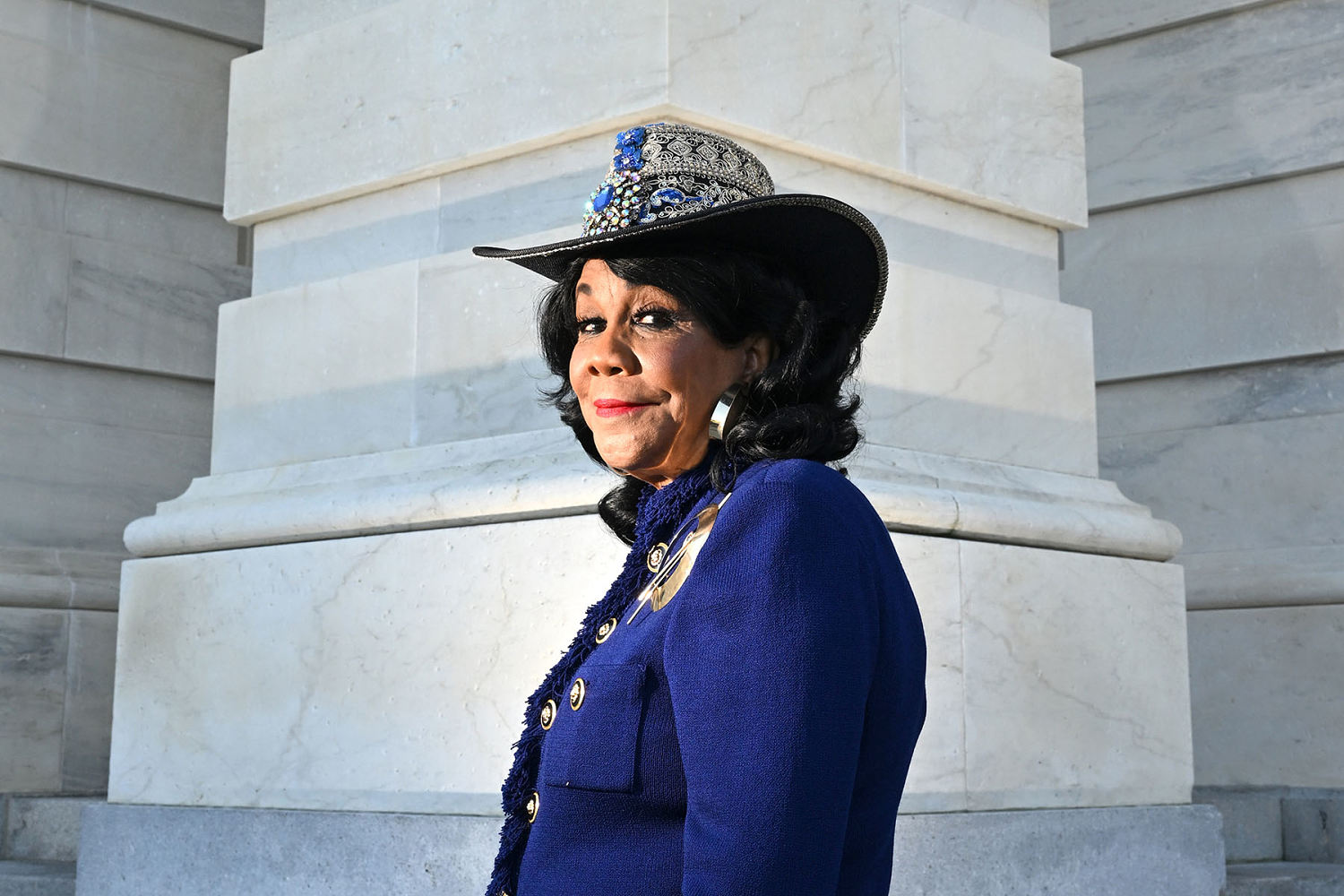
To the casual observer, Frederica Wilson was defined by her sprawling collection of custom cowboy hats and her fierce rhetorical battles, most notably her 2017 clash with Trump administration officials over the treatment of a gold star family. But beneath the sartorial flair was a cold, calculated approach to regional power dynamics.
Wilson did not just survive in South Florida politics. She dominated.
Before arriving in Washington in 2011, she climbed through the ranks of the Miami-Dade school system as a principal, later leveraging that base into successful runs for both the Florida House and Senate. Her signature achievement, the 5,000 Role Models of Excellence Project, became a powerful institutional vehicle that provided mentorship to thousands of young men of color while cementing her ironclad loyalty among Black voters in Miami-Dade County.
Yet, the institutional armor began to show fractures this spring. Data from GovTrack revealed that Wilson missed 59 legislative votes across April and May, accounting for over 71% of the votes cast during that window. Her office quickly blamed the absences on a necessary recovery period following surgery on her left eye, but the damage to her political baseline was already done. In a narrowly divided House, extended absences by aging lawmakers instantly invite internal party anxiety and quiet maneuvering by ambitious successors.
The numbers simply caught up with the calendar. At 83, Wilson was the oldest member of Florida's congressional delegation, occupying a seat that requires regular cross-country travel and constant fundraising prowess.
Weaponized Geography and the DeSantis Map
While health issues provided the immediate catalyst, the structural reason for Wilson's retirement lies in Tallahassee. Governor Ron DeSantis and the Republican-controlled Florida legislature engineered a sweeping overhaul of the state's congressional boundaries, explicitly designed to maximize GOP gains while disorienting incumbent Democrats.
The redrawn 24th District remains a Democratic stronghold on paper, favoring Kamala Harris with over 68% of the vote in the 2024 presidential cycle. Wilson herself secured her last term with a comfortable 68.2% margin over her Republican challenger. But the actual geography of the district underwent a radical, hostile transformation.
Historically, the 24th District hugged the Atlantic coast, stretching from the working-class inland neighborhoods of Miramar and Miami Gardens out to the affluent, politically active coastal strips of Aventura and Miami Beach. The new boundaries completely stripped away the coastal territory. Instead, the district was pushed entirely inland, reaching deep into Broward County to absorb unfamiliar portions of Hollywood and Pembroke Pines.
Wilson herself admitted that she intentionally delayed her retirement announcement as a matter of raw political defense. She feared that if she signaled her exit before the maps were legally finalized, Republican cartographers would view an open 24th District as a defenseless target, slicing it up even further to dilute Black voting strength. By remaining a declared, formidable candidate until the lines were locked, she acted as a human shield for the seat.
The tactical maneuver worked to preserve the district's demographic makeup—it remains 47.7% Black and 40.9% Hispanic—but it left Wilson facing a grueling campaign in suburban territory where she had never previously built a ground game or courted donors. For an octogenarian lawmaker recovering from surgery, the prospect of spending a summer introducing herself to hundreds of thousands of new constituents in Broward County proved to be the breaking point.
The Backroom Scramble for Succession
Wilson’s retirement immediately exposes the fragile nature of the Democratic infrastructure in Florida, a state where the party has suffered catastrophic systemic losses over the last decade. Because the 24th District remains overwhelmingly safe for Democrats in November, the upcoming primary election is the actual contest for the seat.
The modern reality of safe seats means that succession plans are rarely peaceful. They are corporate takeovers executed through local political machines.
Two prominent Florida Democrats have already positioned themselves to fill the vacuum. State Senator Shevrin Jones, a prominent voice within the state party, sent shockwaves through Tallahassee by abruptly announcing he would not seek another term in the state legislature, explicitly hinting that a new chapter of public service was imminent. Joining him in the shadow primary is Miami-Dade County Commissioner Oliver Gilbert, another heavyweight with deep institutional ties to the district’s core voting blocs.
- The Funding Dilemma: A primary battle between institutional insiders like Jones and Gilbert will drain millions of dollars from local progressive donors, money that national Democratic committees desperately need to protect vulnerable incumbents elsewhere.
- The Endorsement Standoff: Wilson has pointedly declined to endorse a successor. By withholding her blessing, she maintains her relevance as a kingmaker, forcing the competing factions to publicly court her machine while privately dividing the local electorate along generational and geographic lines.
The Broader Crisis of the Democratic Gerontocracy
Wilson's exit is not an isolated incident of a long-serving public servant choosing a quiet retirement. It is part of a broader, systemic liquidation of the post-civil rights generation of Black leadership in the United States capital.
For decades, the seniority system in Congress allowed Black lawmakers from safe, urban districts to accumulate immense institutional power, eventually rising to chair powerful committees when Democrats held the majority. Wilson chaired the House Education Committee’s subcommittee on Health, Employment, Labor, and Pensions, using the perch to direct federal dollars back to South Florida's infrastructure and social programs.
But when these iconic figures retire or face health crises, that concentrated institutional capital vanishes instantly. The incoming freshmen, regardless of their talent, start at the bottom of the seniority ladder, reducing the region’s leverage in high-stakes budget negotiations.
The national party faces an acute dilemma. It must balance deep respect for the trailblazers who built the modern party coalition with the stark mathematical reality that an aging bench is highly vulnerable to sudden disruption. Wilson’s retirement makes her the fifth U.S. Representative from Florida to announce their departure this cycle, forcing a total reorganization of the state's federal representation during a period of acute national polarization.
The era of the untouchable urban incumbent is drawing to a close, accelerated by targeted partisan redistricting and the simple, unyielding passage of time. Wilson’s exit proves that even the most deeply entrenched political figures cannot outrun the mapmakers or the calendar indefinitely.