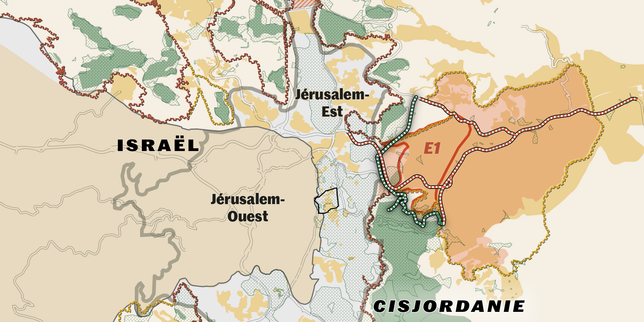
The political discourse surrounding the current Israeli governing coalition frequently relies on broad ideological labels to describe policy shifts in the West Bank. To understand the operational reality, one must move past rhetorical framing and analyze the specific institutional, legal, and economic mechanisms driving policy. The assertion that the current administration aims for full annexation and the establishment of a regime based on legal asymmetry is not merely a political claim; it is an operational strategy that can be mapped through three distinct structural pillars: administrative reallocation, budgetary prioritization, and the codification of dual legal tracks.
By examining these vectors, we can separate rhetorical posturing from structural shifts. This analysis deconstructs the mechanics of this transformation, assesses the strategic bottlenecks the coalition faces, and maps the long-term institutional outcomes. Discover more on a related topic: this related article.
The Three Pillars of De Facto Institutional Shift
The transformation of the West Bank’s administrative status does not require a formal, singular declaration of sovereignty. Instead, it operates through a triad of structural reallocations that permanently alter the governance framework of the territory.
1. The Administrative Vector: Reallocating Power
Historically, the West Bank (designated as Judea and Samaria within Israeli administrative structures) has been governed through the Ministry of Defense via the Coordinator of Government Activities in the Territories (COGAT) and the Civil Administration. This structure maintained the legal framework of belligerent occupation under international law, concentrated authority under the military commander, and preserved a theoretical separation between sovereign Israeli territory and the administered zone. Further analysis by USA Today delves into related perspectives on this issue.
The current strategy dismantles this military-civilian separation through a specific institutional mechanism: the creation of the Settlement Administration within the Ministry of Defense, placed under civilian ministerial control.
This structural shift produces three immediate operational outcomes:
- Civilianization of Authority: Direct powers over zoning, building permits, and infrastructure planning for Israeli citizens in the West Bank have been transferred from the military chain of command to civilian-led administrative bodies.
- Bypassing the Military Commander: By shifting decision-making from the IDF Central Command to a civilian minister, the state treats the territory not as an occupied zone under temporary military administration, but as an extension of domestic civilian ministries.
- Institutional Bifurcation: The Civil Administration's duties have been split. Issues affecting Israeli settlers are integrated into standard domestic bureaucratic pipelines, while governance affecting the Palestinian population remains under military-administrative oversight.
2. The Fiscal Vector: Resource Asymmetry as Policy
An ideological objective requires capital to achieve permanence. The fiscal mechanism relies on asymmetric resource allocation designed to alter demographics and land-use patterns fundamentally. This is executed through targeted budgetary mechanisms within the national budget and coalition agreements.
[National Budget Allocation]
       │
       ├─► Sovereign Israel (Standard Municipal Appropriations)
       │
       └─► Settlement Administration (West Bank Infrastructure Pipeline)
                 │
                 ├─► Bypass Roads & Transit Corridors (High-Speed Integration)
                 ├─► Dual-Use Security-Civilian Infrastructure
                 └─► Asymmetric Zoning Capital (Zone C Optimization)
The cost function of this strategy involves prioritizing infrastructure that integrates the West Bank directly into the Israeli metropolitan core. Budgetary outlays focus heavily on bypass roads, high-speed transportation corridors, and utility grid integration. This serves a dual purpose: it reduces the geographical and psychological distance for commuters moving between the West Bank and major economic centers like Tel Aviv or Jerusalem, and it physically fragments Palestinian contiguous space, limiting the growth potential of localized Palestinian economies.
3. The Legal Vector: The Codification of Asymmetry
The core structural critique of the coalition's policy centers on the formalization of a dual legal regime within the same geographic territory. This is not a static condition but a dynamic process driven by legislative extension and zoning enforcement.
In Zone C—the 60% of the West Bank under full Israeli security and civil control—the legal framework is applied disproportionately. For Israeli citizens, extraterritorial domestic legislation ensures that Israeli criminal, civil, and labor laws apply directly to them, creating a seamless legal experience identical to living in Tel Aviv. For the Palestinian population in the exact same territory, governance is mediated through Jordanian law as amended by military orders.
This dual-track system manifests in highly measurable ways:
- Zoning Approvals: Building permits for Palestinian structures in Zone C face a rejection rate that approaches statistical totality, while master plans for Israeli settlements are systematically expanded.
- Enforcement Actions: Demolition orders for unauthorized Palestinian construction are executed via expedited administrative processes, whereas unauthorized Israeli outpost construction frequently benefits from retroactive legalization mechanisms (such as the market regulation principle).
The Strategic Friction Points and Structural Bottlenecks
While the coalition’s policy pipeline is designed for systematic integration, the strategy faces severe internal and external friction points that limit its velocity and create systemic risks.
International Legal Vulnerability and Sovereign Risk
The primary risk factor for this strategy is the erosion of Israel’s long-standing legal defense in international forums. For decades, the Israeli state argued that its presence in the West Bank was a temporary, sui generis military occupation, which allowed it to navigate the requirements of the Fourth Geneva Convention.
By shifting administrative control to civilian ministries and pursuing permanent legal integration, the state undercuts its own legal defense. The International Court of Justice (ICJ) and the International Criminal Court (ICC) view these structural changes not as temporary security measures, but as a permanent annexation process. This creates a direct bottleneck: every step toward domestic administrative integration increases the probability of international sanctions, legal liability for state officials, and diplomatic isolation.
Economic Strain and Demographic Friction
The fiscal cost of maintaining, securing, and expanding a dual-track infrastructure network is exceptionally high. Securing fragmented enclaves requires an extensive military footprint and continuous capital investment in security infrastructure, such as smart fences, checkpoints, and dedicated security personnel for isolated outposts.
This creates a structural deficit. The capital diverted to subsidize West Bank infrastructure and municipal services is capital removed from sovereign Israel's peripheral regions, such as the Galilee and the Negev. Over time, this misallocation generates domestic political friction, as secular and middle-class taxpayer demographics bear the financial burden of an ideological project that offers them little economic return.
Evaluating the "Single-State" Outcome
The ultimate structural consequence of the coalition's policy is the systematic destruction of the two-state framework. By embedding hundreds of thousands of civilian settlers into the geographic heart of the West Bank and connecting them via permanent infrastructure, the physical capability to draw a coherent border disappears.
This leaves two theoretical long-term institutional equilibriums, both defined by severe instability:
The Asymmetric Non-Democratic Paradigm
If the state successfully completes the administrative and infrastructure integration of the West Bank while permanently denying citizenship and equal civil rights to the Palestinian population, it solidifies a permanent hierarchy. In this scenario, the territory between the Jordan River and the Mediterranean Sea operates under a single sovereign authority, but with two entirely different tiers of human rights based on ethnicity and nationality. This equilibrium satisfies the coalition's ideological goals but faces severe legitimacy crises, guaranteed civil unrest, and inevitable international containment strategies.
The Bi-National Demographic Shift
Conversely, the elimination of a separate Palestinian political entity creates long-term structural pressure toward a single, bi-national state. If partition becomes physically impossible, the Palestinian political strategy will inevitably pivot from a struggle for independence to a struggle for civil rights and franchise within the existing state apparatus.
[Irreversible Infrastructure Integration]
                  │
                  ▼
   [Collapse of Partition Framework]
                  │
                  ▼
     [Shift in Palestinian Strategy]
                  │
        ┌─────────┴─────────┐
        ▼                   ▼
[Demand for Franchise]   [International Pressure]
        │                   │
        └─────────┬─────────┘
                  ▼
  [Erosion of Jewish Majority Framework]
Should international or domestic pressures ever force the granting of equal voting rights to the entire population between the river and the sea, the core concept of Israel as a Jewish state ceases to exist due to demographic parity.
Tactical Reorientation for Analytical Observers
Organizations analyzing this conflict must shift their focus away from high-level political statements and focus instead on the granular, bureaucratic indicators that track actual policy execution.
To accurately measure the rate of de facto annexation, analysts must monitor three specific metrics:
- The Rate of Military-to-Civilian Regulatory Transfers: Track every instance where authority is legally moved from the IDF Commander to the Settlement Administration or domestic Israeli ministries.
- Infrastructure Capital Efficiency: Quantify the ratio of transportation and utility spending in the West Bank versus sovereign Israeli territory, specifically measuring how effectively these projects integrate settlement blocs into coastal economic centers.
- Zoning and Demolition Ratios in Zone C: Maintain a continuous statistical baseline of building permit approvals and demolition executions, broken down strictly by demographic group, to map the precise rate of territorial consolidation.
Only by analyzing these structural variables can observers forecast the trajectory of the region with precision, moving past the emotional noise of the political arena to understand the cold calculus of institutional transformation.