The media loves a tragic, heartwarming narrative.
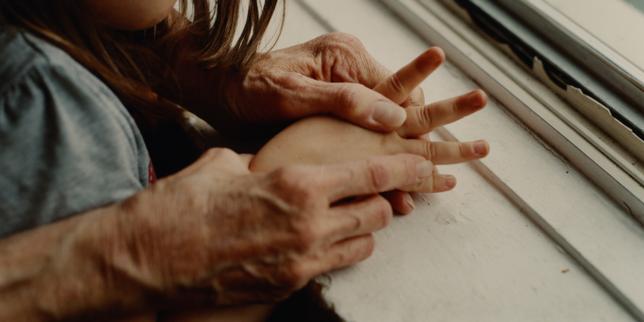
For years, the reporting on the American opioid crisis has followed a predictable script: Appalachian and Rust Belt communities are ravaged by addiction, and out of the ashes rise the "mawmaws"—the gritty, self-sacrificing grandmothers who step in to raise their abandoned grandchildren. They are framed as saints. They are lauded as the ultimate safety net.
This framing is not just lazy. It is actively dangerous.
By romanticizing these grandmothers as heroic matriarchs saving the day, we are masking a catastrophic systemic failure and participating in the optimization of human misery. The "mawmaw" phenomenon is not a heartwarming silver lining to a public health disaster. It is the outsourcing of state failure to an aging, impoverished demographic that is utterly unequipped to break the cycle of multi-generational trauma.
We need to stop celebrating this trend and start recognizing it for what it is: the final, desperate collapse of the American social safety net.
The Structural Lie of the Kinship Care Victory
Major news outlets consistently cover kinship care—grandparents raising grandchildren—as a triumph of family values over bureaucracy. They point to data showing that children placed with relatives experience less placement instability than those tossed into the traditional foster care system.
But this data hides a brutal economic and psychological reality.
When a state child welfare agency places a child in formal foster care with a stranger, that foster parent receives a monthly stipend, medical coverage for the child, and access to heavily subsidized childcare and mental health services. When that same agency drops a child on a grandmother's doorstep under the guise of "kinship care," those financial resources vanish or shrink to a fraction of the size.
State policies actively exploit the unconditional love of grandparents. According to the federal AFCARS (Adoption and Foster Care Analysis and Reporting System) data, over 2.5 million children in the United States are being raised by grandparents or other relatives outside the formal foster care system. The vast majority of these arrangements are informal, meaning the grandparents receive zero state financial assistance.
Imagine a 68-year-old woman living on a fixed Social Security income of $1,400 a month. Suddenly, she is responsible for diapers, formula, clothing, and the intense psychological needs of a toddler suffering from neonatal abstinence syndrome.
Calling this woman a "hero" is a cynical mechanism to avoid paying her. We have created a system that relies on the financial liquidation of senior citizens to keep children out of state custody. It is a predatory strategy disguised as family preservation.
The Myth of the Unblemished Guardian
Here is the uncomfortable truth that nobody in polite media wants to say out loud: addiction does not happen in a vacuum.
The current narrative treats the addicted parents as spontaneous anomalies who somehow went wrong despite being raised by these saintly grandmothers. This flat, one-dimensional psychology ignores everything we know about developmental psychology and the hereditary nature of trauma.
To understand why the "mawmaw" fix is failing, we must look at the concept of Adverse Childhood Experiences (ACEs). The Centers for Disease Control and Prevention (CDC) has established a direct, undeniable link between a high ACE score and substance abuse later in life. If an adult child is deep in the throes of a lethal fentanyl addiction, it is highly probable that their own childhood home was destabilized by poverty, mental health struggles, or domestic chaos.
By blindly handing the next generation back to the exact same environment that produced the addicted parent, we are not rescuing these children. We are resetting the timer on a generational bomb.
I have interviewed child welfare workers in West Virginia and Ohio who admit off the record that they routinely place children with grandparents who have active domestic violence reports or their own history of substance abuse, simply because the local foster system is at 150% capacity. The state lowers its standards to zero for family members because a bad home is cheaper for the county budget than a state-funded group home.
The grandmother is often old, exhausted, and harboring immense guilt over her own child's failure. She is dealing with her own complex PTSD. Expecting her to successfully navigate the severe behavioral and neurological disorders of a child born addicted to synthetic opioids is an exercise in delusion.
The Economic Destruction of the American Senior
Let's look at the cold numbers. The financial toll of this crisis on seniors is catastrophic, yet it is completely absent from the national policy debate.
| Financial Indicator | Standard Senior (Ages 65+) | Senior Raising Grandchildren |
|---|---|---|
| Poverty Rate | ~10.3% | ~25.4% |
| Food Insecurity | Low to Moderate | Exceptionally High |
| Retirement Savings Utilization | Preserved for healthcare | Liquidated for legal/childcare costs |
| Labor Force Participation | Retired/Part-time | Forced return to low-wage labor |
The long-term economic fallout is devastating. Grandparents are raiding their meager 401(k) plans or selling their homes to pay for family lawyers to secure legal custody, fearing that the state will take the children away if they don't.
When a 70-year-old man is forced to go back to work driving an Uber or stocking shelves at Walmart because he suddenly has to buy school clothes for a nine-year-old, that is not an inspiring story of family resilience. It is an economic tragedy. We are systematically impoverishing our elderly population to patch up a hole left by corporate pharmaceutical greed and legislative apathy.
How We Dismantle the Premise
If you ask the average politician how to fix this, they will tell you we need to "support our grandmothers" through community support groups, respite care, or local clothing drives.
This is useless, cosmetic bandaging.
We do not need more support groups where exhausted 70-year-olds cry together in church basements. We need a radical overhaul of how child welfare handles kinship placement. If the state determines that a grandparent's home is the best place for a child, that grandparent must automatically receive the exact same monthly financial compensation, Medicaid coverage, and therapeutic resources as a licensed foster stranger. No exceptions. No bureaucratic hurdles.
Furthermore, we must stop using kinship care as an excuse to defund intensive, long-term rehabilitation programs for parents. The ultimate goal cannot be the permanent outsourcing of parenting to a generation that will be dead before the child reaches adulthood.
The downside to this contrarian view is obvious: it requires an immediate, massive influx of state and federal capital. It forces us to acknowledge that saving these families will cost billions of dollars in direct cash transfers to poor people—a concept that makes fiscal conservatives break out in hives. It also requires us to shatter the comforting illusion that "family love conquers all." It doesn't. Love does not pay for pediatric occupational therapy, and love does not cure a brain rewired by carfentanil.
Stop the Applause
The next time you read an article profiling a brave grandmother in rural Kentucky who is raising four grandchildren on a gravel road, do not look at the photos of her tired, smiling face and feel a warm glow of admiration.
Feel rage.
That woman is being exploited by a system that refuses to hold pharmaceutical companies fully accountable, refuses to fund universal healthcare, and relies on her biological guilt to keep children off the streets. She is not a hero. She is a casualty of a war that America is actively choosing to lose.
Take the cameras out of her face, stop writing your patronizing profiles, and fund the systemic infrastructure required to actually save her grandchildren. Anything less is complicity.