Silence.
That is what hits you first when you stand on the edge of a diplomatic freeze, thousands of miles away from the gilded banquet halls where the fate of borders is traded over crystal glasses and slow-roasted beef. You expect the roar of engines or the static of emergency broadcasts, yet the actual sensation of global instability is a heavy, suffocating quiet that settles into the kitchen of a family waiting for a visa, a ceasefire, or a price drop on heating oil.
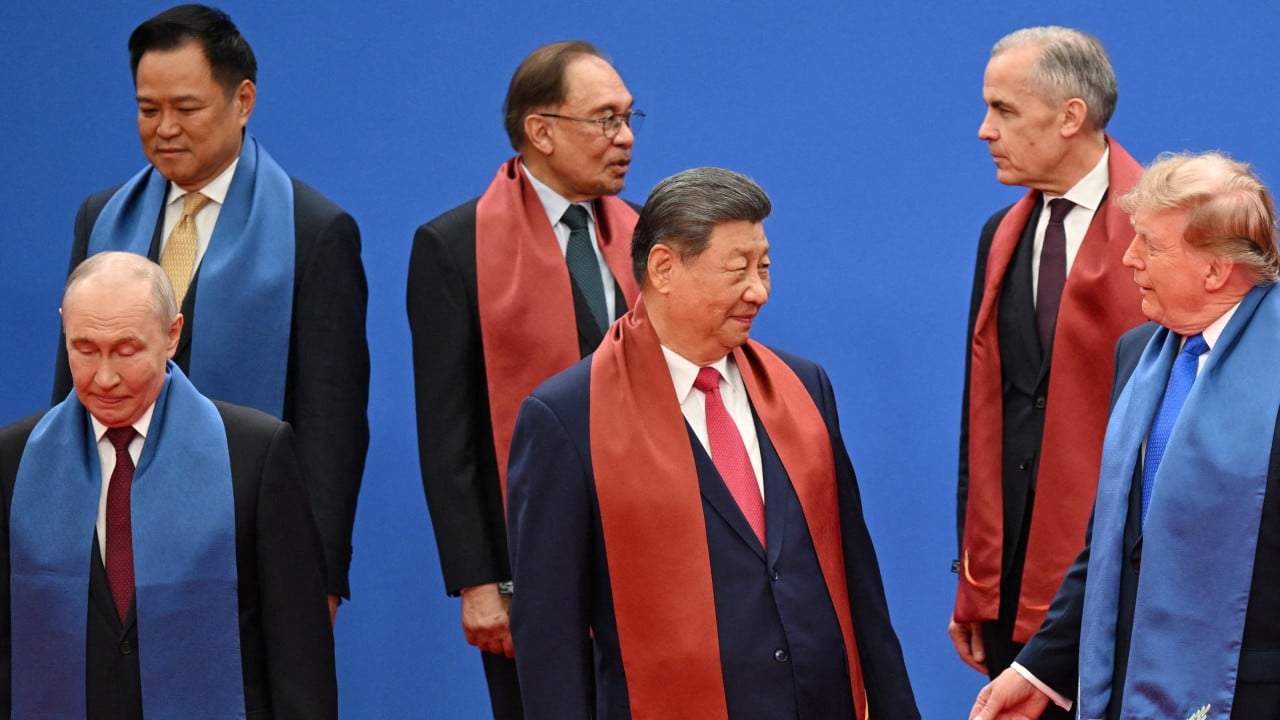
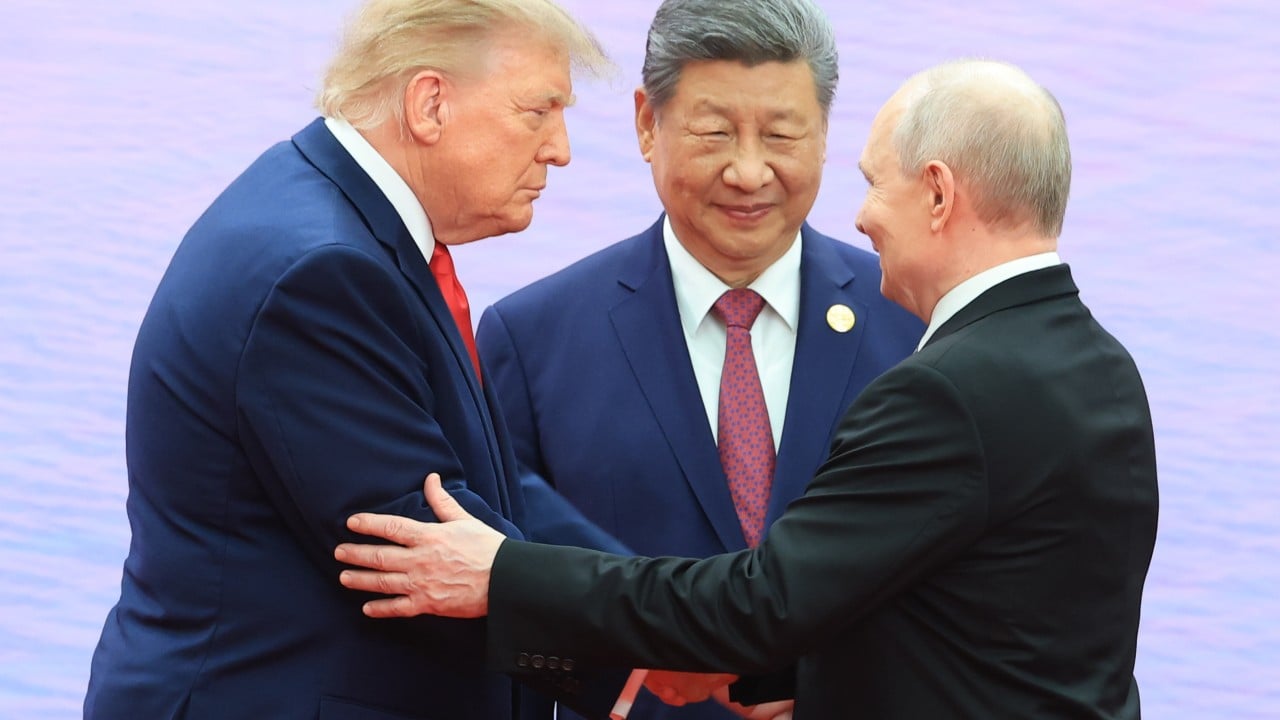
In recent coverage, Daily Mirror US columnist Chris Bucktin framed Donald Trump’s high-profile engagements with authoritarian leaders as a "boys’ day out with his dictator pals" taking place "while the world burns." That characterization captures a sharp, unmistakable critique of contemporary statecraft—one that views personal rapport with strongmen not as strategic pragmatism, but as a casual abandonment of democratic solidarity during a period of acute international crisis. Yet to understand why that image provokes such visceral debate across kitchen tables and foreign ministries alike, we have to look past the tabloid shorthand and step into the room where personal chemistry collides with institutional survival.
The Architecture of the Handshake
To see how this works in practice, consider a hypothetical scenario grounded in the documented mechanics of modern summitry. Picture a mid-level trade attaché named Elena, sitting in an unremarkable office in Warsaw or Seoul, watching a live feed of an unscripted summit. For three years, Elena and dozens of career diplomats have drafted painstaking, line-by-line frameworks on nuclear verification, tariff schedules, and mutual defense guarantees. Every comma in those drafts represents months of leverage, intelligence sharing, and alliance maintenance.
Then, the cameras flash. Two leaders step onto a red carpet, bypass the prepared talking points, and spend forty minutes behind closed doors with only their translators present. When they emerge, the joint statement is vague, warm, and entirely divorced from the briefing books sitting in Elena’s briefcase.
That contrast—between the slow, grinding machinery of alliances and the sudden, intoxicating theater of personal diplomacy—is the real fault line in modern foreign policy. Critics, echoing the frustration voiced by commentators like Bucktin, argue that treating autocrats as peers confers instant legitimacy without securing measurable concessions. Supporters of Trump’s approach, however, contend that traditional multilateral diplomacy has grown sclerotic, and that direct, leader-to-leader engagement is the only way to break deadlocks that conventional statecraft has left frozen for decades.
Both arguments carry real weight, and pretending otherwise misses the deeper stakes. When foreign policy becomes personalized, the rules of predictability change overnight.
Why Strongmen Love the Spotlight
History offers a clear record of how authoritarian regimes use visual optics. From the Cold War summits in Vienna and Reykjavik to the high-stakes meetings in Singapore and Hanoi in 2018 and 2019, leaders who rule without domestic checks and balances rely heavily on international pageantry to project strength at home.
Think of the camera lens as a currency converter. Inside a closed state, where independent journalism is suppressed and economic dissent is criminalized, a photograph standing shoulder-to-shoulder with an American president is instantly converted into domestic political capital. State media broadcasts those images on a continuous loop, framing them not as an effort to resolve conflict, but as proof that the world’s preeminent superpower has come to pay court.
This is where the human cost begins to compound, often invisibly. In 2019, following the stepped-up diplomatic exchanges at the Korean Demilitarized Zone, analysts at the Center for Strategic and International Studies noted that while the immediate rhetoric cooled, underlying weapons development programs continued largely unabated. The spectacle created the sensation of momentum, even as the structural reality on the ground remained unchanged.
Meanwhile, for dissidents sitting in cramped cells in Minsk, Moscow, or Pyongyang, those same photographs land like a locked door. I remember speaking years ago with a former Eastern European democracy advocate who described listening to shortwave radio broadcasts during periods of superpower détente. "You don't hate the peacemakers," he told me, tracing the rim of a chipped coffee mug with his thumb. "You just realize that when the giants decide to smile for the cameras, the people trapped under their boots disappear from the frame."
The Case for Breaking the Script
Yet if we stop there, we ignore why so many voters—and a significant cohort of realist foreign policy thinkers—find traditional diplomatic orthodoxy equally exhausting.
Walk through any manufacturing town in the American Midwest or talk to families who watched two decades of protracted overseas interventions drain trillions of dollars from domestic infrastructure, and you hear a very different diagnosis of what it means for "the world to burn." From that vantage point, the conventional foreign policy establishment spent years issuing stern communiqués, hosting multilateral conferences, and enforcing sanctions regimes that failed to deter aggression while steadily raising costs for ordinary citizens.
Proponents of Trump’s transactional style argue that personal engagement is not an endorsement of another leader’s domestic brutality; it is a recognition of who actually holds the keys to war and peace. In systems where one individual exercises absolute control over military mobilization or energy exports, talking exclusively to foreign ministers is like negotiating a lease with the building’s maintenance crew while the owner sits upstairs.
There is an intuitive logic to that metaphor. If a single phone call or an unorthodox bilateral meeting can pause a military escalation, secure the release of detained nationals, or open a backchannel that prevents miscalculation, refusing to sit at the table on moral grounds can carry its own catastrophic price. Diplomacy, after all, is rarely conducted among friends; if two nations already shared identical values, they would not need a summit in the first place.
The Invisible Ledger of Trust
So where does the danger actually lie? Not merely in the handshake itself, but in what happens to the invisible ledger of trust that holds collective security together.
Modern alliances—whether NATO in Europe or bilateral defense treaties across the Indo-Pacific—function like an insurance pool. Smaller democracies agree not to build their own nuclear arsenals or pursue destabilizing regional arms races because they trust that a broader coalition will stand beside them if a larger neighbor threatens their sovereignty. That trust is fragile, built over generations through joint military exercises, intelligence sharing, and consistent diplomatic signaling.
When a U.S. leader projects greater warmth toward authoritarian counterparts than toward elected allies, the tremor registers immediately in capitals from Tokyo to Tallinn. Defense ministries quietly recalculate their assumptions. Budgets shift from social spending toward rapid rearmament. Nuclear proliferation, once considered unthinkable among stable democracies, creeps back into respectable policy debates.
Consider what happens next: a mid-sized democracy, uncertain whether its security guarantees will hold during a crisis, begins hedging its bets. It strikes separate commercial deals with rival powers, softens its stance on human rights violations to avoid diplomatic isolation, and prepares to go it alone. None of these shifts make the evening news. There is no dramatic treaty signing, no breaking-news banner. Just a slow, quiet erosion of the rules-based order that kept major-power wars at bay for eighty years.
Living Inside the Uncertainty
It is tempting to look at global politics as a clean morality play—heroes on one side, villains on the other, and simple choices separating peace from catastrophe. The reality is far messier, and honestly, far more unsettling.
Even seasoned diplomats struggle to pinpoint the exact line where pragmatic engagement turns into appeasement, or where principled isolation hardens into dangerous brinkmanship. History shows that refusing to talk can trap nations on a conveyor belt toward conflict, as happened in the rigid alliance networks of 1914. At the same time, history warns just as fiercely that mistaking personal flattery for genuine strategic alignment can blind leaders to imminent aggression, as Europe learned to its horror in the late 1930s.
What makes the current moment feel so precarious is the speed at which media spectacle replaces substantive diplomacy. In an era where every gesture is clipped into a ten-second social media video, the nuanced work of verification, alliance consultation, and incremental concession gets drowned out by the optics of the room. Critics see a "boys’ day out" that trivializes global suffering; admirers see a decisive leader cutting through bureaucratic red tape. Both are reacting to the same surface performance, while the actual terms of the bargain remain hidden behind closed doors.
The Empty Chair at the Table
At the end of every summit, the motorcades pull away, the flags are folded into storage cases, and the banquet tables are cleared by staff who will never appear in a history book.
What remains is the ledger that no photograph can capture: the families in conflict zones still waiting for corridors to open, the allies quietly rewriting their defense contingencies in windowless rooms, and the quiet realization that when diplomacy becomes a private club for strongmen, the rest of the world is left standing outside the velvet rope, listening through the glass for the sound of what was decided in their name.