The air in a television studio at 5:00 PM is thick with a specific kind of static. It is the smell of floor wax, the hum of high-voltage lighting, and the frantic, hushed energy of writers trying to find a joke that hasn't already been told ten thousand times on social media. For Jimmy Kimmel, this space has been a second home for over two decades. But lately, the studio walls have started to feel more like a bunker.
When a former President of the United States spends his Sunday morning typing out a demand for your professional execution—metaphorically speaking—it changes the way you look at a teleprompter. It isn't just about ratings anymore. It is about a fundamental shift in how we talk to each other.
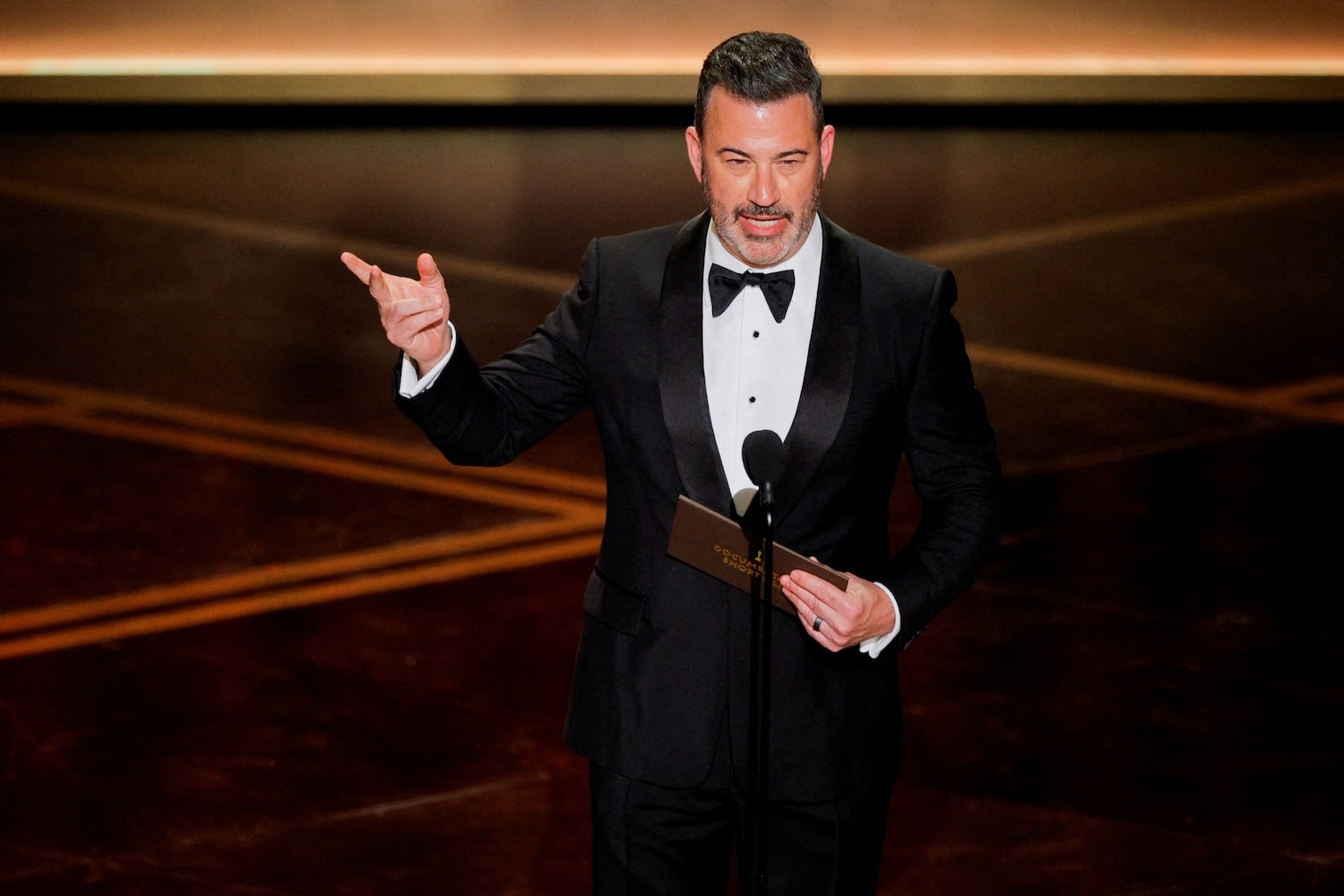
The latest volley from Donald Trump wasn't a standard political critique. It was an echoing cry for Kimmel to be fired, fueled by a lingering resentment over a joke told at the Oscars months prior. Most people see this as a headline. If you look closer, you see a masterclass in the breakdown of the American ego.
The Anatomy of a Late Night Feud
Think back to the playground. There was always one kid who could dish out every insult in the book, but the moment you pointed out his mismatched socks, he ran to the principal. That is the rhythm of this conflict. It is a cycle of provocation and thin-skinned retaliation that has transcended the world of comedy and entered the realm of civil stability.
Kimmel didn't respond with a formal press release. He didn't have a spokesperson issue a dry, three-sentence denial. Instead, he sat behind a desk, looked into a lens, and treated the leader of the free world’s grievances like a Yelp review from a confused customer.
"I love that he’s watching," Kimmel told his audience.
There is a specific power in that sentence. It shifts the dynamic from victimhood to observation. By acknowledging that his harshest critic is also his most dedicated viewer, Kimmel highlighted the absurdity of the obsession. The facts are simple: Trump posted on Truth Social that Kimmel was a "loser" and that ABC should replace him with "talent." Kimmel responded by reading the post aloud, effectively turning the attack into the very content that keeps him on the air.
The Invisible Stakes of a Punchline
We often treat late-night monologues as disposable entertainment, something to fall asleep to or watch in thirty-second clips while waiting for the bus. But there is something deeper happening here. This isn't just a spat between two wealthy men; it’s a battle over the boundary of the "Un-joke."
In a healthy society, the court jester is the only one allowed to tell the king he has no clothes. When the king starts trying to fire the jester, the clothes aren't the problem anymore. The problem is the mirror.
Consider the psychological toll of this constant friction. For the writers in the room, every script is now a legal minefield. For the audience, every laugh is a political statement. We have moved away from shared humor and into a period of tribal signaling. When Kimmel mocks the former president’s legal woes or his social media habits, he isn't just seeking a laugh. He is reinforcing a boundary. He is saying, "You are not above being ridiculed."
And that, more than any policy disagreement, is what seems to sting the most.
Why the "Firing" Narrative Fails
The demand for Kimmel’s removal rests on a fundamental misunderstanding of how modern media works. In the old world, a scandal or a powerful enemy could sink a career. Today, conflict is the fuel. Every time a post goes live calling for a boycott or a firing, the algorithm hums with delight.
If ABC were to actually fire Kimmel, they wouldn't be solving a problem; they would be destroying their most valuable asset: relevance.
In the attention economy, being hated by the right people is just as lucrative as being loved by the masses. The data bears this out. Engagement spikes when the feud is active. The "dry facts" of the ratings show that Kimmel’s numbers often see a lift when he becomes the target of a high-profile grievance. It turns a comedy show into a nightly check-in on the state of the national psyche.
But what about the human cost?
The Man Behind the Monologue
It’s easy to forget that beneath the suit and the makeup, Kimmel is a person who has spent his life trying to make people like him. That’s the core of being a comedian. It’s a needy profession. You stand on a stage and wait for the sound of air leaving lungs in a rhythmic burst.
To be the primary target of a political movement's ire is a strange way to live. It means security details. It means your family’s names appearing in comment sections filled with vitriol. It means that a simple job—telling jokes—becomes a daily act of defiance.
Kimmel’s resilience doesn't come from a lack of feeling. It comes from an understanding of the stakes. He has leaned into the role of the "common sense" narrator, often using his platform to talk about his son’s health or the realities of the healthcare system. He has grounded his comedy in his own vulnerability.
When he responds to the calls for his firing, he does so with a weary kind of grace. He knows that in six months, there will be a new demand, a new post, a new insult. The cycle is the point.
The Schoolyard and the Screen
Imagine a hypothetical viewer named Sarah. Sarah lives in a suburb, works forty hours a week, and is exhausted by the noise. She watches Kimmel not because she agrees with every political point, but because he represents a sense of normalcy in a world that feels increasingly unhinged.
When she sees a former president obsessing over a monologue from three months ago, she doesn't see a leader. She sees the noise she’s trying to escape. Kimmel’s superpower isn't his wit; it’s his ability to point at the noise and say, "Do you see how weird this is?"
That is the emotional core of this entire saga. It’s not about television contracts or FCC regulations. It’s about the refusal to be bullied into silence by someone who doesn't understand the difference between a punchline and a threat.
The screen reflects us. Right now, it shows a country caught in a loop of grievance and response, where the most powerful people are the most easily wounded. Kimmel stands there, night after night, holding up the glass. He isn't going anywhere, not because he’s untouchable, but because as long as the attacks continue, he has the most important job in the room: he’s the one holding the mirror.
The lights dim. The theme music kicks in. The audience cheers, perhaps a little louder than they did five years ago. Jimmy walks to the center of the stage, takes a breath, and prepares to tell the truth, even if it’s wrapped in a jab. He knows that the moment he stops being a target is the moment he stops being heard.
He adjusts his tie. He looks at the camera. He smiles, but the eyes are watchful, waiting for the next chime of a notification in the dark.