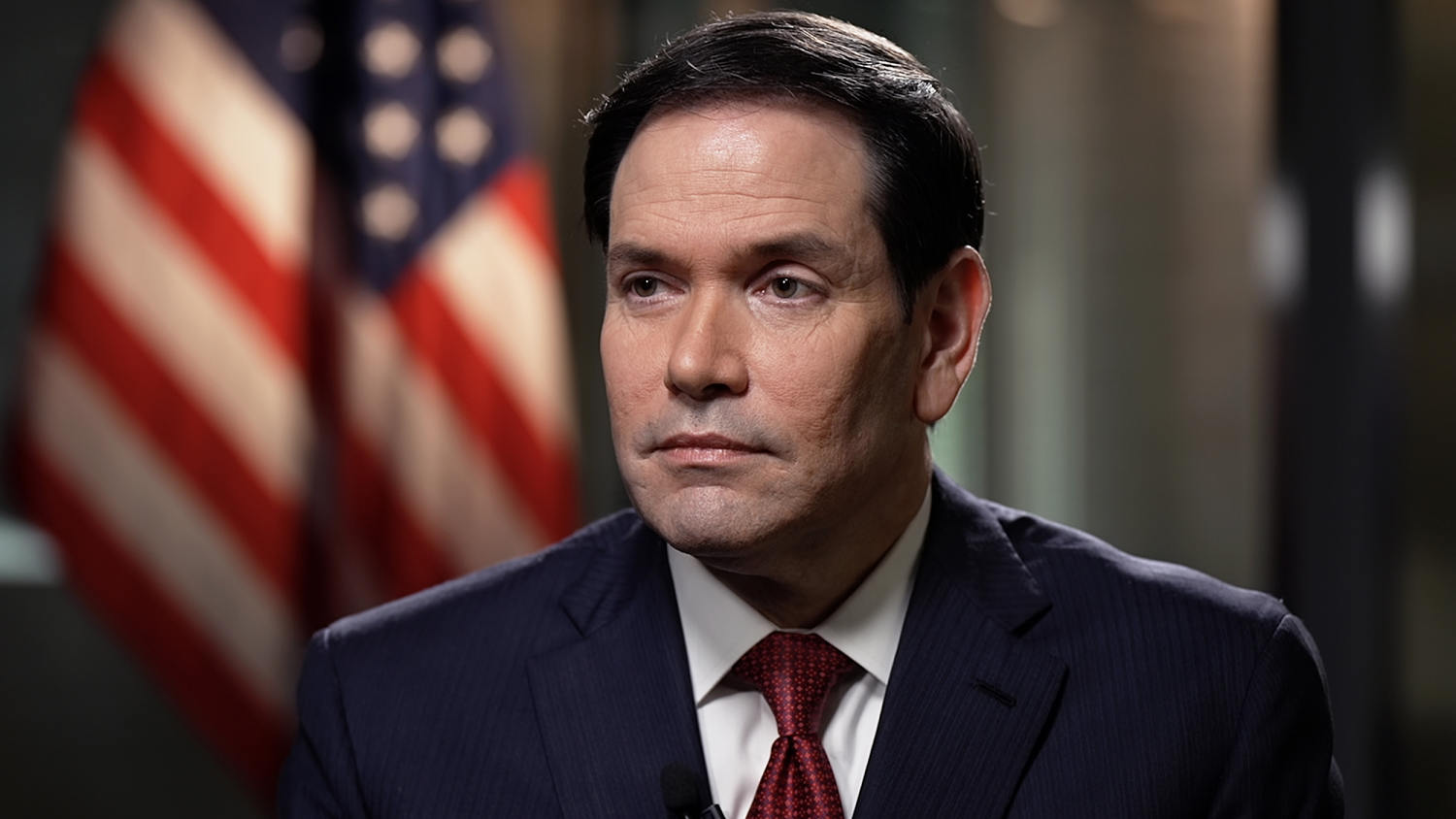
Marco Rubio doesn't sound like a typical diplomat and that's exactly the point. In his recent sit-down with Tom Llamas on NBC Nightly News, the Secretary of State laid out a vision for American power that feels fundamentally different from the last thirty years of Washington consensus. If you were looking for flowery language about global cooperation, you didn't get it. You got cold, hard realism.
The interview wasn't just a routine press junket. It was a signal to the world that the "America First" doctrine isn't just a slogan anymore. It’s the literal manual for how the State Department operates. Rubio was blunt about Ukraine, China, and the border. He didn't hedge. He didn't use the usual "strategic ambiguity" that keeps D.C. consultants in business. He told us where the line is drawn.
Ukraine and the shift toward a pragmatic peace
Tom Llamas pushed hard on the Ukraine question. Everyone wants to know if the U.S. is going to pull the plug on Kyiv. Rubio's answer was telling. He didn't promise "as long as it takes" in the way we've heard before. Instead, he talked about "bringing this to a conclusion."
This is a massive shift. For two years, the official line was that only Ukraine decides when to stop fighting. Rubio is signaling that the U.S. is now an active participant in finding the exit ramp. He isn't saying we're abandoning them. He's saying the math has changed. War is expensive. Resources are finite. He’s looking for a deal that stops the dying and protects American interests without a permanent drain on our own stockpiles.
It’s about leverage. Rubio understands that the threat of cutting off aid is the only thing that gets both sides to a table. It's a high-stakes gamble. If he pulls it off, he’s a hero who stopped a continental war. If it fails, he risks a Russian surge. But the Secretary seems comfortable with those odds because he views the status quo as a slow-motion disaster for the American taxpayer.
The China threat is the only thing that matters
If you listen closely to Rubio, you realize he views every other global conflict through the lens of Beijing. Ukraine is a distraction. The Middle East is a complication. China is the existential threat. During the NBC interview, he made it clear that the economic competition with the CCP is the primary struggle of our generation.
He isn't just talking about ships in the South China Sea. He’s talking about our medicine, our steel, and our tech. Rubio has long been a hawk on this, and now he has the keys to the kingdom. He wants to decouple the economies in a way that actually hurts. Most politicians talk a big game on China then cave when Wall Street complains. Rubio sounds like he’s ready to tell Wall Street to deal with it.
He specifically mentioned the need to secure supply chains. We can't rely on an adversary for the basic ingredients of our life. That’s not just trade policy; it’s national security. He’s pushing for a world where we trade with friends and build things at home. It’s a protectionist streak that would have been heresy ten years ago. Now, it's the official stance of the U.S. government.
Securing the border is a diplomatic priority
One of the more surprising parts of the interview was how much Rubio tied the Southern border to foreign policy. Usually, the State Department stays out of domestic enforcement. Not this time. Rubio is treating the border as a diplomatic lever.
He wants to use our influence in Central and South America to stop the flow before it hits our soil. This means playing hardball with Mexico and the Northern Triangle countries. He isn't interested in just sending aid and hoping for the best. He wants results. If a country doesn't help us stop the migration, their trade benefits or aid packages are on the chopping block.
It’s a "carrots and sticks" approach where the sticks are much bigger than they used to be. Rubio’s Florida background gives him a unique perspective here. He knows the politics of the region intimately. He speaks the language. He knows the players. He isn’t some academic looking at a map; he’s a guy who has watched these dynamics play out for decades.
Reality check on the global stage
People are going to call this isolationism. They’re wrong. Isolationism is hiding behind a wall and ignoring the world. What Rubio is describing is intense, aggressive engagement—just on our terms. He isn’t interested in being the world's policeman if the world doesn't want to pay the precinct's bills.
This new direction is going to ruffle feathers in London, Paris, and Berlin. They're used to a U.S. that says "please" and "thank you" at every summit. Rubio is signaling that those days are over. He’s going to ask what Europe is doing for their own defense. He’s going to ask why we’re paying for things that benefit them more than us.
It's uncomfortable. It's messy. Honestly, it's about time. You can disagree with his politics, but you can't deny that he has a clear, coherent vision. He isn't drifting. He’s steering the ship toward a very specific destination.
What this means for you
Don't expect the world to stay quiet while this shift happens. We're going to see more trade friction. We're going to see allies complaining in the press. We're going to see a lot of "unnamed sources" in the Pentagon expressing concern.
But for the average person, this means a foreign policy that finally cares about the price of gas and the availability of jobs in Ohio. Rubio is betting that Americans are tired of being the world's benefactor. He thinks we're ready to look out for ourselves for a change.
If you want to see where this goes next, watch the trade numbers. Watch how many times he visits Latin America compared to Western Europe. The map is being rewritten in real-time. Keep an eye on the specific bilateral agreements he’s pushing. That’s where the real power is shifting. Pay attention to the rhetoric around the BRICS nations too. Rubio is clearly trying to fracture that bloc before it gains more ground.
The era of the globalist consensus is dead. Marco Rubio just buried it on national television.