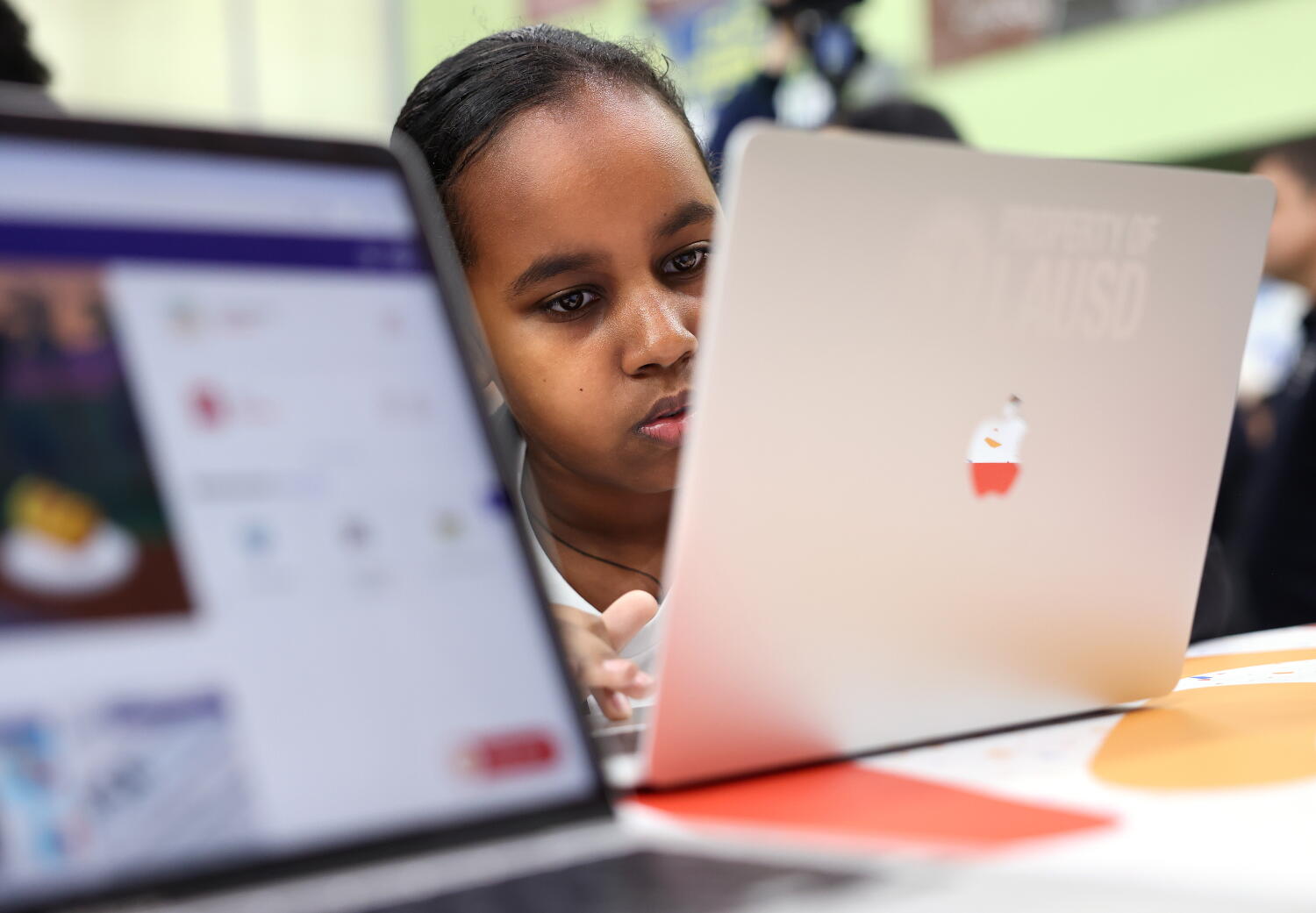
The Los Angeles Unified School District abruptly blocked all generative artificial intelligence tools across nearly 380,000 student-issued laptops and tablets, taking an aggressive stance that caught its own board members and parents completely by surprise.
When district officials quietly updated web-filtering software to strip access to these platforms, it marked a sharp about-face for the nation's second-largest school system. Only months prior, the district permitted students aged thirteen and older to use AI utilities under strict teacher supervision after completing basic digital citizenship modules. Now, a system-wide blackout halts those experiments, driven by a newly formed ad hoc generative AI committee tasked with untangling the mess of digital integration.
This sudden clampdown did not happen in a vacuum. It follows a multi-million-dollar administrative disaster that left district leadership bruised and defensive. In mid-2024, LAUSD spent six million dollars on a custom student chatbot named Ed, developed by AllHere Education. The project collapsed catastrophically when the vendor went bankrupt, triggering federal fraud investigations into the company's executive leadership. That financial hemorrhage created institutional PTSD within the district central office. School administrators became deeply suspicious of vendor-pitched technological silver bullets, paving the way for the current policy freeze.
The Pushback from Below
Parents and advocacy groups have spent the past year mobilizing against unchecked screen consumption, linking digital tools to declining attention spans and eroded social development. The district's hand was forced not by pedagogical theory, but by sustained grassroots pressure demanding a timeout on unproven software.
Data from independent researchers highlights the urgency felt on the ground. A comprehensive study by the RAND Corporation found that roughly two-thirds of middle and high school students rely on artificial intelligence for daily homework assistance, while a matching majority worry the practice damages their capacity for independent critical thinking. Meanwhile, an analysis published by the Center for Democracy and Technology revealed that over half of students embedded in heavy digital environments report feeling emotionally disconnected from their instructors.
The district's new approach attempts to slam the brakes on these troubling trends. Yet the execution has exposed deep internal friction. During the committee's opening session, board member Nick Melvoin expressed public bewilderment upon learning that the technical blockade had already gone live without broad public debate.
"I don't think it's well-publicized," Melvoin admitted to roomfuls of startled stakeholders.
The Mechanics of the Blockade
Enforcing this blackout relies on invisible infrastructure. District IT leadership utilizes web-filtering tools like Lightspeed to intercept and deny connection requests to any domain or application flagged as generative artificial intelligence on an LAUSD Chromebook or tablet.
Douglas Le, the district's interim chief information officer, explained that the monitoring apparatus logs screen time and application interactions down to the second. This surveillance architecture feeds data back into administrative portals, tracking how students interface with hardware.
However, this digital iron curtain has a glaring structural flaw. The restriction applies exclusively to district-managed hardware and authenticated network profiles. A student sitting in an LAUSD classroom can easily bypass the filter by pulling out a personal smartphone or browsing via a cellular data connection. District leadership acknowledges this loophole, conceding there is no technical mechanism to police unmanaged personal devices operating outside school firewalls.
Splitting the Classroom
The policy creates a fractured reality for educators. Teachers are permitted to use generative algorithms for administrative duties, such as drafting lesson plans and organizing instructional materials. At the same time, those same teachers are barred from integrating those exact platforms into interactive student lessons.
This dichotomy frustrates educators who spent the past two years trying to figure out how to teach digital literacy responsibly. Anya Meksin, a member of the newly minted AI committee, argued against a blanket prohibition, suggesting that scrapping existing rules throws away valuable learning opportunities instead of reforming them.
The debate splits the educational community into two camps. One side views artificial intelligence as an addictive distraction that degrades foundational writing and problem-solving skills. The other side views it as an inevitable workplace reality, arguing that banning it leaves students fundamentally unprepared for a modern economy.
By freezing student access for the duration of the review cycle, LAUSD has bought itself time, but it has also pushed a complex problem underground. Students will continue experimenting with these tools on personal devices beyond the reach of school servers. The district's committee meetings, scheduled through the spring of 2027, will determine whether this temporary wall becomes a permanent barrier or a brief pause in an unstoppable digital transition.