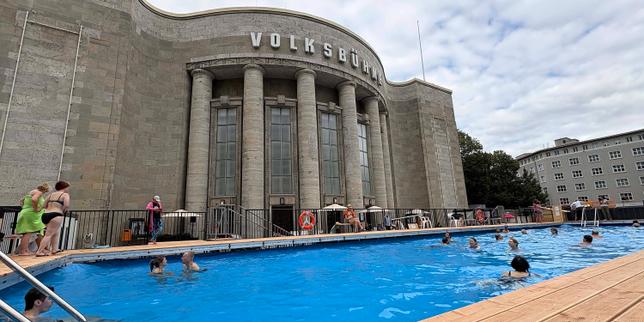
A blunt German insult spray-painted across political discourse doesn't usually start with an art installation. But Berlin always finds a way to turn municipal dysfunction into performance art. When the iconic Volksbühne theater dumped a massive 25-meter outdoor pool right onto its public square, they weren't just offering locals a spot to cool off. They threw a grenade straight into the local election cycle.
Art institutions in Europe love provocation, yet this specific stunt hit a raw nerve. Half the public pools across the German capital remain closed due to chronic maintenance backlogs, crumbling infrastructure, and severe municipal budget cuts. Schools deal with asbestos issues, public transit runs on delayed prayers, and residents queue for hours just to find a functioning lap lane anywhere in the city. Enter a heavily state-subsidized theater taking matters into its own hands by building an impromptu urban oasis. It is equal parts brilliant political satire and a stinging rebuke of local administrative failure.
The rationale behind the project reads like an open indictment of city hall. Theater organizers looked at the decaying public amenities and decided to construct their own temporary "people's pool" right out front, completely free of charge and open without rigid bureaucratic identity checks. It quickly turned into a lightning rod. Critics from various political flanks immediately seized on the spectacle. Conservative voices and right-wing agitators lambasted the use of public funds for what they framed as a chaotic leftist stunt, while debates exploded online over access rights, inclusion policies, and exclusive swimming sessions.
What makes this controversy so uniquely Berlin is how rapidly a simple body of water became a symbol of cultural warfare. Urban spaces are finite, but the anxiety over who controls them is infinite. When a cultural landmark uses its operational budget to mock municipal decay, politicians scrambling for votes get caught flat-footed. They cannot easily defend broken public infrastructure, nor can they easily condemn a project that gives citizens what the government failed to provide: a place to swim during a heatwave.
Beneath the shouting matches and media outrage lies a deeper frustration with urban management. Cities across the continent are squeezing public services dry while expecting citizens to stay patient. The Volksbühne pool exposed the absurd gap between bureaucratic promises and daily reality. You can try to regulate the fallout or debate the optics of artistic protest, but the underlying message remains crystal clear to anyone standing on the pavement. Fix the city, or expect the artists to do it for you.