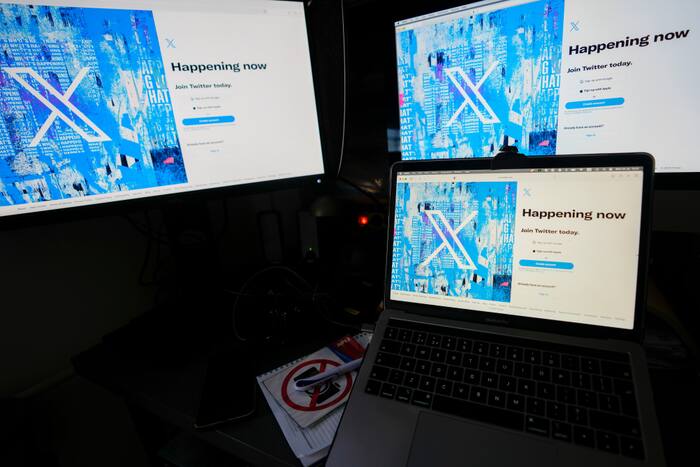
According to research published by social network analysis firm Graphika, a covert network of China-linked social media accounts known as Spamouflage has been posing as American voters on X to stoke division and undermine trust in the US political system. Rather than endorsing a specific candidate, the campaign hijacks authentic partisan grievances across the political spectrum—from immigration and inflation to foreign aid—to amplify domestic chaos and portray American democracy as broken beyond repair.
For years, foreign influence operations relied on clumsy, easily detectable bots spouting state-approved talking points in broken English. Those days are over. What Graphika uncovered on X represents a sharp tactical evolution in state-backed information warfare, where operators borrow the exact vernacular, memes, and ideological friction points of genuine American citizens to blend into the timeline undetected.
The Anatomy of Modern Sockpuppetry
To understand how Spamouflage operates today, you have to look past the outdated stereotype of a basement-dwelling troll farm. Graphika’s investigation revealed a coordinated cluster of accounts masquerading as everyday Americans—veterans, concerned parents, disillusioned progressives, and MAGA loyalists alike.
The mechanics are deceptively simple. Operators build out plausible digital identities by scraping profile photos, reposting benign local news, and engaging in routine sports or pop-culture banter before pivoting to political commentary. Once established, these accounts don't try to invent narratives out of thin air. They act as accelerants on fires already burning inside the American electorate.
Consider a hypothetical example of how this play unfolds on a Tuesday afternoon. An authentic partisan account posts a viral video criticizing federal spending on foreign conflicts while domestic infrastructure crumbles. Within minutes, dozens of Spamouflage accounts descend on the thread. Some adopt a right-wing persona, framing the issue as a betrayal of working-class taxpayers; others adopt a left-wing persona, framing it as proof of unchecked corporate imperialism. Neither group mentions Beijing. Both groups push the exact same underlying message: the US government is illegitimate, corrupt, and indifferent to its own people.
Why Ideological Agnosticism Works
Traditional propaganda tries to make you love the sender. Modern computational propaganda tries to make you hate your neighbor.
By playing both sides of the American ideological divide, Spamouflage bypasses the cognitive defenses most news consumers have built up over the last decade. If an account blindly praises the Chinese Communist Party, American users immediately spot the agenda and scroll past. When an account echoes a voter’s existing frustration with border policy, gun violence, or rising grocery prices, that user is far more likely to hit repost.
Graphika’s findings highlight that these accounts frequently attack both major US political parties simultaneously. In one post, an account might mock Republican leadership as out-of-touch extremists; hours later, a sister account in the same network will attack Democratic leadership as incompetent warmongers. The goal isn't to tip the scales toward one party in a single election cycle. The objective is long-term institutional erosion—convincing enough Americans that the entire democratic experiment is a sham so they disengage from civic life altogether.
The Structural Blind Spots on X
A campaign of this scale does not survive in a vacuum. It requires a platform architecture that rewards outrage and lowers the barrier to synthetic identity creation.
Over the past several years, major shifts in content moderation, verification systems, and API access on X have fundamentally altered how researchers and platform defenders track coordinated inauthentic behavior. When verification badges became tied to paid subscriptions rather than vetted identity checks, the cost of purchasing credibility dropped to a few dollars a month. For a state-backed operation with deep pockets, paying for dozens of blue checks is a rounding error.
Furthermore, algorithmic feeds inherently favor high-arousal emotions—anger, fear, and moral indignation. Spamouflage operators understand this math intimately. By crafting posts loaded with inflammatory rhetoric and polarizing visual memes, they exploit recommendation engines to push their content into the "For You" tabs of real voters who do not even follow them.
The Attribution Bottleneck
Catching these networks requires forensic patience, and even the best threat intelligence teams face severe limitations. Graphika analysts rely on behavioral breadcrumbs rather than smoking-gun IP addresses. They look for:
- Temporal clustering: Accounts posting identical hashtags or visual assets within seconds of one another across specific time zones, often aligning with standard working hours in mainland China.
- Linguistic artifacts: Subtle grammatical habits, misused American idioms, or formatting quirks that persist across supposedly unrelated personas.
- Cross-platform laundering: Narratives seeded on fringe forums or smaller video platforms before being imported onto X to create the illusion of an organic, multi-platform grassroots movement.
Yet attribution remains an imperfect science. Because Spamouflage operators increasingly use commercial Virtual Private Networks (VPNs), US-based proxy servers, and generative AI tools to polish their English syntax, the line between a foreign operative and an angry domestic partisan grows thinner every month.
A History of Trial and Error
Spamouflage is not a new invention. Threat researchers at Graphika, Meta, and the Australian Strategic Policy Institute have tracked iterations of this network since at least 2019.
In its earliest phases, the campaign was remarkably inept. Accounts flooded social platforms with spammy, repetitive videos attacking Hong Kong pro-democracy protesters or exiled Chinese dissidents, interspersed with random clips of cute animals and cooking tutorials to evade automated spam filters. Engagement was virtually nonexistent. Real users rarely interacted with the posts, creating an echo chamber where bots simply liked and shared one another's content.
What changed was a strategic pivot toward audience-first targeting. Instead of forcing Chinese state media talking points onto Western audiences, operators studied Western internet culture. They learned how American political memes are structured. They tracked trending domestic hashtags in real time. While many Spamouflage accounts still struggle to generate massive organic reach on their own, Graphika noted a troubling uptick in genuine US users—including political commentators and influencers—interacting with and amplifying Spamouflage content.
The Counter-Argument Over Actual Impact
Among disinformation researchers and political scientists, a fierce debate persists over how much these operations actually move the needle. Skeptics rightly point out that the vast majority of foreign influence posts receive minimal engagement compared to mainstream media outlets or high-profile domestic politicians. A network of a few dozen or even a few hundred fake accounts is a drop in the ocean compared to the millions of real Americans arguing online every hour.
Treating Spamouflage as an omnipotent mind-control machine gives foreign adversaries far too much credit. American polarization is driven primarily by domestic forces—economic anxiety, partisan media ecosystems, gerrymandering, and deep cultural divides—not by anonymous accounts operating out of Beijing.
However, dismissing the threat entirely misses the point of asymmetric warfare. Foreign actors do not need to brainwash millions of voters to achieve a return on investment. In an era where national elections are decided by razor-thin margins across a handful of swing states, and where public trust in election integrity is already fragile, injecting a small amount of targeted toxicity into the bloodstream at the exact right moment can create outsized chaos. Even more damaging is the perception of manipulation—once voters know fake accounts are everywhere, they begin to suspect that every opposing viewpoint they encounter online is a foreign bot, destroying any remaining space for good-faith debate.
The Role of Generative AI and Synthetic Media
The integration of large language models and image generators has lowered the operational overhead for networks like Spamouflage. Previously, maintaining fifty distinct American personas required fifty fluent English writers capable of sustaining coherent backstories without contradicting themselves.
Today, a small team of operators can use off-the-shelf AI tools to generate tailored replies, translate local news nuances, and create bespoke political cartoons on the fly. Graphika has documented the use of AI-generated profile pictures—characterized by symmetrical facial features and slightly blurred backgrounds—alongside synthetic audio and manipulated imagery designed to provoke immediate emotional reactions.
This technological shift creates an asymmetrical race between offense and defense. Platform trust and safety teams must build classifiers capable of detecting synthetic text and coordinated behavior at scale, while adversaries only need a handful of accounts to slip through the cracks to claim a tactical victory.
Why Platform Whack-a-Mole Fails
Whenever firms like Graphika, Mandiant, or the Stanford Internet Observatory publish an exposé detailing a coordinated influence network, X and other major platforms typically respond by suspending the flagged accounts. Within weeks, new clusters emerge using slightly modified tactics.
This cycle persists because structural incentives remain misaligned. Social media companies generate revenue from attention and engagement, and polarized political discourse is one of the most reliable engines of daily active usage ever invented. Aggressive interventions—such as strict identity verification, friction on rapid reposting, or throttling algorithmic amplification of unverified political claims—inevitably reduce user engagement metrics.
Without transparency mandates that allow independent researchers full access to platform data, public visibility into these operations depends entirely on the goodwill of tech executives and the detective work of external analysts. When platforms restrict API access or disband internal election integrity teams, they effectively turn off the lights in the middle of a storm.
Navigating an Information Minefield
For ordinary voters scrolling through X, expecting tech platforms or government regulators to sanitize the feed is a losing bet. The burden of defense increasingly falls on individual media literacy and behavioral discipline.
Recognizing the fingerprints of operations like Spamouflage requires paying attention to patterns rather than individual posts. Accounts with generic names followed by strings of random numbers, profiles created recently that immediately dive into hyper-partisan outrage, and users who never engage in normal, nuanced conversation are classic warning signs. More importantly, any post designed to trigger an instant surge of anger—especially one accompanied by an out-of-context video clip or an unverified screenshot—deserves immediate skepticism before being shared.
State-backed influence campaigns succeed not because their propaganda is uniquely persuasive, but because human beings are wired to amplify anger that validates their own worldview. Until users stop treating social media outrage as a substitute for civic engagement, networks like Spamouflage will always find an eager audience willing to do their distribution work for free.