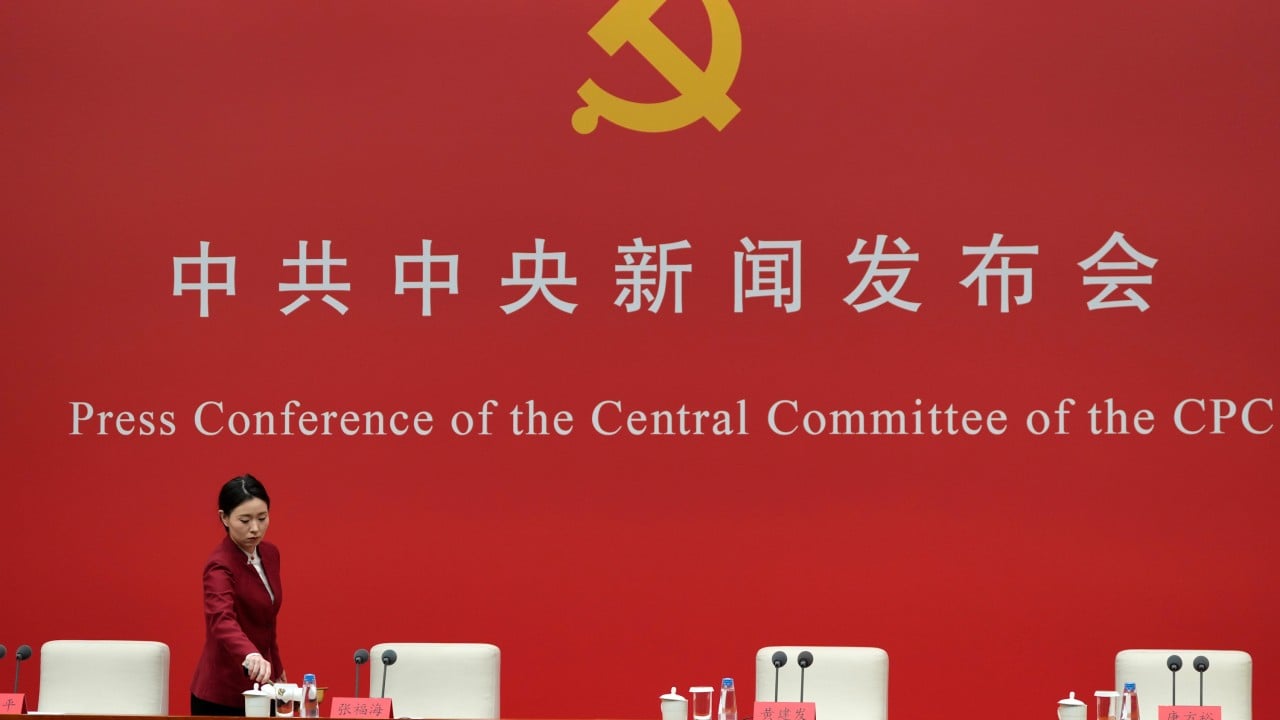
Recent senior personnel reshuffles within the Chinese Communist Party do not signal an ideological break or a new factional revolt. According to political analysts who track elite Chinese politics, including researchers at the Brookings Institution and the Jamestown Foundation, these appointments reflect a methodical consolidation of administrative control ahead of the 21st Party Congress in 2027. Rather than elevating traditional economic reformers or distinct regional power brokers, Beijing is systematically moving technocrats with backgrounds in aerospace, defense manufacturing, finance, and internal security into provincial and ministerial leadership roles.
Personnel announcements in Beijing rarely come with explanatory press conferences. Western observers often read these transfers like tea leaves, searching for signs of hidden friction inside Zhongnanhai. That habit misses the mechanical reality of how the Party manages its human capital. Every promotion, lateral transfer, and quiet retirement is part of a vast, continuous calibration designed to solve specific governance problems while neutralizing political risk.
The End of the Provincial Growth Tournament
For roughly three decades following Deng Xiaoping’s opening-up policies, the criteria for promotion within the Chinese Communist Party were straightforward. Local officials competed in what political scientists call a tournament model. If a party secretary or governor delivered double-digit GDP growth in their province or municipality, they climbed the ladder toward the Politburo. Ideological orthodoxy mattered, of course, but raw economic output acted as the ultimate shield and accelerator.
That system broke down under the weight of its own success. Chasing headline GDP numbers incentivized local governments to pile up trillions of dollars in off-balance-sheet debt through local government financing vehicles, overbuild real estate, and ignore severe environmental degradation.
Over the past decade, and accelerating sharply through the mid-2020s, the Party’s Organization Department rewrote the grading rubric. According to analysts at the Mercator Institute for China Studies (MERICS), performance evaluations for cadres now heavily weight risk mitigation, technological self-reliance, and political discipline over raw expansion. A provincial leader who generates 6 percent growth while triggering a local banking crisis or a wave of labor protests is no longer considered a rising star. They are a liability.
The latest wave of appointments reflects this revised scorecard. Officials who spent their careers managing industrial supply chains, state-owned defense conglomerates, or financial regulatory bodies are increasingly occupying seats once reserved for career provincial administrators who rose through the Communist Youth League or municipal party committees.
Why Technocrats Are Back in Fashion
Western commentary frequently characterizes the current Chinese leadership as purely ideological, prioritizing political loyalty at the expense of competence. That binary is misleading. Loyalty is the baseline requirement—the non-negotiable ticket of admission—but within the pool of politically vetted cadres, Beijing is aggressively selecting for a very specific type of operational expertise.
In the 1990s and early 2000s, China’s leadership was dominated by civil and hydraulic engineers—men like Hu Jintao and Wen Jiabao—who were tasked with building physical infrastructure, dams, highways, and power grids. Today’s cohort of rising officials represents a different generation of specialists.
Political researchers at the Asia Society Policy Institute have documented the steady rise of the so-called cosmic club and defense-industrial veterans—executives who previously ran major state enterprises such as the China Aerospace Science and Technology Corporation (CASC), Aviation Industry Corporation of China (AVIC), or major nuclear and shipbuilding conglomerates. These individuals spent decades managing complex, capital-intensive research and manufacturing programs under strict state security protocols.
The Logic of Industrial Security
Why put a former aerospace executive in charge of a coastal province or a major industrial municipality? The answer lies in Beijing’s overarching strategic priority: insulating the Chinese economy from Western export controls and supply chain chokeholds.
When Washington and its allies restrict access to advanced semiconductors, precision machine tools, or aerospace components, the Chinese leadership views the problem through an engineering and logistics lens. Career local bureaucrats, skilled in land sales and infrastructure permitting, often lack the technical fluency required to coordinate university research labs, state-owned industrial giants, and private hardware startups.
A cadre who has managed a state defense conglomerate understands how to direct state capital into bottleneck technologies without relying on foreign intellectual property. They also know how to operate inside closed, security-vetted ecosystems. By placing these managers into top regional posts, Beijing is effectively turning provincial governments into industrial mobilization hubs.
Financial Firefighters in the Provinces
Alongside the defense-industrial technocrats, another distinct profile has emerged in recent promotion cycles: veteran central bankers and financial regulators.
China’s local governments face a protracted fiscal squeeze driven by a multi-year downturn in the property sector, which historically supplied up to 40 percent of local fiscal revenue through land-use sales. Several provinces carry debt burdens that severely constrain their ability to fund basic public services or stimulate local economies.
In response, the Party has dispatched senior officials from the People’s Bank of China, state-owned commercial banks, and national financial regulatory bodies to serve as vice-governors and party secretaries in indebted regions. Their mandate is not to launch flashy new infrastructure projects. Their job is triage. They are sent to restructure local government financing vehicles, negotiate debt swaps with state lenders, and prevent regional banking failures from spilling into the national financial system.
The Demise of Factional Balancing
To understand why the latest promotions look so uniform, one has to look at what has disappeared from Chinese elite politics. During the Jiang Zemin and Hu Jintao eras, senior appointments were the product of intense negotiation among recognizable institutional factions.
Observers tracked the rivalry between the tuanpai—officials who rose through the Communist Youth League and tended to favor balanced regional development and social welfare—and the Shanghai Gang or princelings, who had strong ties to coastal commercial hubs and state-owned enterprises. Promotions at the Central Committee and Politburo levels were carefully balanced to ensure neither bloc gained a decisive monopoly over personnel decisions.
That factional architecture has been dismantled. As documented by scholars at Stanford University’s Freeman Spogli Institute, institutional power bases like the Communist Youth League have been systematically hollowed out, their budgets slashed, and their pathways to senior provincial leadership largely closed off.
Today, there are no competing factions negotiating over cabinet seats. Instead, analysts observe micro-networks based on shared educational backgrounds—such as Tsinghua University or the Beijing University of Aeronautics and Astronautics—or overlapping stints in specific provinces like Zhejiang, Fujian, and Shaanxi.
| Era | Dominant Cadre Profile | Primary Evaluation Metric | Factional Dynamic |
|---|---|---|---|
| 1990s–2012 | Civil engineers, career Youth League cadres, regional generalists | Headline GDP growth, foreign investment attraction | Institutional balancing between distinct party blocs |
| 2013–2022 | Anti-corruption enforcers, trusted provincial associates | Political discipline, poverty alleviation, party building | Rapid consolidation of central authority |
| 2023–Present | Defense-industrial executives, financial regulators, security specialists | Supply chain resilience, debt containment, ideological security | Granular vetting within a single centralized hierarchy |
This shift carries profound operational consequences. When factional competition existed, rival groups acted as an informal check on policy overreach. If an economic policy failed in one province, a rival faction had every incentive to point out the flaws and propose an alternative. Without institutionalized factions, policy feedback loops become narrower. Local officials are far less likely to report bad economic data upward if they believe doing so will be interpreted as a failure of political resolve.
The Age Ceiling and the Succession Question
Every personnel move between now and late 2027 is also viewed through the prism of generational turnover. For decades, the CCP relied on an informal rule known as qi-shang ba-xia—"seven up, eight down." Under this norm, officials aged 67 or younger at the time of a Party Congress could be promoted to or remain on the Politburo, while those aged 68 or older were expected to retire.
That norm was visibly bent at the 20th Party Congress in 2022, when several loyalists past the traditional retirement age were retained while younger figures associated with previous leadership cohorts were sidelined. However, biology remains undefeated. A large cohort of current Politburo members will be in their early to mid-70s by the time the 21st Party Congress convenes in 2027.
To avoid a sudden leadership vacuum, the Organization Department must cultivate a bench of cadres born in the 1960s and early 1970s—often referred to as the post-60s and post-70s generations.
The Missing Middle
Analysts tracking the Central Committee have noted a distinct demographic bottleneck. Because the anti-corruption campaign initiated in 2012 removed thousands of mid-level and senior officials, and because vetting standards have grown extraordinarily strict, the pool of eligible candidates with both clean records and broad administrative experience has shrunk.
To prepare younger technocrats for top roles, Beijing relies heavily on rapid lateral rotation. A promising official born in the late 1960s rarely stays in one post for a full five-year term anymore. Instead, they are moved every two to three years across vastly different geographies and portfolios—from running a state enterprise, to serving as a municipal party secretary in a coastal city, to managing a central ministry, to governing an inland province.
Consider a hypothetical career trajectory that illustrates this modern grooming pattern: an engineer spends twenty years rising through a state-owned telecommunications or aerospace firm, is appointed vice-governor of a central province to oversee industrial upgrading, transfers two years later to a coastal municipality to manage trade and finance, and is then tapped to lead a central regulatory commission. This accelerated rotation prevents officials from building entrenched local patronage networks—a perennial fear for Beijing—while forcing them to acquire generalist governance skills quickly.
The Absence of an Anointed Heir
What remains conspicuously absent from the current promotion cycle is any clear signal regarding ultimate succession. During the Deng, Jiang, and Hu eras, prospective successors were elevated to the Politburo Standing Committee at least five years before taking power, given specific portfolios—such as overseeing the Party Secretariat, the Central Party School, and Hong Kong affairs—and systematically introduced to foreign leaders.
No post-1960s or post-1970s official currently holds that kind of unmistakable trajectory. While several provincial party secretaries and municipal leaders in key jurisdictions like Beijing, Shanghai, Guangdong, and Chongqing are closely watched by political analysts, none has been elevated above their peers in a way that signals an heir apparent.
According to specialists at the Center for Strategic and International Studies (CSIS), keeping the succession picture ambiguous serves a clear political purpose. Naming an heir early inevitably creates a second center of power inside the Party, encouraging ambitious cadres to hedge their bets and align with the incoming leader rather than the incumbent. By withholding that designation, the top leadership preserves undivided authority over the bureaucracy.
What Critics and Counter-Arguments Highlight
While the prevailing consensus among China watchers is that these technocratic promotions enhance administrative execution and regime durability, a vocal minority of economists and political scientists argues the exact opposite. They contend that the current personnel strategy contains structural flaws that could undermine long-term governance.
First, critics point out that corporate engineering management does not translate cleanly to macroeconomic governance. Running a state-owned aerospace firm means operating in a protected environment where budgets are guaranteed by the state, competitors are barred from entry, and success is measured by meeting physical engineering milestones regardless of cost. Managing a complex provincial economy of 80 million people—where private small businesses generate the vast majority of urban employment and consumer confidence drives growth—requires an entirely different toolkit.
Second, economists at institutions like the Peterson Institute for International Economics note that the heavy emphasis on political security and debt containment has produced widespread bureaucratic paralysis at the local level. When officials know that a single misstep or bad audit can end their career, the rational response is inaction. Many local cadres have adopted a posture of minimal compliance—issuing endless study documents on central directives while avoiding bold regulatory reforms that might revive private sector animal spirits.
Finally, there is the problem of institutional homogeneity. When the vast majority of rising leaders share similar backgrounds in state industry, internal security, and party administration, the system loses cognitive diversity. Few senior officials currently rising through the ranks possess deep experience in international diplomacy, private venture capital, or grassroots social work. In a period of intense geopolitical friction and structural economic transition, that uniformity leaves the leadership vulnerable to blind spots.
Reading the Signals Correctly
The Western media cycle tends to treat every batch of Chinese personnel announcements as either proof of imminent collapse or evidence of unstoppable strategic genius. Neither framing holds up under scrutiny.
What the latest Communist Party promotions actually reveal is a ruling apparatus that has consciously traded rapid, messy economic dynamism for tight, centralized control. The Party has looked at the vulnerabilities exposed by the global financial crisis, the COVID-19 pandemic, and escalating technological rivalry with the United States, and it has adjusted its recruitment profile accordingly.
The officials moving into China’s key provincial and ministerial chairs today are not charismatic ideological firebrands, nor are they closet liberal reformers waiting to revive the free-market policies of the 1990s. They are disciplined organizational managers, engineers, and financial troubleshooters tasked with keeping a massive, heavily indebted, and externally pressured system running without crashing. Watching where these technocrats are deployed—and whether they can fix local balance sheets without suffocating private enterprise—will tell observers far more about China’s trajectory than any speech delivered in the Great Hall of the People.



