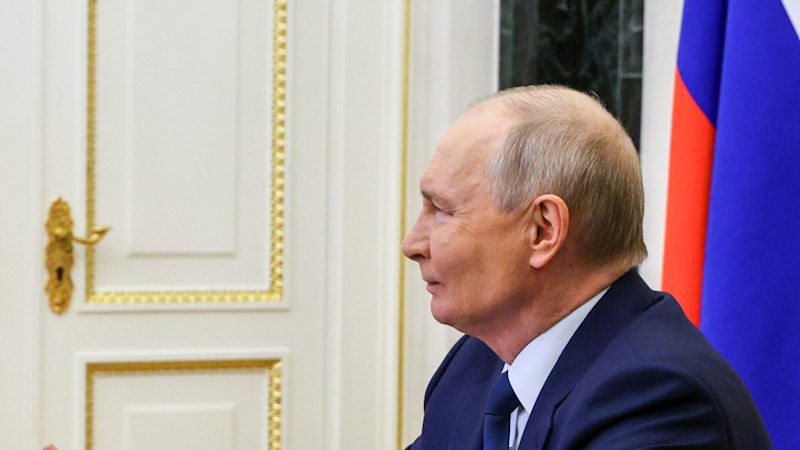
Everyone already knew the outcome of Russia's presidential vote long before the first ballot box opened. That was never the suspense. The real terror for European capitals wasn't the predictable coronation in Moscow; it was what Vladimir Putin’s extended grip on power meant for the continent's immediate future.
When leaders gathered in places like Dublin to hash out defense strategies, the anxiety was palpable. Moscow's strategy isn't just about grinding down the front lines in Ukraine. It's about outlasting Western resolve, exploiting political fractures, and rewriting the entire European security architecture on Kremlin terms. Don't miss our earlier post on this related article.
The Illusion of Choice and Domestic Control
Elections in modern Russia don't function as democratic barometers. They operate as loyalty tests and consolidation rituals. Independent voices face systemic erasure, opposition candidates are blocked or imprisoned, and the state media apparatus ensures a single, unyielding narrative dominates every household.
By locking in another term, Putin achieved total internal predictability. This domestic lockdown gives the Kremlin a luxury Western democracies rarely enjoy: long-term strategic continuity. While European governments cycle through shifting coalitions, snap elections, and wavering public opinions, Moscow operates on a multi-decade timeline. They can afford to wait, absorb economic blows, and watch for cracks in Western solidarity. To read more about the context here, NBC News provides an informative summary.
The Real Threat to European Security
The true nightmare for Europe isn't theatrical bluster. It's the systematic pressure being applied to transatlantic alliances and regional stability.
Moscow has consistently pushed a demand to reshape the security framework of Europe, weaponizing peace talks to drive wedges between the United States and European Union member states. When Washington flirts with transactional diplomacy or bilateral deals that bypass Brussels, the fault lines across the continent widen instantly.
Frontline states—particularly in the Baltic region and Eastern Europe—understand this threat intimately. They know that entertaining Moscow's demands regarding buffer zones or military restrictions is a trap designed to dismantle NATO's deterrent posture. Yet, weary electorates in Western Europe, strained by inflation and economic friction, are increasingly vulnerable to fatigue.
Hybrid Warfare Beyond the Trenches
The post-election reality also means an intensification of the "everywhere war." Russian interference isn't confined to the battlefield. It manifests as a steady drip of cyberattacks, critical infrastructure sabotage, coordinated disinformation campaigns, and illicit political financing designed to boost anti-establishment parties across the EU.
Moldova, the Western Balkans, and various EU enlargement candidates serve as testing grounds for these hybrid tactics. By destabilizing democratic transitions on its periphery, Moscow aims to prove that integration with the West is a messy, fragile illusion.
What Europe Must Do Now
Denial is no longer an option for European policymakers. Hoping for a sudden internal collapse in Moscow is a lazy substitute for a real defense strategy.
Europe has to radically accelerate its own rearmament, secure its digital and physical infrastructure, and tighten sanctions enforcement to choke off the supply chains keeping Russia's war machine funded. More importantly, European capitals need to present a united front that refuses to be sidelined in any future negotiations brokered by external powers.
The countdown has already begun. The real test is whether a fragmented continent can find its spine before the Kremlin's long game pays off.