The air in the briefing room does not circulate. It sits heavy, a thick soup of recycled oxygen, expensive cologne, and the sharp, metallic tang of camera equipment running hot. When a President walks into that space, the atmospheric pressure changes. It is a physical shift. You can feel it in the back of your throat.
In these moments, the world narrows. It isn't about global policy or the sweeping arcs of history. It is about a single human being standing behind a lectern, facing a phalanx of people whose entire professional existence is dedicated to finding the one crack in the armor.
The question that day was about Iran. Specifically, it was about the deployment of American troops to a region that has swallowed generations of young men and women whole. It was a question about the machinery of war. But the story that emerged wasn't about a map or a troop count. It was about the friction between a leader's temperament and a reporter’s persistence.
The Spark in the Dry Grass
A reporter asks a question. It is their job. They are the proxy for a public that cannot stand in that room. They asked about the rationale, the "why" behind the movement of soldiers.
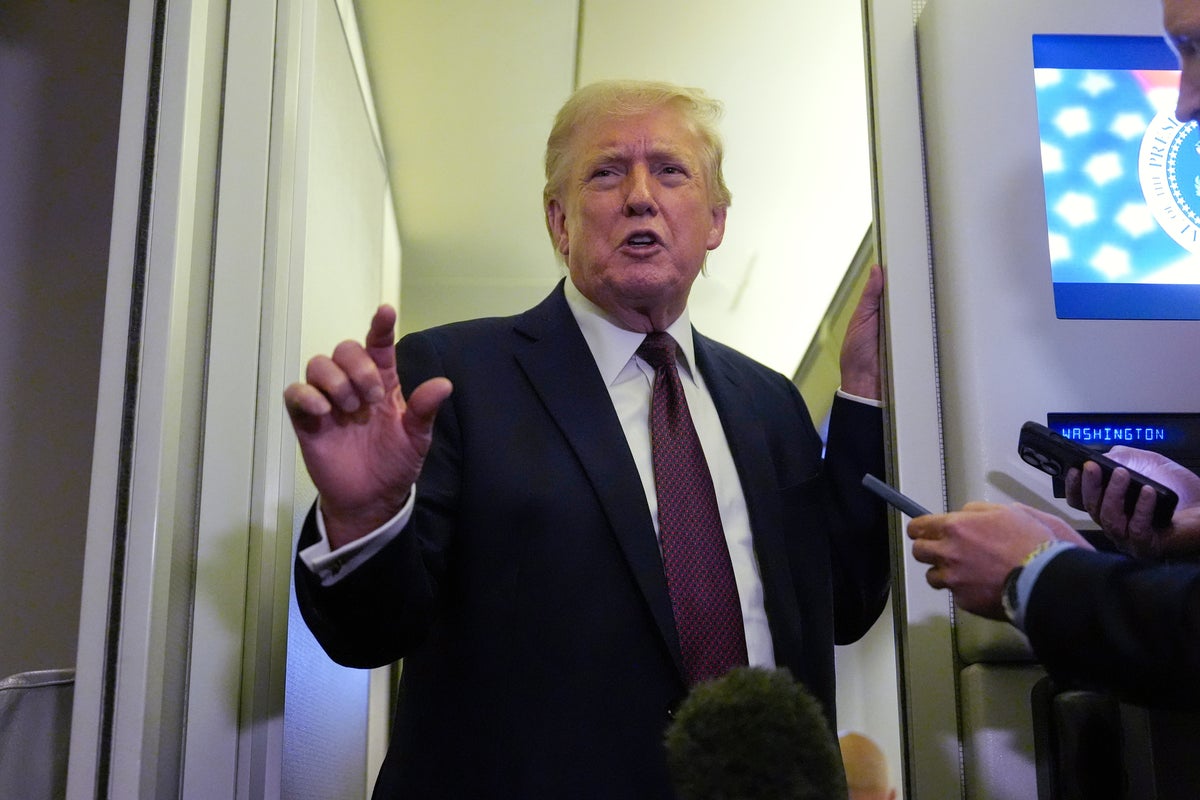
Donald Trump did not offer a white paper. He did not recite a list of strategic objectives curated by the Joint Chiefs. Instead, he snapped.
The reaction was visceral. It was a sharp, jagged rejection of the premise of the inquiry. In that split second, the policy became secondary to the personality. This is the modern theater of power. We have traded the slow, deliberate oratory of the past for a series of high-stakes, televised skirmishes where the primary weapon is the retort.
Consider a hypothetical family in a small town in Ohio. Let’s call them the Millers. Their son, a nineteen-year-old with a penchant for fixing old engines and a quiet streak of bravery, has just received his orders. To the Millers, the "deployment" isn't a political talking point. It is an empty chair at the dinner table. It is the sound of a phone ringing at 3:00 AM and the paralyzing fear that follows.
When the President snaps at a reporter regarding that deployment, the Millers aren't looking for a "win" in a cable news debate. They are looking for the steady hand of a commander who views their son’s life as the most precious resource the nation possesses. When the response is anger rather than explanation, that empty chair feels a little colder.
The Mechanics of the Snap
Why does a leader snap?
Power is a strange lens. It distorts the way sound travels. From behind the seal of the President, a question can sound like an indictment. A request for clarity can feel like a trap. The snapping is a defensive reflex, a wall of sound built to stop a line of questioning that feels like an encroachment.
But the wall has holes.
When a leader reacts with visible irritation to a question about military movement, it signals a deeper tension. It suggests a conflict between the public's right to know and the executive's desire to act without the burden of constant justification. We see this play out in the body language—the leaning forward, the pointing finger, the narrowing of the eyes. These are the ancient cues of a hunter or a warrior, now transplanted into the sterile environment of a press conference.
The reporter, meanwhile, is often cast as the villain in this narrative. They are told they are being "rude" or "unfair." But strip away the partisan framing, and you are left with the fundamental tension of a democracy: the governed asking the governor for an accounting of their actions.
The Invisible Stakes
We often talk about "geopolitics" as if it were a game of chess played on a marble board. It’s a clean metaphor. It makes us feel like we understand the movements. But the reality is much messier. It is composed of sweat, dust, and the smell of jet fuel.
When we discuss troop deployments in Iran, we are talking about the projection of power into a region that is a pressurized kist of historical grievances and modern ambitions. It is a place where a single misunderstanding can trigger a cascade of events that no one truly wants.
In this context, the tone of a President matters as much as the content of the orders. The world watches these briefings. Allies look for consistency. Adversaries look for cracks. When the leader of the free world loses his cool over a question, the message sent to Tehran or Moscow isn't about the troops—it’s about the volatility of the decision-maker.
The "snap" becomes a data point. It is analyzed by intelligence agencies and translated into a dozen languages. They aren't looking for the facts of the deployment; they already have those from satellite imagery and signals intelligence. They are looking for the man. They are trying to map the boundaries of his patience.
The Human Cost of Silence
There is a specific kind of silence that follows a sharp exchange in the briefing room. It’s the silence of a room full of people realizing they aren't going to get the answer they came for.
Imagine the reporter walking back to their desk. They have the "clip." The video will go viral. It will be carved into fifteen-second chunks and served to millions of people on social media. The supporters will cheer the "takedown." The critics will lament the "lack of decorum."
But buried under the noise is the unanswered question: What is the plan?
The tragedy of the modern political spectacle is that the heat of the moment evaporates the light of the information. We are so busy discussing the "snap" that we forget to discuss the "why." We treat the President’s temper as the lead story, while the soldiers packing their bags become the background noise.
The reality of deployment is not found in a soundbite. It is found in the logistics of moving thousands of tons of steel and flesh across an ocean. It is found in the complex, often contradictory intelligence reports that land on the Resolute Desk every morning. It is a weight that should, by all rights, make a person humble.
When that weight is met with irritability, it suggests a disconnect. It suggests that the person at the top views the inquiry as a personal affront rather than a civic duty. This is the danger of the "strongman" archetype—it prizes the appearance of dominance over the reality of accountability.
The Echo in the Halls
The briefing ends. The President leaves. The cameras are cut. The room begins to cool, but the tension lingers like the smell of ozone after a lightning strike.
This isn't just about one man or one reporter. It is about the erosion of a specific kind of trust. We need to believe that our leaders are operating from a place of deep, calculated reason, especially when it comes to the use of force. Every time that reason is replaced by a flash of temper, a brick is removed from the foundation of that trust.
The invisible stakes are the lives of the people we send into the breach. They deserve a narrative that is larger than a spat in a pressurized room. They deserve a discourse that is as serious as the sacrifices they are asked to make.
Instead, we are left with the image of a man snapping at a question, a moment of human frailty captured in high definition. It is a reminder that for all the titles and the power, the world is often run by people who are just as tired, just as frustrated, and just as defensive as the rest of us.
But most of us don't have our fingers on the pulse of a global superpower.
The Miller family sits in Ohio. The news is on, but the volume is low. They see the clip of the President. They see the anger. They don't hear the strategy. They just see the face of the man who holds their son’s future in his hands, and they wonder if he is thinking about the engine-fixer in the garage or if he is only thinking about the person holding the microphone.
The silence in their house is different from the silence in the briefing room. It is heavier. It is the silence of those who wait for the world to make sense, while the people in charge are too busy winning the moment to explain the decade.
The light on the camera goes red. The door closes. The deployment continues. The questions remain, hanging in the stagnant air of the room, waiting for an answer that may never come.