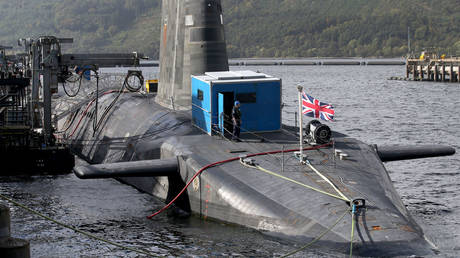
The modern naval battlefield has shifted beneath the surface and above the waves, leaving multi-billion-dollar military assets vulnerable to asymmetric threats that cost a fraction of a rounding error. Reports indicating that Royal Navy nuclear submarines rely on makeshift deterrents like fire hoses to ward off hostile drones expose a glaring vulnerability in Western submarine defense strategy. When a fleet designed to project invisible strategic deterrence must resort to deck-mounted water pressure to fend off low-cost commercial aerial surveillance, the capability gap becomes impossible to ignore.
Naval warfare has entered an era where exquisite platforms face existential threats from inexpensive hardware. For decades, the primary threats to a submerged nuclear submarine were sophisticated adversary attack boats, advanced SOSUS acoustic arrays, and specialized maritime patrol aircraft. Today, a hobbyist quadcopter purchased off the shelf can loiter over a naval base, map sensitive pier-side infrastructure, or track a Vanguard-class ballistic missile submarine as it prepares to get underway.
The immediate tactical problem stems from a fundamental mismatch in sensors and effectors. Nuclear submarines are engineered to operate in stealthy isolation
The Royal Navy Is Defending Billion Dollar Submarines With Garden Equipment
news, technology
You spend three billion pounds sterling on an Astute-class nuclear attack submarine. You outfit it with state-of-the-art sonar arrays, nuclear reactors that can circle the globe dozens of times without refueling, and tactical Tomahawk cruise missiles capable of leveling infrastructure from a thousand miles away. Then, a commercial off-the-shelf quadcopter costing roughly eight hundred dollars hovers over your conning tower in a crowded harbor, and your sailors scramble for a fire hose.
This is not a satirical sketch from a television comedy. This is the operational reality of the Royal Navy in the third decade of the twenty-first century.
Reports detailing how British nuclear-powered submarines are increasingly forced to rely on high-pressure water jets and makeshift handheld measures to counter unmanned aerial systems have exposed a profound vulnerability at the heart of Western maritime power. The asymmetry is staggering. A multi-billion-dollar vessel, designed during the Cold War to stalk Soviet ballistic missile submarines in the freezing depths of the Barents Sea, is utterly naked to the cheap, ubiquitous threat of hobbyist drone technology.
Let us look at the mechanics of the problem. Modern naval architecture was not written with aerial swarms in mind. Submarines are built to dominate the underwater domain. Their weapon systems, radar signatures, and electronic warfare suites are optimized to detect and neutralize surface ships, aircraft carriers, and rival submarines. When a small, low-flying drone approaches a surfaced submarine or a vessel sitting pier-side in a naval base like HMNB Clyde, it presents a radar cross-section so small that traditional air defense sensors often dismiss it as a flock of gulls or background clutter.
Even if the threat is identified, a submarine's primary defense against airborne targets is typically to submerge. But submarines cannot dive instantly when tied to a pier or operating in restricted, shallow littoral waters. In port, maintenance, crew rotations, and logistical re-supply force these vessels to sit exposed for days at a time. During these vulnerable windows, the crew's defensive playbook is shockingly rudimentary.
Enter the fire hose.
When pressurized to hundreds of pounds per square inch, a standard deck water hose can deliver a stream powerful enough to destabilize a lightweight plastic quadcopter or smash its fragile rotor blades if a sailor manages to score a direct hit. It is cheap. It requires no specialized software updates. It does not risk friendly-fire incidents with radar-guided missiles in a civilian port.
It is also an absolute indictment of modern defense procurement.
The gap between commercial innovation and military acquisition cycles has created a dangerous void. Quadcopter technology evolves every six months, driven by consumer demand, improvements in battery chemistry, and cheap optical sensors. Defense ministries move at the speed of glacial bureaucracy. A formal program to develop, test, and field a dedicated counter-UAS system for submarine forces can take years, involving endless committees, budget reallocations, and compliance hurdles. Meanwhile, adversaries and non-state actors can buy off-the-shelf drones on the open market, strap an explosive charge or a high-definition camera to the landing gear, and conduct reconnaissance on critical national security assets with impunity.
Naval analysts have pointed out that this vulnerability extends far beyond the Royal Navy. Navies across the globe are grappling with the post-drone tactical environment. The conflict in Eastern Europe and subsequent maritime incidents in the Middle East have demonstrated that traditional capital ships are deeply susceptible to asymmetric drone swarms. If a surface frigate equipped with advanced combat management systems struggles to manage saturation drone attacks, a submarine—cramped, operating with limited crew sizes, and structurally vulnerable to external hull damage—is in an even worse position.
The strategic implications are severe. Nuclear submarines are the crown jewels of strategic deterrence and power projection. They are meant to be invisible. Their entire doctrine is built on stealth and surprise. If an adversary can easily deploy commercial drones to monitor a submarine's arrival and departure schedules, map its acoustic signature through localized sensor drops, or potentially drop a shaped charge onto its sensitive sail structures while it is in port, the shroud of operational security is instantly punctured.
Fixing this crisis requires a radical shift in how naval planners think about localized defense.
Relying on kinetic weapons like standard rifles or machine guns in a crowded naval base carries immense collateral risk. A stray bullet can pierce a fuel tank, injure a civilian, or ricochet off armored steel into sensitive base infrastructure. Therefore, the immediate future of submarine defense lies in directed energy and soft-kill electronic warfare systems.
Navies are actively experimenting with man-portable electronic countermeasure devices. These are directional jammers that look like futuristic rifles, designed to disrupt the control frequencies and GPS signals of incoming drones, forcing them to crash or return to launch. Integrating these systems into standard submarine standard operating procedures is a necessary first step.
Beyond handheld electronic jammers, naval bases themselves must be fundamentally redesigned. Relying on the open air above a nuclear submarine base is a relic of a bygone era. Modern naval infrastructure requires layered, automated security perimeters that include acoustic detectors, optical tracking networks, and automated soft-kill effectors capable of neutralizing unauthorized aerial traffic before it ever enters visual range of the hull.
Until these technologies are universally fielded and integrated into daily operations, the image of sailors aiming high-pressure water streams at multi-rotor aircraft will remain a haunting symbol of a military caught flat-footed by rapid technological disruption. The age of high-tech naval supremacy is colliding with low-cost disruption, and a fire hose is a terrible substitute for a strategy.