The escalation of civil disobedience and state friction in Pakistan-administered Kashmir cannot be diagnosed through the lens of spontaneous public anger alone. A structural failure of governance combined with an asymmetric fiscal squeeze has generated a predictable systemic breakdown. To understand why public friction transformed into institutional crisis, one must deconstruct the operational mechanics governing the region's economy, administrative dependency, and civil-military relations.
The operational friction points trace back to a compounding cost-of-living crisis intersecting with structural economic exclusion. The region's populace faces an acute economic squeeze, driven by soaring utility tariffs and basic commodity inflation. Historically, the local economy relied heavily on remittance inflows, agricultural output, and small-scale trade. However, infrastructural deficits under the China-Pakistan Economic Corridor framework failed to translate into local capital formation or sustainable employment generation.
Youth unemployment sits at levels nearly triple the national average of mainland Pakistan. When a regional economy produces an excess of unabsorbed, educated labor without matching industrial or administrative expansion, the demographic profile shifts from a productive asset into an engine for mobilization. This demographic reality formed the core recruitment pool for grassroots resistance groups, bypassing traditional political parties that were viewed as compromised proxies of Islamabad.
The administrative framework of the territory operates under severe structural constraints that systematically disenfranchise local populations. Formally designated as a self-governing entity, the region's legislative assembly functions under the administrative shadow of the federal Ministry of Kashmir Affairs and Gilgit-Baltistan. The contentious inclusion of refugee seats—specifically the twelve seats reserved for displaced communities residing in mainland Pakistan—acts as an institutional valve. Federal administrations frequently leverage these seats to manipulate legislative majorities and engineer pliable local leadership.
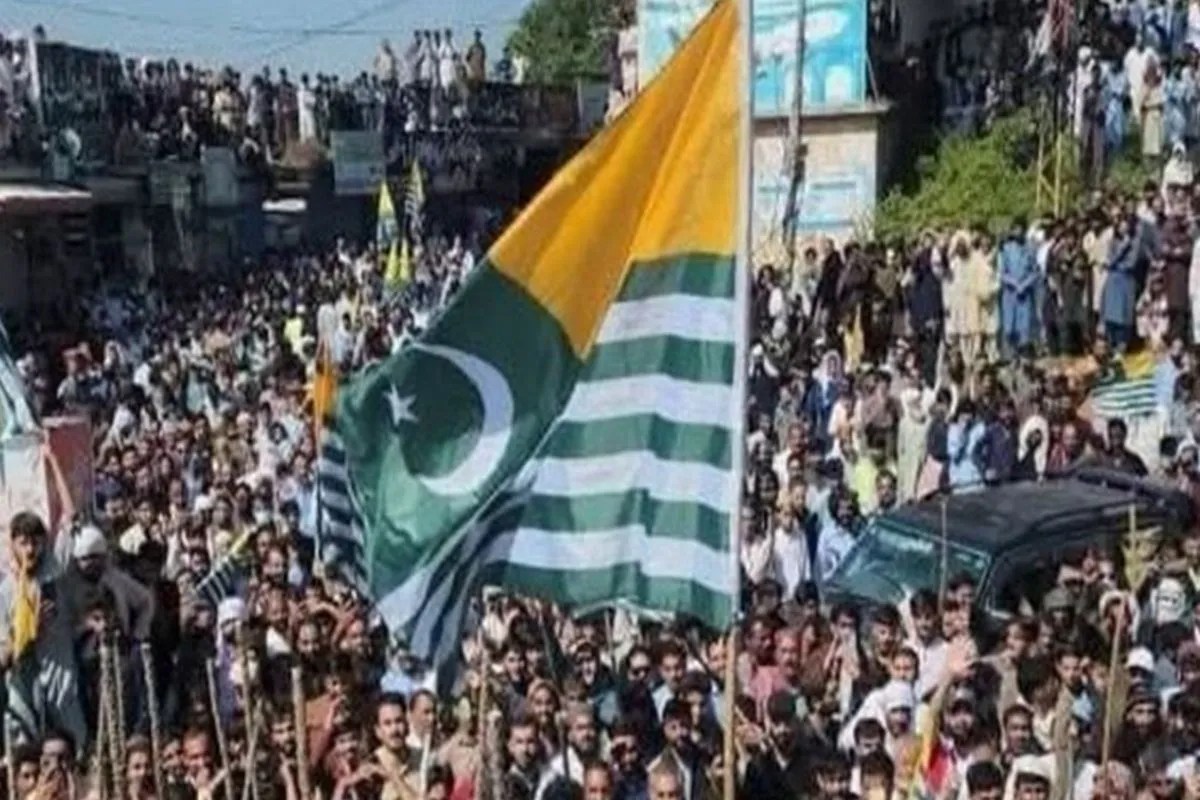
This institutional bypass creates a legitimacy gap. When local populations realize that electoral outcomes are structurally predetermined to favor federal interests rather than indigenous socioeconomic demands, faith in democratic channels collapses. The emergence of the Jammu Kashmir Joint Awami Action Committee represented an organic adaptation to this failure. By organizing outside conventional party politics, the coalition consolidated fragmented grievances—spanning exorbitant electricity billing, wheat flour subsidies, and taxation burdens—into a unified platform for structural reform.
State response mechanisms followed a predictable institutional trajectory when faced with organized civil disobedience. Rather than pursuing administrative restructuring or fiscal accommodation, federal and regional authorities defaulted to coercive legal and physical architectures. Fact-finding assessments by organizations such as the Human Rights Commission of Pakistan highlight an escalating reliance on anti-terrorism statutes, preventive detention protocols, and the Fourth Schedule to criminalize political dissent.
The employment of security protocols transformed a socioeconomic dispute into an existential constitutional crisis. The deployment of heavy security contingents, combined with prolonged communication shutdowns, disrupted fundamental logistical vectors, including healthcare delivery, public administration, and commerce. Communications blockades did not merely silence digital protest coordination; they severed the operational continuity of regional supply chains and banking systems.
The friction between state security forces and civil society intensified during electoral cycles, notably exemplified during the phased polls. While formal observers noted limited evidence of direct physical coercion inside isolated polling booths, the broader electoral environment was compromised by heavy securitization, structural boycotts, and the administrative postponement of key constituencies. Low voter turnout—particularly among female demographics—signaled widespread public disillusionment and a voluntary retreat from a process perceived as hollow.
The state's reliance on disproportionate force created a feedback loop of polarization. Every instance of lethal intervention or mass arrest reinforced public narratives of occupation rather than integration, driving moderate factions toward radicalized positions. The state's cost function for maintaining control through coercion continues to escalate, marked by mounting casualties among both security personnel and civilian protesters.
Stabilizing the region requires abandoning the current security-centric paradigm in favor of structural reform. Federal authorities must decouple local governance from arbitrary bureaucratic interventions, institute transparent fiscal transfers, and dismantle the legal mechanisms that criminalize peaceful assembly. Without structural devolution of administrative power and a credible economic stimulus package targeted at youth employment, the region will remain locked in a permanent cycle of institutional friction and state-society confrontation.
How Pakistan-administered Kashmir's protests escalated
This video provides a concise visual overview of how the grassroots economic protests over utility prices and inflation rapidly evolved into a broader political challenge against Islamabad's governance.