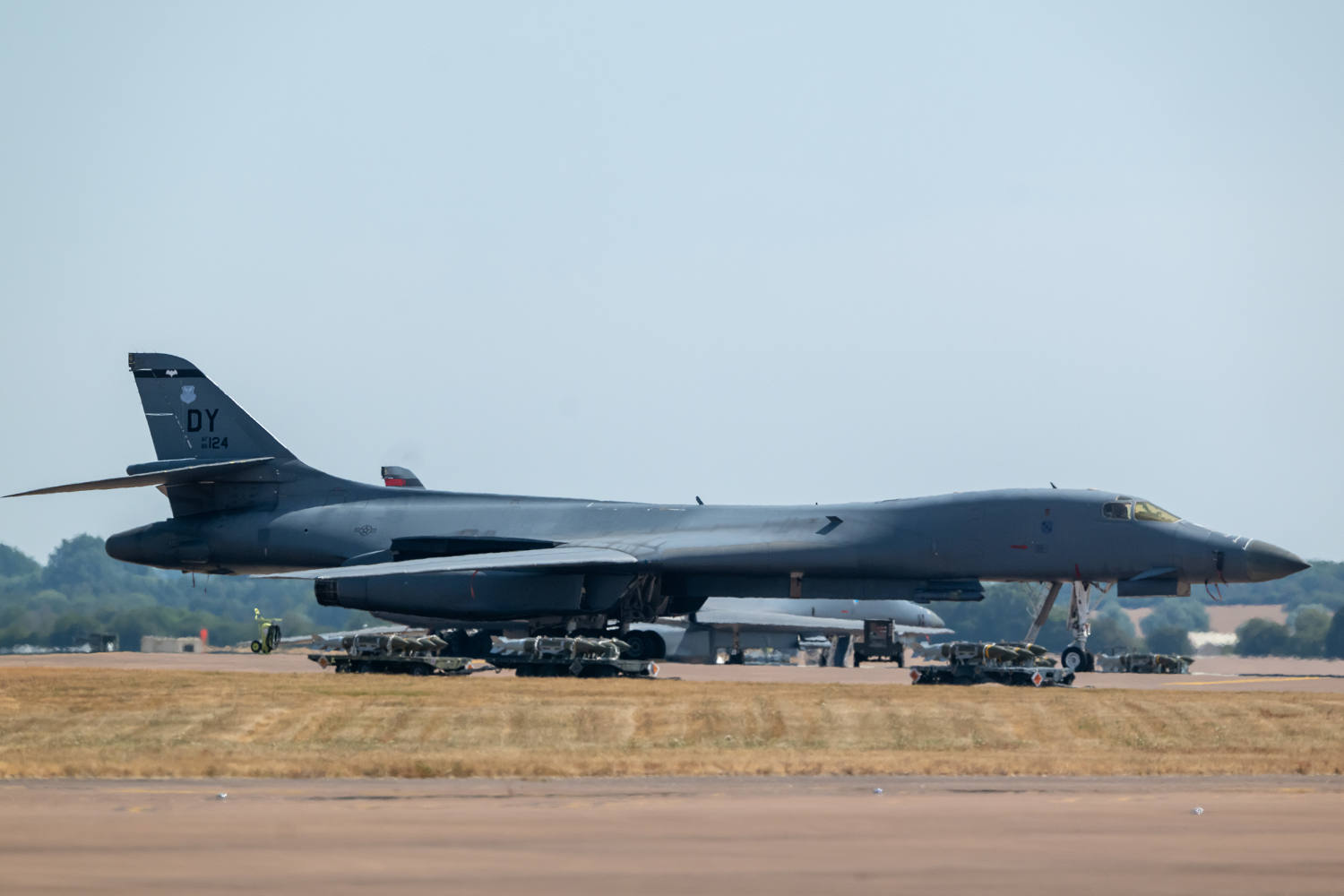
The September 2026 security breach at Royal Air Force Fairford exposes critical structural vulnerabilities in the physical protection of forward operating airbases. When a perimeter is compromised not by sophisticated cyber warfare or state-level aerospace infiltration, but by low-cost commercial vehicles carrying bulk fuel drums, the failure lies in the friction points between local civilian surveillance, perimeter sensor arrays, and rapid-response integration.
Strategic facilities like Fairford operate under complex threat matrices where dual-use infrastructure intersects with public access corridors. The operational architecture of these installations relies on layers of defensive depth, yet the initial detection mechanism in this instance did not stem from high-frequency radar telemetry or automated perimeter alarms. It originated from civilian observation. This reliance on organic community vigilance highlights a structural dependency on non-professional sentinels, revealing gaps in automated anomaly detection for surface-level logistics threats.
Deconstructing the mechanics of the incident clarifies how proxy networks exploit the seams of domestic counter-intelligence. The logistics footprint utilized in the Fairford operation—utilizing standard commercial vans and easily accessible accelerants—demonstrates a low-cost, high-asymmetry methodology. State-backed proxies frequently bypass high-value security perimeters by employing deniable assets who mimic legitimate service operations. The cost function for the attackers is minimal: standard rental fees and basic fuel procurement. Conversely, the cost function for the host nation involves large-scale evacuations, complex multi-agency counter-terrorism investigations, and the strategic redeployment of high-asset military hardware such as B-1 bombers.
The tactical fallout extends far beyond the immediate arrests. When an installation of strategic importance experiences a security lapse driven by external proxy networks, the secondary effect is a forced posture adjustment by allied forces. The relocation of strategic bombers to continental and domestic bases alters the theater's power projection capabilities. Strategic deterrence relies heavily on forward positioning; disrupting that positioning via localized sabotage or reconnaissance threats achieves a strategic victory for the adversary without requiring a direct military engagement.
Evaluating the multi-agency response reveals both operational agility and systemic friction. Counter-terrorism policing units and judicial frameworks, including actions taken under the National Security Act, are designed to neutralize networks post-discovery. However, the operational latency between asset staging and law enforcement intervention dictates the ultimate success of facility defense. Minimizing this window requires integrating real-time telemetry from civilian and military traffic nodes with predictive behavior analytics.
The fundamental takeaway for infrastructure defense is the necessity of closing the sensor-to-shooter loop for unconventional surface threats. Perimeter security can no longer focus solely on airborne or heavily armored incursions. The optimization metric must shift toward identifying anomalous logistics signatures—such as unmarked commercial vehicles loitering near critical flight lines—before they reach the outer wire.
Deploy integrated, multi-spectral ground sensors capable of distinguishing between legitimate base contractors and anomalous commercial vehicles within a five-mile outer exclusion zone.