Rain doesn't kill people. Gravity and bad engineering do.
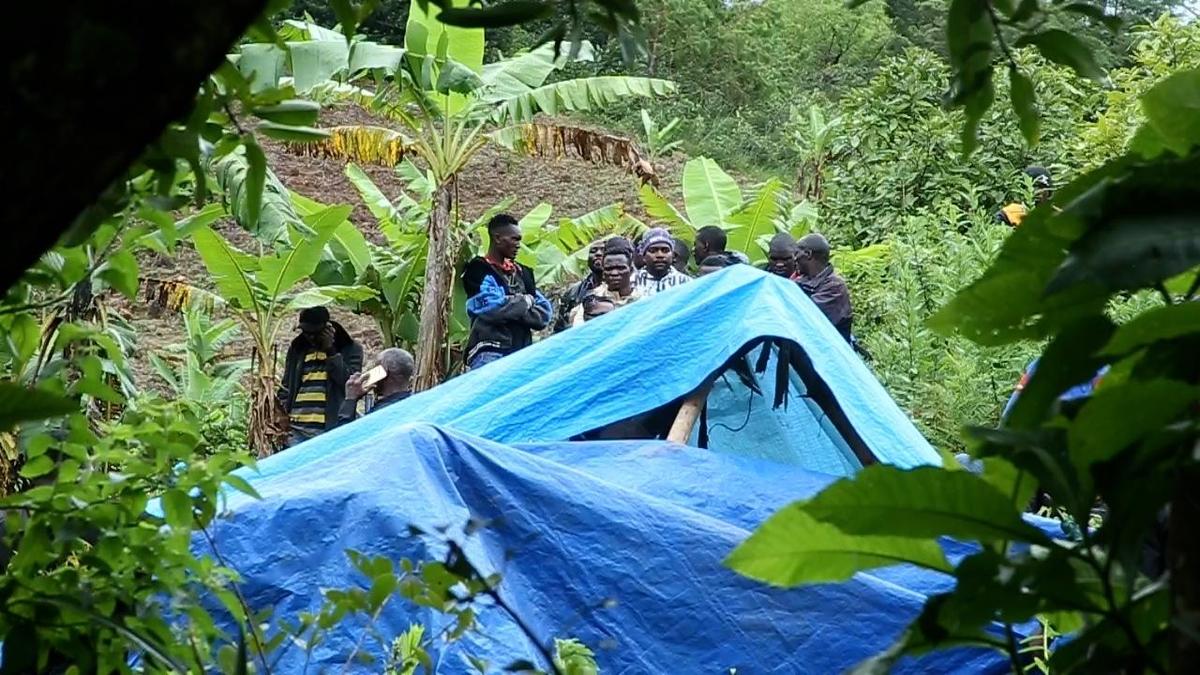
The mainstream media loves a "natural disaster" narrative. It’s convenient. It’s clean. It allows bureaucrats to shrug their shoulders and point at the clouds as if they were victims of a vengeful deity. When the headlines broke that at least 20 people died in Hanang, Tanzania, the reports followed the same tired script: "Heavy rainfall triggers deadly landslips."
This is a lie by omission.
Calling a landslide a "natural disaster" in 2026 is like calling a house fire an "oxygen disaster." You need the fuel and the heat to get the flame. In the case of Tanzania’s recurring tragedies, the "fuel" isn't the water falling from the sky—it’s the systematic failure of land management, the arrogance of ignoring soil mechanics, and a total reliance on reactive, post-mortem aid rather than predictive physics.
If we want to stop burying children in mud, we have to stop blaming the weather.
The Myth of the "Unprecedented" Storm
Every time a hillside gives way, officials call the rainfall "unprecedented." It’s a linguistic shield used to mask a lack of preparation.
Data shows that while rainfall intensity is increasing due to shifting climate patterns, the threshold for slope failure in regions like Manyara or the Southern Highlands hasn't changed. Soil has a specific shear strength. When you saturate that soil, you increase the pore water pressure. It's a simple math problem, not a mystery.
The physics of a landslide can be summarized by the Factor of Safety ($FS$):
$$FS = \frac{\text{Resisting Forces}}{\text{Driving Forces}}$$
When $FS$ drops below 1.0, the mountain moves. "Heavy rain" is just the final variable in a long equation of deforestation, over-grazing, and illegal slope-cutting for "affordable" housing. We know exactly where the $FS$ is precarious. We have the LiDAR data. We have the satellite imagery. We choose to ignore it until the body bags arrive.
Civil Engineering is the Real Villain
I’ve spent years looking at infrastructure projects across East Africa. The "lazy consensus" is that these communities are too poor to protect themselves. That's nonsense. It’s not a lack of money; it’s a misallocation of intelligence.
We build roads that act as gutters. In many of these mountainous regions, poorly designed drainage systems actually funnel massive amounts of runoff directly into the most unstable parts of the slope. Instead of dispersing the energy of the water, we concentrate it. We create "man-made rivers" that lubricate the very fault lines we should be stabilizing.
If you want to see where the next "natural" disaster will happen, look at where the last road was built without a proper retaining wall or a sub-surface drainage gallery.
The Cost of Cheap Concrete
We see a "robust" (to use a word I hate) wall and think we’re safe. But most of the retaining structures built in these zones are gravity walls that lack the mass or the drainage to handle a 100-year storm event.
- Lack of Weep Holes: Water builds up behind the wall.
- Hydrostatic Pressure: The pressure becomes immense.
- Catastrophic Failure: The wall doesn't just break; it becomes a projectile.
When a wall fails, it adds its own mass to the landslide, increasing the kinetic energy of the flow. We aren't building protection; we're building ammunition.
Why "Early Warning Systems" are a Grift
The international community loves to throw money at "Early Warning Systems" (EWS). They want to give everyone a cell phone alert that says, "Run, the mud is coming."
This is the ultimate "wrong question."
An EWS is a confession of failure. It says, "We have no intention of making your land safe, so we’ll just give you a five-minute head start to abandon everything you own."
True safety doesn't come from a text message. It comes from Slope Geotechnical Stabilization.
Imagine a scenario where we invested the millions spent on "disaster relief" into simple, low-tech bio-engineering. Deep-rooted vegetation, terrace contouring, and check-dams. These aren't flashy. They don't make for a good photo op for a UN dignitary in a blue vest. But they keep the dirt where it belongs.
The Brutal Reality of Land Use
People live on steep slopes because they have no choice? Not quite. They live there because the "safe" land is often hoarded by industrial interests or tied up in decades of bureaucratic red tape.
We see this in Arusha, in Mbeya, and in the Hanang district. The valley floors are for "development," and the unstable heights are for the workers. When the landslide hits, we call it a tragedy of nature. We should call it a tragedy of zoning.
If you build a house on a 35-degree slope composed of loose volcanic ash and weathered gneiss, you aren't a victim of rain. You are a victim of a society that allowed—or forced—you to build a grave.
Stop Donating to "Relief"
If you want to help, stop sending money to organizations that provide blankets after the fact. Blankets don't un-bury a village.
Demand investment in:
- Geological Mapping: Real-time monitoring of soil moisture levels using ground-integrated sensors.
- Aforestation Reform: Not just "planting trees," but strategic planting of species with high root-cohesion values.
- Legal Accountability: Suing the contractors and planners who approve housing developments on known high-risk catchment areas.
The "experts" will tell you that this is too complex. They’ll say the terrain is too rugged. They’ll say the rain was "once in a lifetime."
They said that in 2023. They said it in 2024. They are saying it now in 2026.
How many "once in a lifetime" events do we need before we admit the problem isn't the sky?
The physics of the earth is predictable. The failure of human will is what’s truly catastrophic. Stop looking at the weather app and start looking at the foundation.
If the dirt is moving, it’s because we let it.