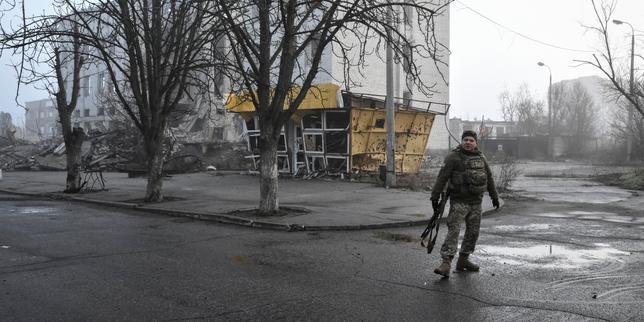
The decision to allocate ₹31,000 crore for the total fencing of the 1,643-kilometer India-Myanmar border represents a fundamental shift from a policy of managed permeability to one of absolute territorial enclosure. This capital expenditure is not merely a construction project; it is a massive structural intervention aimed at decoupling internal security from the regional instability of Myanmar’s Sagaing and Chin states. By terminating the Free Movement Regime (FMR), which previously allowed residents within 16 kilometers of the border to cross without visas, the Indian state is prioritizing kinetic control over historical social integratedness.
The Infrastructure Cost Function
A ₹31,000 crore outlay for 1,643 kilometers yields an average cost of approximately ₹18.8 crore per kilometer. This figure is significantly higher than standard highway construction costs due to the extreme geographical variables of the Indo-Myanmar frontier. Unlike the relatively flat terrain of the Radcliffe Line in Punjab or the desert expanses of Rajasthan, the eastern border is defined by the Patkai Range, dense tropical rainforests, and riverine gaps that defy standard linear fencing. For another perspective, check out: this related article.
The cost function of this project is driven by three primary variables:
- Topographical Complexity: The North-Eastern ridges require specialized engineering to prevent soil erosion from undermining fence foundations during monsoon cycles. In many sectors, traditional steel fencing must be supplemented by reinforced concrete retaining walls.
- Smart Border Integration: The budget includes a "Smart Border Management System" (SBMS). This shifts the reliance from physical barriers alone to a multi-layered sensor grid. This grid incorporates thermal imagers, infra-red sensors, and underground vibration detectors to identify breaches in low-visibility conditions.
- Logistical Premiums: Much of the border lacks arterial road connectivity. A substantial portion of the allocated funds must be diverted to "Border Load-Class" roads required to transport heavy machinery and raw materials to the zero line.
The Security Mechanism: Decoupling and Containment
The strategic intent behind this expenditure is the mitigation of "external-internal" spillover. The Myanmar border has historically functioned as a porous membrane for three distinct threats that this infrastructure aims to contain. Similar reporting on this matter has been shared by TIME.
The Insurgent Supply Chain
Naga and Meitei insurgent groups have long utilized "Safe Havens" in Myanmar’s ungoverned spaces. A physical barrier disrupts the tactical depth these groups enjoy. By forcing movement through designated Integrated Check Posts (ICPs), the state gains a monopoly on the observation of personnel flow, effectively choking the logistics of insurgent transit.
The Narcotics-Insurgency Nexus
The border proximity to the Golden Triangle makes it a primary conduit for high-purity heroin and synthetic methamphetamines. Current enforcement relies on intermittent patrolling. The fence transitions this to a persistent denial strategy. The logic is simple: by increasing the "Cost of Crossing" for smugglers, the state reduces the net profit margins of illicit trade, potentially de-funding local militant proxies.
Demographic Stabilization
The influx of displaced persons following the 2021 Myanmar coup has stressed the socio-political fabric of Manipur and Mizoram. The fence serves as a tool for demographic regulation. While humanitarian concerns remain, the state’s primary objective is the prevention of unregulated settlement patterns that trigger ethnic friction within Indian territory.
Technical Limitations and Failure Points
No physical barrier is absolute. The effectiveness of the ₹31,000 crore investment is capped by specific operational realities.
- Riverine Gaps: Hundreds of kilometers of the border consist of river channels. Fencing these is physically impossible. These "blue borders" remain the weakest link in the enclosure strategy, requiring constant UAV (Unmanned Aerial Vehicle) surveillance and water-patrolling, which are separate operational costs not fully captured in the initial construction budget.
- Maintenance Decay: The high-humidity environment of the Northeast accelerates the corrosion of steel components. Without a dedicated, multi-decade maintenance fund, the physical integrity of the fence will degrade within 10 to 15 years, rendering the initial capital expenditure a sunk cost.
- Subterranean Threats: As seen in other global conflict zones, high-density fencing often leads to the professionalization of tunneling. The seismic sensors included in the "Smart" package must be calibrated specifically for the clay-heavy soil of the region to avoid false positives while detecting manual excavation.
Operational Displacement and the Economic Pivot
The termination of the Free Movement Regime (FMR) creates an immediate economic vacuum. For decades, local border economies have functioned through informal barter and small-scale trade. The fence formalizes these interactions, pushing them through Integrated Check Posts.
This formalization has two likely outcomes:
- Macro-Economic Integration: Large-scale trade under the "Act East" policy becomes easier to regulate and tax, potentially increasing the state's revenue from formal transit.
- Micro-Economic Friction: Local communities lose access to traditional markets and agricultural lands that straddle the zero line. This creates a risk of local alienation, which insurgent groups may exploit. The success of the border project depends on the state's ability to replace lost informal trade with formal infrastructure and local employment.
Strategic Allocation of Force
The physical fence allows for a "Force Multiplier" effect for the Assam Rifles, the primary paramilitary force guarding this border. Currently, the lack of a barrier necessitates a high density of boots on the ground to maintain visual contact with the border.
Once the fence and sensor grid are operational, the force can transition from a "Line Defense" to a "Response Force" model. Personnel can be concentrated in strategic hubs, deploying only when sensors indicate a breach. This increases the operational efficiency of the troops and reduces the fatigue associated with constant, static patrolling in hostile terrain.
The Strategic Finality
The ₹31,000 crore project is a high-stakes bet on the primacy of the nation-state over ethnic and historical fluidness. It signals that India is no longer willing to tolerate a "soft" eastern flank in exchange for regional goodwill. The move effectively "hardens" the state’s sovereignty.
To maximize the return on this investment, the government must now pivot from construction to data management. The fence is only as effective as the intelligence layer sitting above it. The next logical step is the integration of the border sensor data into a centralized AI-driven command center that can predict breach patterns based on weather, seasonal movement, and political volatility across the border. If the fence remains merely a wall of steel and wire, it will eventually be circumvented; if it functions as a live data-gathering organ, it becomes a definitive tool of national security.