The smell of a construction site is usually a cocktail of wet concrete and sawdust. But inside the Cirque d'Hiver on a Tuesday morning, the air tastes like a century of exhaled breath, ionized by the ghost of ozone and the very real presence of gold leaf.
We forget that buildings have heartbeats. We treat them as containers—static boxes where things happen—rather than participants in the drama. But the Cirque d'Hiver, the "Winter Circus," is different. It is the world’s oldest circus building, a twenty-sided polygon of stone and scandal that has stood in Paris since Napoleon III personally handed over the keys in 1852. For decades, it sat under the weight of its own history, the red velvet fraying and the gilded molding losing its shine to the steady creep of grime. In other news, take a look at: Why a Lapland Gold Hunt Is the Best Summer Travel Trend You Haven't Heard About Yet.
Then came the restoration.
It wasn’t just a cleaning. It was a resurrection. To understand why a city would pour millions into a building dedicated to the "dying art" of the trapeze, you have to look past the sawdust. You have to look at the skeleton. Lonely Planet has provided coverage on this critical topic in extensive detail.
The Architecture of a Gasp
In the mid-19th century, an architect named Jacques Hittorff was tasked with a singular mission: build a place where the spectacle never stops. He designed a rotunda. No pillars. No obstructions. Just a massive, unobstructed bowl of human energy.
Imagine a performer named "Leo"—a hypothetical acrobat who represents the thousands who have swung from these rafters. In 1859, the real-life Jules Léotard (the man who gave the leotard its name) premiered the flying trapeze right here. When Leo stands on that high platform, his heart isn’t just beating for the crowd. It’s beating in sync with the acoustics of the room. Hittorff’s design ensured that even the smallest intake of breath from a child in the back row could travel up to the ceiling.
The recent restoration took this geometry and polished it until it screamed. The workers didn't just paint the walls; they stripped back layers of "modern" interference to find the original pigments. They found a specific, royal shade of red that hadn't seen the light of day since the Franco-Prussian War.
Walking into the arena now feels like stepping inside a jewelry box. The gold leaf on the Corinthian columns has been painstakingly reapplied by hand. It’s a deliberate rejection of the digital age. In a world where we consume "content" on five-inch glowing rectangles, the Cirque d'Hiver offers something heavy. Something physical.
The Stakes of the Invisible
Why does this matter? Why restore a circus when we have IMAX and VR?
The answer lies in the stakes. When you watch a film, you know the actor is safe. When you watch a performer at the Cirque d'Hiver, you are a co-conspirator in a dance with gravity. The stakes are physical, immediate, and terrifyingly real.
The restoration team understood that the building itself is a safety net—not literally, but psychologically. The atmosphere of a venue dictates the level of respect the audience gives the performer. A run-down, dusty arena invites a casual, distracted gaze. A restored masterpiece, gleaming with 19th-century opulence, demands silence. It demands awe.
Consider the technical challenge of the roof. The Cirque’s ceiling is a marvel of pre-Eiffel ironwork. During the restoration, engineers had to ensure that the ancient beams could still support the massive loads of modern aerial acts. We aren't just talking about a single man on a rope anymore. Modern circus involves complex pulleys, high-tension wires, and multi-person troupes that exert thousands of pounds of force.
The building had to be strengthened without losing its soul. It was a surgical operation on a giant. They replaced the seating—now a deep, plush crimson—but kept the tight, intimate spacing that makes you feel the shoulder of the stranger next to you. That intimacy is the "invisible stake." You aren't just watching a show; you are part of a collective human experience. When the acrobat misses the bar by a fraction of an inch, the entire room groans as one organism.
The Bouglione Legacy
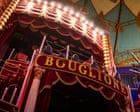
The circus isn't owned by a corporation. It’s owned by the Bouglione family. They bought it in 1934, and they have lived, breathed, and occasionally bled within its walls ever since.
To the Bougliones, this restoration wasn't a business decision. It was an act of ancestor worship. When you speak to the family members, they don't talk about ROI or market share. They talk about the smell of the stables and the way the light hits the ring at 4:00 PM.
The history here is dense. This is where Toulouse-Lautrec came to sketch the riders. This is where the Fratellini clowns redefined comedy. During the restoration, the family insisted on maintaining the equestrian soul of the building. Even though the use of wild animals in circuses is rightfully fading into history, the Cirque d'Hiver remains a temple to the horse. The friezes on the exterior, depicting epic battles and riders, were cleaned with the same precision as a Renaissance painting.
This is the intersection of high art and "low" entertainment. Paris doesn't make a distinction. To the Parisian mind, a perfectly executed backflip is as much a cultural treasure as a poem by Baudelaire.
The Geometry of the Circle
There is a reason the ring is exactly 13 meters in diameter. It’s the precise size needed for a horse to gallop in a circle while maintaining enough centrifugal force for a rider to stand on its back.
The restoration honored this sacred geometry. The ring itself—the "piste"—is the heart of the world. Everything radiates from it. By restoring the surrounding tiers to their original 1852 glory, the architects recreated the "optics of wonder."
The light was the hardest part. Original 19th-century circuses were lit by gaslight, which cast a flickering, warm, and slightly dangerous glow over everything. Modern LED lighting is often too clinical; it kills the mystery. The designers for the restoration had to develop a lighting scheme that mimicked that historical warmth while providing the pinpoint accuracy needed for modern safety.
They succeeded. When the house lights dim now, the transition isn't just dark. It’s a descent into a different era. The gold leaf catches the stray beams, creating a halo effect around the rim of the dome. It makes the performers look less like athletes and more like myths.
The Survival of the Physical
We are living through a crisis of the tangible. We order food through apps, we work in "clouds," and our social lives are mediated by algorithms. We are starving for the "thud."
The thud of a performer hitting the mat. The creak of the rope. The heat of the spotlights.
The Cirque d'Hiver restoration is a middle finger to the virtual world. It is a massive, expensive, beautiful stake driven into the ground of the 11th Arrondissement, declaring that some things must be experienced in person.
The critics who say the circus is dead are looking at the wrong things. They see the lack of elephants and think the soul is gone. But the soul of the circus was never the animals; it was the human capacity to defy the limits of the body. It was about the "gasp."
As the sun sets over the Place de la République, the lights of the Cirque d'Hiver flicker on. The restored facade, with its statues of Amazon warriors and its intricate carvings, glows against the Parisian twilight. Inside, a new generation of performers is warming up. They are stretching muscles, chalking hands, and checking cables.
They are ready to play their part in a story that started 174 years ago. The building is ready, too. Its skin is fresh, its bones are strong, and its heart—that 13-meter circle of dirt and dreams—is beating louder than ever.
The dust has settled. The gold is bright. The show, as it must, goes on.
The next time you find yourself in Paris, walk past the boutiques and the bistros. Find the twenty-sided building. Stand under the dome. Look up at the rafters where Jules Léotard first learned to fly.
You’ll realize that we don’t restore buildings because they are old. We restore them because they remind us how to be young.
The trapeze is swinging. All you have to do is jump.