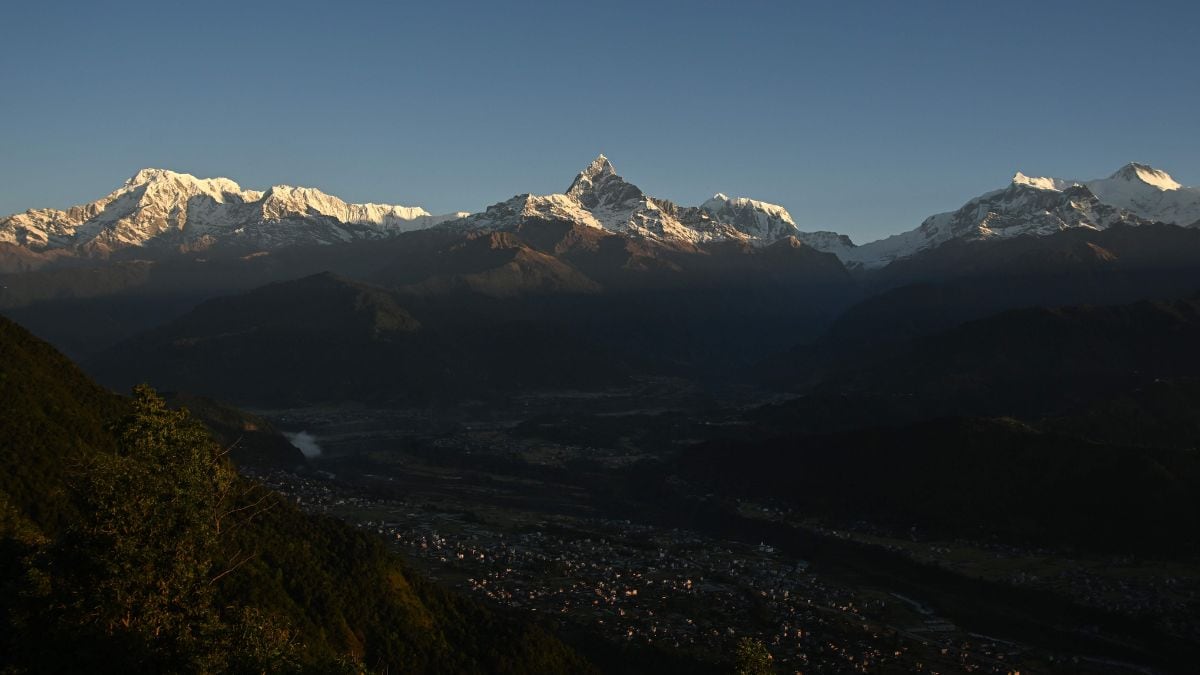
Six Indian tourists remain trapped by heavy snowfall in Nepal’s remote Dolpa district, where severe weather and high-altitude visibility issues have grounded rescue operations. When sudden winter storms sweep across western Nepal, standard emergency protocols collapse under the weight of extreme elevation, sparse telecommunications, and an aviation sector stretched beyond its operational limits. While wire reports treat this event as an isolated weather delay, anyone who has covered Himalayan tourism for the past two decades recognizes a familiar, systemic failure. The mountains are unpredictable. The bureaucracy meant to save people inside them should not be.
The Anatomy of a Dolpa Extraction Failure
Dolpa is not Everest. When a trekker runs into trouble near Lukla or Namche Bazaar, they are sitting inside a heavily trafficked corridor where private helicopter operators maintain forward bases and satellite connectivity is largely reliable. Dolpa, located in Nepal’s Karnali Province, is the country's largest and least-developed district. Getting a rescue chopper into high-altitude pockets like Shey Phoksundo or the Upper Dolpo trails requires long-range transit flights from hubs in Nepalgunj, Surkhet, or even Kathmandu.
Distance kills momentum. A helicopter departing from Nepalgunj must navigate narrow river gorges and rapid barometric shifts before it even reaches the staging areas near Juphal or Dunai. Once heavy snow sets in, cloud ceilings drop to the valley floor, eliminating the visual flight rules that govern almost all rotorcraft operations in western Nepal. Pilots cannot fly blind through unmapped, jagged terrain where downdrafts can slam a light utility helicopter into a granite wall in seconds.
The Physics of Thin Air and Heavy Snow
Standard news dispatches rarely explain why a rescue stops the moment snow starts falling. At elevations exceeding 3,500 meters, air density drops significantly. Rotor blades generate less lift, and turbine engines lose power. Add the weight of accumulated ice on the airframe or the turbulence of an active snow squall, and a rescue aircraft quickly exceeds its safe operating envelope.
Ground teams face an equally brutal reality. Trails carved into cliff faces disappear under two feet of fresh powder. Without clear visual markers, local police and Nepal Army units dispatched from district headquarters in Dunai move at a crawl, burning precious calories and risking frostbite just to cover a few kilometers. In Dolpa, a ten-mile gap between a stranded group and a rescue team can easily translate into a three-day march.
Why Permits Outpace Infrastructure
Nepal’s tourism ministry aggressively markets restricted areas like Upper Dolpo to high-spending international travelers and regional visitors from India. Yet the revenue collected from mandatory restricted-area permits rarely circles back into local emergency infrastructure.
Consider the disconnect between policy and reality on the ground.
- Permit Revenue vs. Local Readiness: Foreign trekkers pay substantial daily fees to enter Upper Dolpo, yet local security posts often lack basic high-altitude cold-weather gear, satellite communicators, or avalanche transceivers.
- The Guide Mandate Loophole: While Nepal introduced rules requiring foreign trekkers to hire licensed guides in most national parks, enforcement in remote pockets remains inconsistent, and regional visitors from India often travel under different administrative frameworks that bypass standard trekking agency oversight.
- Communication Blackouts: Cellular networks in Karnali Province rely on solar-powered towers. When multi-day blizzards block out the sun, backup batteries drain, plunging entire valleys into total silence just as distress calls need to go out.
When Indian nationals cross into Nepal—a border open to citizens of both countries without passports—many assume the proximity to home guarantees straightforward logistics. They often rely on local jeeps, regional flights, or independent itineraries rather than full-service expedition outfitters who carry satellite messengers like Garmin inReach devices. Once a storm hits, that lack of a dedicated crisis-management chain leaves families frantic and local authorities guessing the exact GPS coordinates of the stranded party.
The Economics of Himalayan Helicopter Rescues
To understand why rescue operations stall, you have to follow the money. Private helicopter companies form the backbone of Nepal’s high-altitude search and rescue capability. The state does not maintain a dedicated, all-weather civilian air-rescue fleet capable of reaching every corner of the Himalayas simultaneously. Instead, district administrators rely on the Nepal Army—whose heavy-lift Mi-17 helicopters are frequently tied up in infrastructure projects or disaster relief elsewhere—or private operators who demand ironclad payment guarantees before spinning their rotors.
Insurance verification takes time. If a stranded group lacks specialized high-altitude evacuation coverage, or if their policy caps rescue altitudes below the elevation where they are trapped, dispatchers hesitate. A single long-range rescue mission into Dolpa can cost upwards of $5,000 to $10,000 USD depending on flight hours, fuel repositioning, and crew standby time.
Even when diplomatic channels activate—such as the Indian Embassy in Kathmandu coordinating with Nepal’s Ministry of Home Affairs—bureaucratic clearance adds hours to a clock that is already ticking down. Weather windows in the high Himalayas do not wait for embassy faxes or insurance underwriters to clear an invoice. A two-hour break in the clouds at dawn might be the only viable extraction window for forty-eight hours. If the paperwork isn't finished before sunrise, the aircraft stays on the tarmac.
The Misconception of Shoulder-Season Safety
Most travelers associate Himalayan disasters with the dead of winter or the peak of the summer monsoon. That assumption is dangerous. Late autumn and early spring—the exact windows marketed as prime trekking seasons—produce some of the most violent, unpredictable weather events in western Nepal.
Western disturbances, massive extratropical storm systems originating in the Mediterranean region, sweep across northern India and slam directly into the Dhaulagiri and Kanjiroba mountain ranges bordering Dolpa. Unlike the predictable afternoon cloud buildups of the monsoon, a strong western disturbance can drop several feet of snow in under twelve hours, turning a dusty, walkable trail into a lethal trap.
Hypothermia and Altitude Sickness Compound Fast
When tourists are caught off guard by unseasonal snow, two physiological threats converge immediately. First is rapid heat loss. Travelers dressed for crisp autumn days suddenly face sub-zero wind chills without expedition-grade down or waterproof shells. Second is Acute Mountain Sickness (AMS). Forced to shelter in place at high elevations without acclimatization flexibility, stranded individuals become dehydrated and exhausted.
Cold stress constricts blood vessels and forces the heart to work harder, accelerating the onset of high-altitude pulmonary or cerebral edema. A group that looks stable over a patchy phone call on day one can deteriorate into a critical medical emergency by day three if they cannot melt snow for drinking water or maintain core body temperature.
What Actually Happens During a Ground Search
When aviation assets are grounded, the burden falls entirely on local police, armed police force personnel, and village volunteers. In Dolpa, these men are tough, acclimatized, and intimately familiar with the terrain. They are also chronically under-equipped.
A typical ground rescue team sets out from a trailhead carrying basic rations, rope, and standard-issue winter boots that quickly soak through in deep snow. Without snowshoes or touring skis, rescuers post-hole through chest-deep drifts, expending massive amounts of energy for every hundred yards gained. Avalanche risk spikes during and immediately after heavy snowfall, forcing teams to take wide, time-consuming detours along exposed ridges rather than following the direct valley floor.
Local residents often bridge the gap. Yak herders and village porters know which rock overhangs offer natural shelter and where hidden springs remain unfrozen. Yet relying on the goodwill and grit of impoverished mountain communities is not a sustainable national safety strategy.
How Travelers and Operators Must Adapt
Until Nepal overhauls its emergency response funding and establishes dedicated weather-radar coverage across Karnali Province, the burden of survival rests on preparation. Anyone planning to enter Dolpa—or any high-altitude corridor outside the heavily commercialized Everest and Annapurna circuits—must treat the trip as a self-reliant expedition rather than a casual mountain holiday.
- Carry Two-Way Satellite Messaging: Never rely on Nepali SIM cards (NTC or Ncell) once you leave a district headquarters. A dedicated satellite communicator with an active SOS subscription allows stranded trekkers to transmit exact coordinates and receive weather updates even when cell towers freeze over.
- Verify Aviation Evacuation Clauses: Standard travel insurance rarely covers helicopter rescues above 3,000 meters. Confirm that your policy explicitly covers emergency airlift up to 6,000 meters and authorizes direct billing with Nepali aviation operators so cash disputes do not delay takeoff.
- Build Mandatory Buffer Days: Western disturbances typically last between 48 and 96 hours. Itineraries scheduled down to the exact flight hour force guides and tourists to push forward into deteriorating weather rather than waiting out the storm in a sturdy stone teahouse.
- Pack for Severe Winter Regardless of the Calendar: Temperatures in Dolpa can plummet below minus fifteen degrees Celsius even during peak trekking months. Carry a four-season sleeping bag, waterproof mountaineering boots, and windproof outer layers on every single trip.
The six Indian tourists waiting out the blizzard in Dolpa are currently victims of geography and meteorology, caught in a blind spot where modern tourism has outrun basic rescue capacity. Every storm that traps travelers in western Nepal exposes the exact same flaw in Himalayan tourism: governments are eager to sell access to the roof of the world, yet chronically unprepared to bring people down when the sky turns white.