The draft nuclear accord between Washington and Riyadh has been sitting on the president's desk for nine months. It is completely finished. Negotiators hammered out the final text of the civil nuclear cooperation pact, known legally as a 123 Agreement, in October 2025. Yet Donald Trump has refused to sign it or transmit the documents to Congress, leaving a cornerstone of his Middle East strategy in legal limbo. While public officials point to procedural delays, the actual friction is driven by an active war with Iran and deep terror on Capitol Hill over a deal that shatters decades of American nonproliferation doctrine.
The Secret Compromise in Riyadh
For years, American diplomats held a firm line with Saudi Arabia. They insisted on the Gold Standard. This framework, established during a 2009 agreement with the United Arab Emirates, requires any foreign partner receiving American civilian nuclear technology to completely forswear domestic uranium enrichment and plutonium reprocessing. It also demands adherence to the International Atomic Energy Agency's Additional Protocol, which grants international inspectors sweeping rights to conduct snap audits of nuclear facilities. For an alternative perspective, read: this related article.
Saudi Crown Prince Mohammed bin Salman refused those terms from the beginning. He wanted a domestic fuel cycle.
The second Trump administration blinked. Documents reviewed by investigators reveal that the draft agreement finalized in late 2025 yields to Riyadh's core demand. It permits Saudi Arabia to enrich uranium and reprocess plutonium on its own soil. Instead of standard international oversight via the Additional Protocol, the agreement relies on a customized, bilateral U.S.-Saudi verification arrangement. Related insight regarding this has been shared by The New York Times.
The administration defended this concession in a confidential waiver report sent to congressional committees. They argued that the bilateral mechanism employs strict safeguards tailored specifically to conversion, enrichment, and fuel fabrication. But security professionals see a massive gamble. A sovereign state can easily evict foreign monitors or nationalize infrastructure once the physical centrifuges are spinning on its territory.
The Shadow of the Iran War
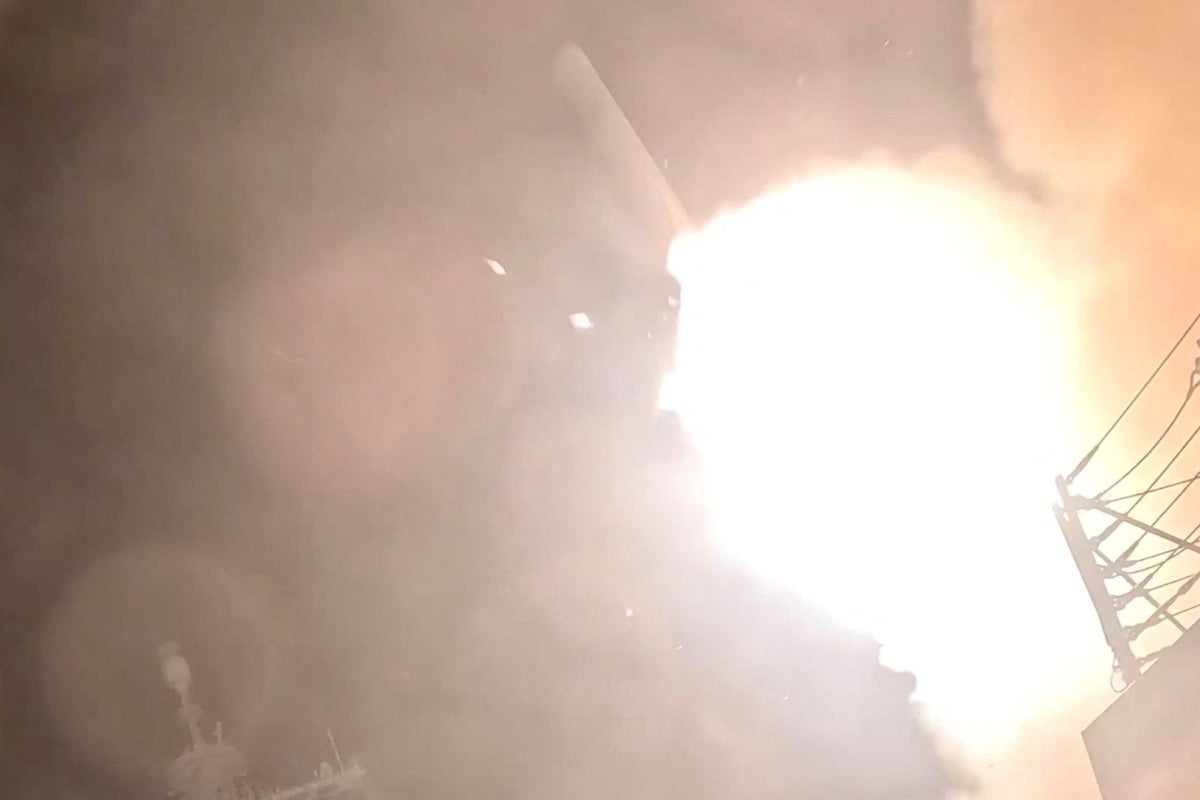
The primary obstacle preventing a formal signature is the violent conflict currently engulfing the Persian Gulf. Trump has repeatedly stated that the current military campaign against Iran was launched to neutralize Tehran's nuclear ambitions once and for all. Authorizing a deal that explicitly permits a neighboring monarchy to enrich uranium while actively fighting a war to stop Iran from doing the exact same thing creates a glaring contradiction.
Geopolitics is messy. A major conflict changes the risk math.
White House advisers are privately warning that signing the accord now would look like hypocrisy on a global scale. It would also validate the long-standing threats made by Riyadh. The Crown Prince has declared on multiple occasions that if Iran acquires a nuclear weapon, Saudi Arabia will build its own as quickly as possible. Providing the technological foundation for a domestic fuel cycle during an active regional war signals that Washington is actively preparing its closest Arab ally for a nuclear arms race.
American defense firms are eager to move forward. Westinghouse and other domestic nuclear suppliers want to secure billions of dollars in reactor contracts before French, Russian, or Chinese state-owned enterprises lock up the Saudi market. The financial stakes are immense. Saudi Arabia has promised to scale its total investment commitments in the United States to nearly $1 trillion as part of a broader economic and defense package that includes F-35 fighter jets and advanced precision weaponry.
The Capitol Hill Time Bomb
The president's hesitation is also driven by simple arithmetic in Congress. Under Section 123 of the Atomic Energy Act, a civil nuclear agreement must sit before lawmakers for 90 days of continuous session. If Congress does not pass a joint resolution of disapproval, the deal automatically takes effect.
The math does not look good for the White House.
Key lawmakers from both political parties are quietly organizing a massive legislative resistance. They are furious that the administration abandoned the Additional Protocol. A bipartisan coalition in the Senate is prepared to introduce a disapproval resolution the moment the agreement is formally transmitted. If that resolution gains veto-proof majorities, it would inflict a devastating, highly public foreign policy defeat on the administration.
Opponents of the deal are highlighting historical precedents where regional nuclear assistance backfired. They frequently point to Pakistan's historical procurement network as an example of how domestic enrichment expertise can rapidly metastasize across borders. Even under tight American bilateral monitoring, trained technicians can carry physical data and practical knowledge to undeclared facilities. The White House is delaying the signature because they do not have the votes to guarantee the deal survives a floor challenge.
The Erosion of the Gold Standard
The long-term danger of this delayed agreement extends far beyond the borders of the Arabian Peninsula. By writing a customized, lenient safeguards arrangement for a wealthy oil state, the United States risks fundamentally undermining the global nonproliferation regime. Other middle powers are watching this negotiation with intense focus.
If Washington permits Riyadh to enrich uranium without signing the Additional Protocol, countries like South Korea, Turkey, and Egypt will inevitably demand the exact same exceptions in their future civilian nuclear negotiations. The United States will lose its moral authority to enforce strict verification standards worldwide.
International security experts fear a future where major nuclear suppliers like Russia or China use this American precedent to justify their own bilateral, low-standard nuclear exports to developing nations. The global standard for safety would collapse into a web of weak, opaque political agreements. The administration finds itself trapped in a prison of its own making. They negotiated a deal that achieved their commercial objectives, but the strategic, military, and legislative costs of finalized execution remain too high to pay. The documents continue to gather dust in the Oval Office because the consequences of putting pen to paper are far more dangerous than maintaining the current stalemate.