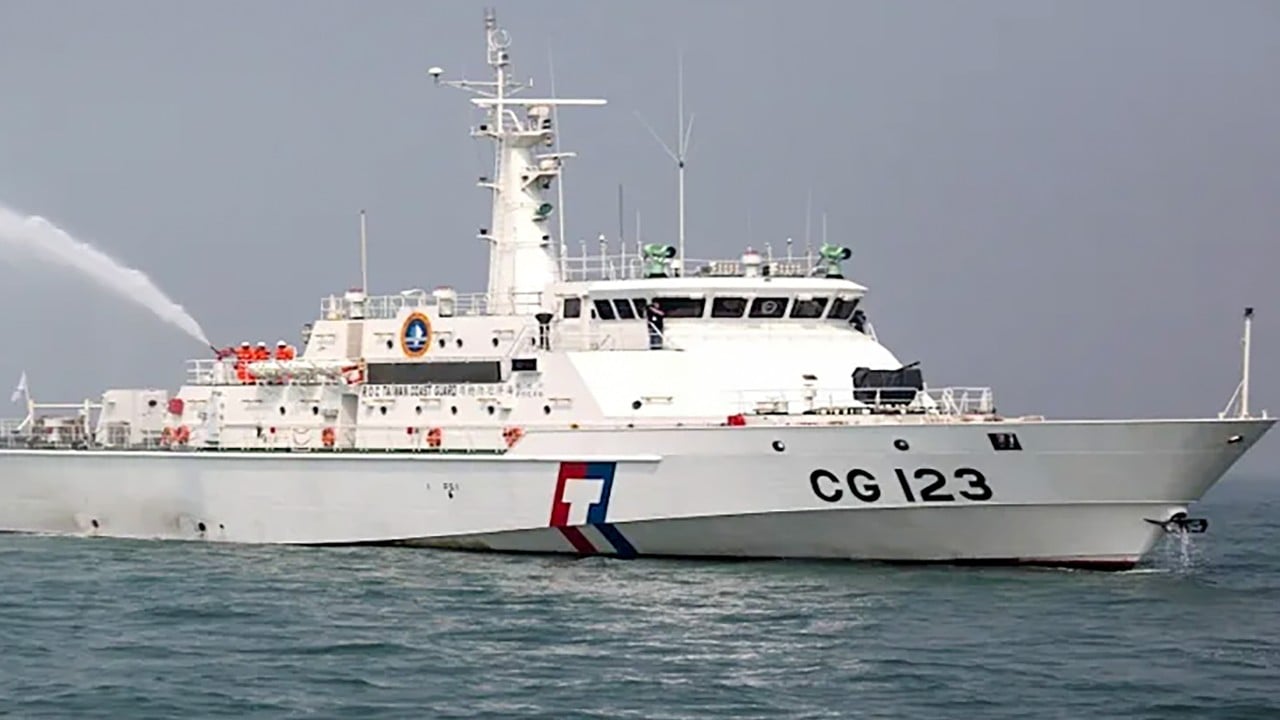
When a retired 500-tonne Taiwanese patrol vessel slipped quietly into the inventory of the Philippine Coast Guard under the newly commissioned designation BRP Sarangani, it marked a subtle yet significant shift in Indo-Pacific maritime politics. Formally transferred through a Manila-based non-governmental organization to sidestep rigid diplomatic sensitivities, the vessel represents far more than mere surplus hardware. It exposes an evolving operational convergence between Taipei and Manila as both governments face increasingly aggressive gray-zone pressure from Beijing across contested maritime zones.
For decades, formal government-to-government defense transfers between Taiwan and the Philippines were non-existent. Manila severed official diplomatic ties with Taipei in 1975, adopting a strict adherence to Beijing's One China principle. Yet maritime realities on the water have forced a pragmatic reevaluation of bilateral quiet diplomacy. The vessel in question, formerly known as the Kinmen during its service with Taiwan's Coast Guard Administration, required months of delicate coordination behind closed doors. Bureaucrats, maritime security analysts, and intermediaries worked through administrative friction and funding hurdles to complete the handover without triggering a diplomatic crisis in Beijing. You might also find this related story insightful: How Russia and North Korea Built a Shared Drone Pipeline.
The architectural genius of the transfer lay in its proxy execution. By routing the hull through the We Protect Our Seas Foundation, both governments managed to achieve a strategic outcome while maintaining plausible deniability. Philippine Coast Guard spokespersons were quick to clarify the chain of custody, emphasizing that the asset was accepted from a private entity rather than directly from a foreign government. This bureaucratic sidestep illustrates the complex choreography required to build security resilience in a theater dominated by competing sovereignty claims.
Navigating The Diplomatic Minefield Of One China
Managing the optics of a coast guard asset transfer requires absolute precision. Taiwan's Ocean Affairs Council established clear boundaries regarding how the vessel can be deployed. Under the terms of the agreement, the ship is strictly barred from enforcing maritime laws against Taiwanese fishing vessels. This caveat was crafted to appease domestic political concerns in Taipei, ensuring that state-backed assets are not turned against local fishing fleets operating in overlapping jurisdictions. As extensively documented in latest reports by The Washington Post, the effects are widespread.
The arrangement underscores the narrow corridor through which cross-strait security cooperation must travel. Lawmakers in Taiwan raised sharp questions about gifting a multi-purpose patrol craft to a state whose maritime enforcement agencies had historically locked horns with Taiwanese operators. By codifying operational limits into the transfer agreement, Taipei protected its own economic interests while extending a hand of goodwill to an archipelago grappling with chronic maritime incursions.
Meanwhile, Manila absorbed the vessel into its active fleet to bolster its strained maritime law enforcement capabilities. The Philippine Coast Guard operates an outmatched fleet relative to the sheer volume of maritime territory it must patrol. Deploying the newly minted BRP Sarangani to the southern maritime approaches around Mindanao provides immediate utility for search and rescue missions, environmental protection, and routine fisheries monitoring. The vessel provides an extra layer of presence in waters where illegal fishing and foreign maritime militia activity routinely threaten local livelihoods.
The Strategic Significance Of The Bashi Channel
Geography dictates strategy, and the Bashi Channel sits at the very epicenter of regional friction. Separating Taiwan from the Philippines, this narrow waterway serves as a vital maritime chokepoint connecting the South China Sea to the Western Pacific. With depths exceeding five thousand meters, the channel offers an ideal transit corridor for submarines and surface combatants operating in the region.
Control and monitoring of this corridor carry immense weight for both Taipei and Manila. Beijing's naval and coast guard forces frequently steam through the approaches, testing defense readiness and exercising power projection along the First Island Chain. When Chinese research vessels or armed coast guard cutters transit these zones, the proximity of Philippine and Taiwanese patrol assets transforms the area into a crowded theater of competing observations.
Security analysts point out that the arrival of the BRP Sarangani is not an isolated event. It forms part of a broader realization among regional capitals that coast guard diplomacy offers a lower threshold for cooperation than formal military pacts. Coast guard vessels, often referred to as white hulls, can engage in interdiction, rescue, and sovereignty patrols without instantly triggering the high-level escalation associated with grey-hull naval deployments. This flexibility allows countries to pool resources and share domain awareness while managing the escalatory ladder carefully.
Healing Old Wounds From The Balintang Channel
To understand the magnitude of this recent transfer, one must look backward to the friction that once defined relations between the two coast guards. In May 2013, a tragic incident in the Balintang Channel saw Philippine Coast Guard personnel open fire on a Taiwanese fishing vessel, resulting in the death of a fisherman named Hung Shih-cheng. The event sparked immediate outrage in Taiwan, leading to economic sanctions, frozen labor agreements, and severe diplomatic fallout. Eight Philippine coast guard personnel were eventually convicted of homicide over the incident, leaving deep scars on institutional memories in both capitals.
Rebuilding trust after such an event required a painstaking diplomatic rehabilitation process. Over the following decade, both sides established communication channels, emergency notification protocols, and mechanisms for the prompt release of detained fishing crews. The recent transfer of the patrol vessel stands as a tangible marker of how far that relationship has traveled. What began as a crisis management framework has matured into a functional security partnership born of shared geopolitical pressures.
The transition from hostility to cooperation did not happen overnight. It was forged through continuous dialogue, joint maritime safety exercises at the non-governmental level, and a mutual recognition that isolated maritime agencies cannot face well-funded regional competitors alone. The memory of the Balintang Channel remains a sobering reminder of the risks inherent in maritime enforcement, but it also serves as a baseline against which current cooperation is measured.
The Rise Of White Hull Cooperation Across The First Island Chain
The Pacific maritime theater is witnessing a proliferation of minilateral security arrangements designed to counter asymmetric pressure. Japan has moved to supply decommissioned naval hardware and patrol vessels to Southeast Asian nations, while the United States continues to provide littoral combat boats and surveillance technology. Taiwan's entry into this donor ecosystem marks a quiet evolution in its foreign policy posture.
By offering retired assets to the Philippines, Taipei signals its desire to be viewed as a net contributor to regional stability rather than merely a recipient of security guarantees. This posture aligns with a broader strategy of deepening connections with democratic partners along the maritime perimeter. As China expands its coast guard footprint and asserts expansive territorial claims through aggressive maneuvering, recipient nations in Southeast Asia are increasingly willing to look past diplomatic orthodoxies to secure the hulls they need.
The BRP Sarangani will soon settle into its operational routine patrolling the southern Philippine maritime domains. Its engines will burn fuel paid for by Philippine taxpayers, and its crew will wear the uniform of the republic. Yet the iron welded into its hull carries a complex diplomatic history, serving as a physical manifestation of changing alliances along the edge of the South China Sea. As maritime tensions continue to simmer, the quiet transfer of a single patrol boat proves that when external pressures mount, traditional diplomatic boundaries bend toward necessity.