War is an industrial numbers game. When you run out of microchips, steel, or skilled hands, you import them. Moscow is doing precisely that, turning to Pyongyang to feed its insatiable appetite for long-range strike weapons. Reports detailing how Russia employs North Koreans to build drones for the Ukraine war highlight a profound shift in modern conflict supply chains. It's not just about trading oil for artillery shells anymore. It's an industrial integration that bypasses traditional Western sanctions.
You have to look at the sheer scale of modern attrition to understand why this matters. Thousands of loitering munitions pound Ukrainian infrastructure every single month. Domestic manufacturing capacity in Russia hit bottlenecks. Skilled labor is scarce because thousands of engineers and factory workers are either on the front lines or working in heavy defense plants around the clock. Discover more on a similar issue: this related article.
Enter North Korea. Pyongyang has spent decades perfecting state-controlled labor export. Sending thousands of workers abroad to earn hard currency for the regime is an old playbook. But putting them inside domestic Russian manufacturing hubs to assemble military hardware represents a dangerous escalation.
The Industrial Reality on the Ground
Factories operating inside special economic zones within Russia face immense pressure to scale up output. Targets are aggressive. Missing deadlines carries severe political and professional consequences. Management needed hands that wouldn't question 16-hour shifts or safety protocols. Further analysis by Associated Press explores similar views on the subject.
North Korean workers arrive with a reputation for strict discipline and absolute compliance. They don't unionize. They don't complain about wages. They live in heavily monitored compounds and report directly to supervisors tied to both state apparatuses.
Reports indicate these workers aren't just doing low-level welding. They are integrated into assembly lines where Iranian-designed systems like the Shahed series—locally designated as Geran-2—are put together. Building these systems requires precise alignment of fiberglass hulls, small combustion engines, and guidance modules. The workforce acts as the muscle for a production line that runs twenty-four hours a day.
Critics often ask why Russia needs foreign workers when its population dwarfs Ukraine's. The answer comes down to specialization and political risk. Mobilizing more citizens risks domestic unrest. Importing foreign labor keeps the internal political temperature stable while keeping production lines humming.
What Pyongyang Gets in Return
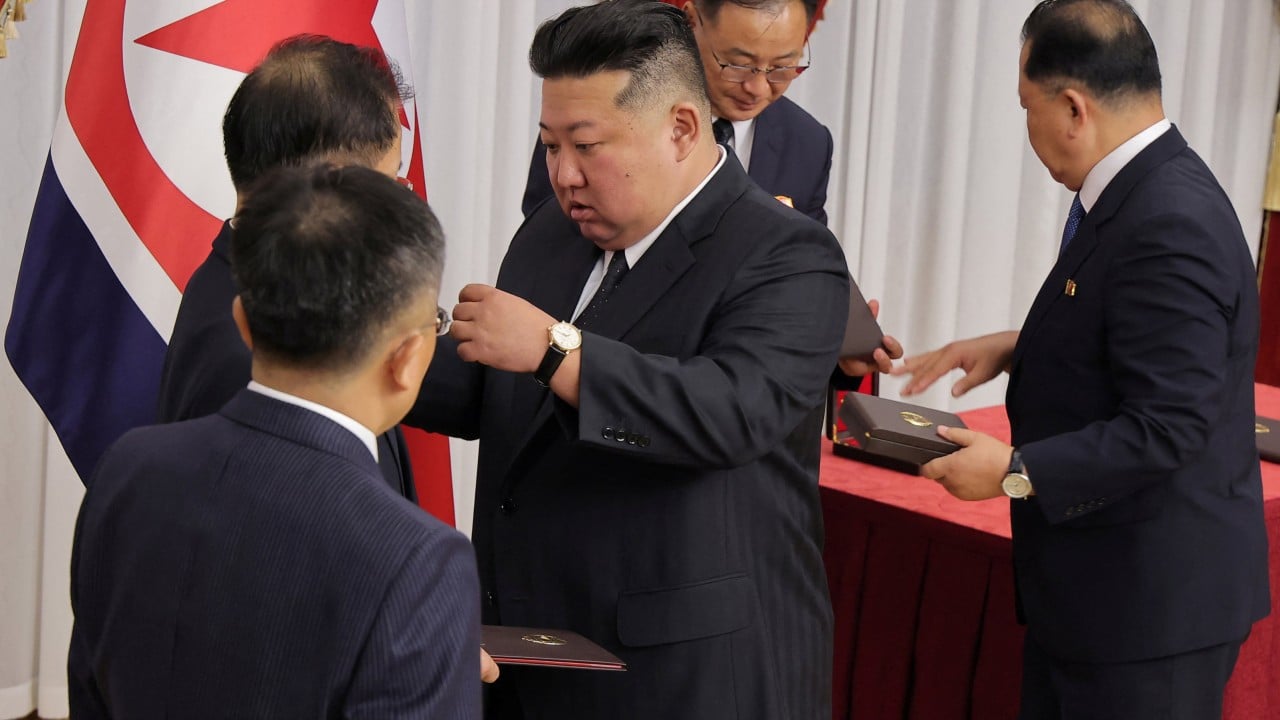
North Korea isn't doing this out of pure ideological friendship. Kim Jong Un's regime operates on strict transactional logic. In exchange for workers, raw materials, and older military supplies, Pyongyang receives crucial technological assistance.
For years, North Korea's ballistic missile and satellite programs struggled with guidance systems and re-entry physics. Direct collaboration with Russian aerospace engineers offers an invaluable shortcut. Data gathered from live combat use in Ukraine flows straight back to North Korean defense institutes. They get real-world testing data that no laboratory simulation can replicate.
Furthermore, hard currency flows directly back to state coffers, helping cushion the blow of decades-old international sanctions. It keeps the elite flush with cash and funds ongoing nuclear development. Every drone assembled in a Russian facility helps finance the next missile test over the Sea of Japan.
The Sanctions Dilemma
Western intelligence agencies track these supply lines closely, yet stopping them proves remarkably difficult. Sanctions work on paper, but enforcement in secondary and tertiary markets is porous. Financial transactions bounce through multiple intermediaries in Asia and the Middle East. Components are shipped under dual-use classifications—civilian electronics that magically find their way into military guidance computers.
When foreign labor is brought in physically, it evades traditional financial tracking altogether. You cannot easily freeze the wages of workers who are paid through bilateral state clearings or barter agreements.
Ukraine's air defenses adapt constantly, but the sheer volume of incoming threats overwhelms even advanced systems like Patriot or NASAMS. Every additional factory shift means more airframes in the sky. That translates directly to higher operational costs for defenders who must spend a multi-million-dollar interceptor missile on a drone that costs a fraction of that to build.
Breaking Down the Strategic Fallout
This cooperation signals a new blueprint for isolated states. When nations under heavy sanctions band together, they create self-sufficient economic bubbles. They share labor, raw materials, and military technology without needing access to global banking systems.
You're looking at the formation of a permanent parallel supply chain. If current trends continue, this partnership won't dissolve when the conflict in Ukraine eventually cools down. It will institutionalize a defense-industrial network stretching from East Asia to Eastern Europe, completely decoupled from Western oversight.
The implications stretch far beyond the immediate battlefields of Eastern Europe. Security planners in Tokyo, Seoul, and Washington now face a much more coordinated adversary network. North Korea's military capabilities are modernizing at an alarming pace, fueled by combat feedback and economic lifelines from Moscow.
The factories keep running. The shifts change in the dark. And a war thousands of miles away from Pyongyang is actively training the next generation of industrial engineers for a regime that has zero intention of backing down.
Check the logistics networks yourself. The borders are porous, the incentives are aligned, and the assembly lines won't slow down anytime soon.