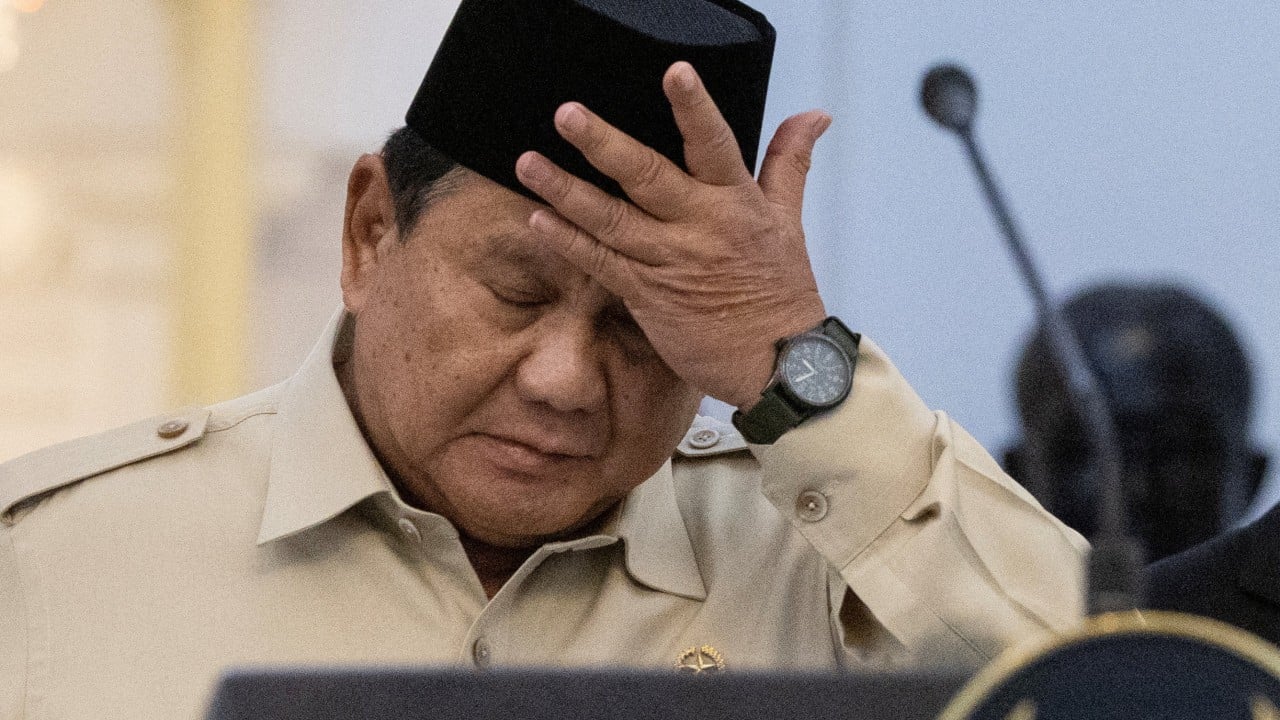
Saying sorry is easy. Stopping millions of hectares of carbon-rich peatland from catching fire every dry season is not.
When Indonesian President Prabowo Subianto offered an apology over transboundary haze, diplomatic circles across Southeast Asia perked up. On the surface, it sounded like a refreshing shift in tone from Jakarta. Past administrations frequently deflected blame, pointed fingers at foreign-owned plantation companies, or brushed off complaints from Singapore and Malaysia as overreactions. So a direct apology feels like progress, right?
Not quite. If you have followed Southeast Asian environmental politics for more than five minutes, you know polite diplomacy rarely clears toxic smoke from the skies over Kuala Lumpur or Singapore. The real question isn't whether Prabowo sounds more conciliatory than his predecessors. It's whether Indonesia actually intends to enforce environmental rules at home when doing so collides with massive agricultural and economic ambitions.
The History Behind Indonesia’s Haze Diplomacy
Transboundary haze has poisoned regional relations in the Association of Southeast Asian Nations (ASEAN) for decades. Every few years, particularly when El Niño weather patterns dry out Sumatra and Kalimantan, illegal slash-and-burn clearing turns peatlands into smoldering underground furnaces. The smoke drifts north and west, shutting down schools, grounding flights, and sending respiratory hospital admissions spiking across neighboring countries.
Look back at how Jakarta has handled this crisis over the years, and a clear pattern emerges.
In 2006, former President Susilo Bambang Yudhoyono apologized to Malaysia and Singapore after choking smog blanketed the region. Back then, regional observers hoped the gesture signaled an immediate crackdown on rogue palm oil and pulpwood operators. Yet Indonesia didn't ratify the ASEAN Agreement on Transboundary Haze Pollution until 2014—making it the very last member state to sign onto a pact created largely to solve a problem originating within its own borders.
Then came 2015, one of the worst haze disasters on record. World Bank estimates put Indonesia’s economic losses from that single fire season at roughly $16 billion, more than double what it cost to rebuild Aceh after the 2004 tsunami. Former Vice President Jusuf Kalla infamously told neighbors they should thank Indonesia for eleven months of clean air instead of complaining about one month of smoke. President Joko Widodo eventually took a firmer domestic stance, establishing the Peatland Restoration Agency (BRG) and imposing a moratorium on new palm oil permits.
Those measures helped reduce hotspots for several years, aided heavily by wetter La Niña conditions. Still, the underlying legal and economic incentives never disappeared. Whenever dry weather returns, the smoke comes back.
Why Prabowo’s Apology Raises Tough Questions About ASEAN Commitment
Diplomacy inside ASEAN runs on consensus, non-interference, and face-saving etiquette. A president offering an apology fits neatly into that tradition. It lowers the political temperature ahead of regional summits and signals goodwill to neighbors like Singapore and Malaysia, whose companies also hold major stakes in Indonesian agribusiness.
Here is the catch. Goodwill does not put out peat fires.
Ambition Versus Conservation at Home
Prabowo came into office promising rapid economic expansion, aiming to push Indonesia’s annual GDP growth toward 8 percent. Central to that vision are massive state-backed initiatives—most notably sprawling food estate projects in Kalimantan and Papua designed to achieve national food self-sufficiency, alongside aggressive biodiesel mandates that require ever-increasing supplies of crude palm oil.
Think about what those policies demand on the ground. They require land. Lots of it.
Environmental researchers and forestry watchdogs have repeatedly warned that clearing forested or peatland zones for large-scale agriculture drastically increases fire vulnerability. Peat swamps act like giant wet sponges in their natural state. Once drained by canals for plantations or food estates, the top layer turns into dry tinder. A single discarded cigarette or deliberate land-clearing spark can ignite fires that burn meters beneath the surface for months, impervious to water bombing from helicopters.
You can't simultaneously push aggressive agricultural land expansion and expect zero haze without ironclad enforcement. Right now, enforcement remains patchy at best.
The Weakness of the ASEAN Haze Pact
Even when Jakarta expresses genuine regret, ASEAN’s institutional toolkit is fundamentally toothless.
Under the ASEAN Agreement on Transboundary Haze Pollution, member states commit to monitoring, preventing, and mitigating land and forest fires. In theory, countries share satellite hotspot data and coordinate firefighting resources. In practice, the treaty lacks binding penalties, independent verification mechanisms, or any power to sanction governments that fail to prosecute offenders.
Singapore tried to work around this diplomatic gridlock in 2014 by passing its own Transboundary Haze Pollution Act, which allows Singaporean authorities to fine companies—even those operating outside Singapore—if they cause or contribute to unhealthy air quality in the city-state. On paper, it looked bold. In reality, enforcing cross-border subpoenas and collecting fines without full cooperation from Indonesian law enforcement agencies has proven extraordinarily difficult. Jakarta has consistently pushed back against foreign legal action targeting companies operating on Indonesian soil, viewing it as an infringement on national sovereignty.
So when Prabowo apologizes without announcing concrete cross-border data sharing or joint enforcement protocols, skeptics in the region naturally wonder if anything structural has changed.
What Actually Causes the Fires (And What People Get Wrong)
If you read casual commentary online, you will often hear two oversimplified explanations for Southeast Asia's haze crisis. Both miss the mark.
The first myth is that small-scale subsistence farmers are solely to blame. Yes, smallholder farmers use fire because it is the cheapest way to clear brush and enrich acidic soil with ash. Clearing a hectare by hand or heavy machinery costs money many rural families simply don't have. However, satellite mapping by organizations like Global Forest Watch and the Center for International Forestry Research (CIFOR) has consistently shown that vast clusters of hotspots frequently occur inside or right along the borders of industrial concessions—palm oil estates, timber plantations, and mining zones.
The second myth is that Indonesian authorities have no idea who owns the burning land.
Jakarta actually possesses sophisticated satellite monitoring through its Ministry of Environment and Forestry and the National Research and Innovation Agency (BRIN). Officials can pinpoint active fires down to specific concession coordinates within hours. The bottleneck isn't technology. It's political will, overlapping land registries, and a court system where corporate environmental fines often go uncollected for years after verdicts are handed down.
The Hidden Role of Global Supply Chains
There is another uncomfortable truth regional politicians rarely emphasize during polite summits. Haze isn't just an Indonesian governance failure; it is tied directly to regional capital and global consumer demand.
Many of the conglomerates operating plantations in Sumatra and Kalimantan are headquartered in Singapore and Malaysia, or rely on financing from banks across East Asia. Meanwhile, global demand for cheap vegetable oil, paper products, and biofuels keeps financial pressure high to convert marginal land into productive estates. Blaming Jakarta exclusively lets regional investors and multinational buyers off the hook far too easily.
How to Tell If Jakarta’s Pledge Means Anything Real
If you want to evaluate whether Prabowo’s administration is serious about preventing another regional smog emergency—or if the apology was simply smart public relations—ignore the diplomatic speeches. Watch four concrete indicators over the coming dry seasons.
- Concession Map Transparency: For years, civil society groups have pushed Indonesia to publish updated, high-resolution concession maps under its One Map Policy so independent analysts can see immediately which company controls burning land. Secrecy protects bad actors. Full public access changes the game overnight.
- Collection of Environmental Fines: Winning court cases against negligent plantation companies means nothing if the treasury never collects the money. Tracking actual rupiah recovered from guilty corporations tells you far more than press releases from the environment ministry.
- Peatland Rewetting Budgets: Blocking drainage canals to keep peat domes waterlogged is the single most effective physical barrier against catastrophic fires. If funding for canal blocking and community fire brigades gets slashed to pay for populist spending programs, expect trouble when rainfall drops.
- Haze-Free Supply Chain Enforcement: Look at whether Jakarta cooperates with regional regulators when trace-back investigations link smoky hotspots to mills supplying international palm oil traders.
What Individuals and Businesses in the Region Should Do Now
Waiting for ASEAN bureaucrats to overhaul environmental treaties is a losing strategy. Whether you live in the haze belt or manage operations across Southeast Asia, preparation beats optimism every time.
- Monitor real-time air quality properly: Rely on independent sensor networks like IQAir alongside official government portals such as Singapore’s NEA or Malaysia’s APIMS, paying close attention to PM2.5 readings rather than just broad daily averages, since fine particulate matter penetrates deep into the lungs and bloodstream.
- Upgrade indoor filtration before the dry season peaks: Once regional air quality hits unhealthy thresholds, HEPA air purifiers and N95 respirators sell out within days and spike in price. Equip homes, schools, and offices early in the year.
- Audit agricultural supply chains: Companies sourcing palm oil, rubber, or pulp from Indonesia should require verifiable satellite monitoring and zero-burning compliance from tier-one and tier-two suppliers rather than relying on self-reported sustainability pledges.
Diplomacy runs on warm words, and Prabowo’s apology certainly sounded better than defensive lecturing. Until Jakarta backs those words with transparent land maps, funded peatland restoration, and relentless corporate accountability, Southeast Asia’s blue skies will remain completely at the mercy of the weather.