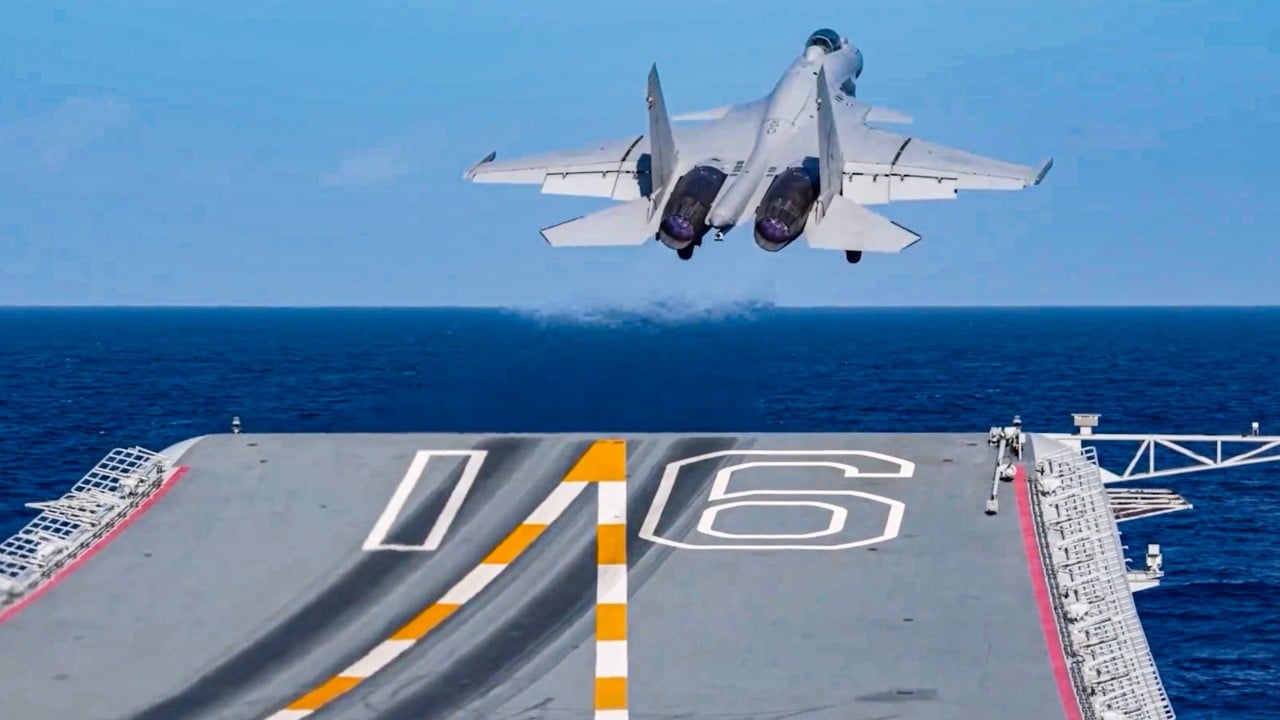
Every few months, defense reporters dust off the exact same headline. Japan’s Ministry of Defense releases its quarterly scramble statistics. The numbers tick upward. Pundits panic. Everyone nods along to the lazy consensus that Tokyo is heroically holding the line against Beijing’s growing Pacific aggression.
They are looking at the scoreboard while missing the entire game.
Treating fighter jet scrambles as a metric of Japanese deterrence is like praising a boxer for blocking punches with his face. Every time a pair of Japan Air Self-Defense Force (JASDF) F-15Js screams off the runway at Naha Air Base in Okinawa to intercept a People’s Liberation Army (PLA) reconnaissance drone or bomber, Beijing achieves a quiet, compounding victory.
The mainstream coverage frames these intercepts as proof of readiness. In reality, they represent a slow-motion logistical and financial bleed. China is not trying to provoke a dogfight in the East China Sea. It is executing a textbook attrition strategy designed to burn through Japanese airframe hours, exhaust maintenance crews, and bankrupt Tokyo’s operational readiness before a single missile ever leaves a rail.
The Math of Asymmetric Exhaustion
To understand why the current narrative is backwards, look at the hardware involved in a typical intercept.
When the PLA Navy or Air Force pushes into the Miyako Strait or circles Taiwan, it rarely sends its top-tier stealth fighters alone. Increasingly, Beijing dispatches unmanned aerial vehicles like the BZK-005 or WZ-7, alongside older maritime patrol aircraft and heavy bombers. These platforms are relatively cheap to operate, easy to replace, and, in the case of drones, carry zero human fatigue cost.
Japan responds with manned twin-engine fighter jets. Specifically, the F-15J Eagle.
Many of Japan’s F-15Js date back to the 1980s. While Tokyo has invested heavily in upgrading roughly half the fleet under the Japan Super Interceptor program, the rest are aging airframes with finite structural lifespans. Every scramble adds takeoff and landing cycles—the most stressful phase of flight for a fighter’s fuselage and wings.
Let’s break down the operational reality of a single intercept:
- Fuel and Maintenance: Twin-engine heavy fighters burn thousands of pounds of fuel per hour, especially when running afterburners to close distance quickly. According to widely documented defense aviation benchmarks, operating costs for heavy fourth-generation fighters run tens of thousands of dollars per flight hour when factoring in depot-level maintenance.
- Pilot Fatigue: A drone operator in Fujian works an eight-hour shift, clocks out, and goes home to dinner. A JASDF pilot sitting on five-minute alert status experiences intense physiological stress, circadian disruption, and rapid burnout.
- Opportunity Cost: Every hour a pilot spends shadowing a slow-moving Chinese surveillance drone is an hour not spent training for high-end, peer-to-peer air combat. Intercepts require basic formation flying and visual identification—skills that do nothing to prepare pilots for beyond-visual-range missile engagements against J-20 stealth fighters.
Imagine a scenario where a heavyweight champion spends twelve rounds swatting away a sparring partner’s jab, only to realize his arms are too heavy to defend himself when the real challenger steps into the ring. That is the exact trap Tokyo has walked into. By committing to a policy of intercepting nearly every intrusion into its Air Defense Identification Zone (ADIZ), Japan has handed Beijing total control over the tempo of JASDF operations.
The ADIZ Illusion
Most readers—and frankly, too many defense journalists—confuse an Air Defense Identification Zone with sovereign airspace. They are not the same thing.
Sovereign airspace extends 12 nautical miles from a nation’s coastline. Entering it without permission is a violation of international law. An ADIZ, by contrast, is a unilaterally declared buffer zone over international waters where a country demands incoming aircraft identify themselves. Under international law, military aircraft flying through another nation’s ADIZ without turning on transponders are doing nothing illegal.
Yet public reporting consistently conflates ADIZ entries with territorial violations. This confusion forces Japanese political leaders into a corner. Because the domestic press treats every ADIZ entry as a test of national sovereignty, Tokyo feels compelled to launch fighters every single time a Chinese aircraft crosses the line.
Beijing knows this. The PLA uses Japan’s own political transparency against it.
By forcing Japan to publish quarterly scramble totals, the media creates an artificial metric of escalation. If Tokyo stops scrambling jets against routine drone flights to save airframe life, opposition politicians and hawkish commentators immediately accuse the government of weakness. If Tokyo keeps scrambling, the PLA gets to dictate the wear-and-tear schedule of Japan’s premier air defense wing.
I have watched defense ministries across the Indo-Pacific fall into this exact reporting trap. When you turn tactical responses into public political scorecards, your adversary stops needing to beat you militarily. They just manipulate your metrics until you exhaust yourself trying to keep the numbers looking tough.
What Everyone Gets Wrong About Chinese Pacific Patrols
The conventional wisdom claims China’s expanded patrols through the First Island Chain are simply rehearsals for a Taiwan blockade or an invasion of the Senkaku Islands. That is only half the story.
Look closely at the flight paths of recent joint Sino-Russian bomber patrols and PLA Navy carrier aviation drills in the Philippine Sea. These are not just tactical dry runs. They are systematic data-harvesting operations.
Every time a Japanese F-15J or F-35A approaches a Chinese aircraft, it emits electronic signatures. Even in peacetime modes, radar emissions, communication frequencies, and response times get recorded by Chinese signals intelligence (SIGINT) platforms operating in the area.
Beijing is mapping Japan’s entire electromagnetic order of battle. They are learning:
- Reaction Times: Exactly how many minutes it takes specific Japanese bases to get wheels off the ground after a radar track appears.
- Sensor Blind Spots: Which altitudes, angles, and electronic countermeasures delay initial detection by Japan’s ground-based radar network.
- Command Bottlenecks: How quickly information flows from radar sites to tactical command centers and out to airborne interceptors.
When commentators cheer high scramble counts as a show of Japanese resolve, they ignore the fact that Tokyo is giving away priceless intelligence data every time those jets go up. You do not show your hand during poker practice, yet Japan is forced to reveal its response playbook daily just to escort drones over international water.
Dismantling the Common Myths
If you search for news on Pacific air defense, you will run into the same recycled questions from readers trying to make sense of the headlines. Almost all of them are built on flawed assumptions.
Are Japan and China on the brink of an accidental air war?
No. The danger in the East China Sea is not an accidental collision sparking World War III. Both militaries maintain strict, professional intercept protocols specifically designed to avoid a repeat of the 2001 Hainan Island incident. The real danger is structural disarmament. If Japan continues burning through its fighter fleet at this pace, it will enter the late 2020s with a hollowed-out air force at the exact moment China’s fifth-generation J-20 production reaches peak scale.
Why doesn’t Japan just use F-35s to scare China off?
Because flying a fifth-generation stealth fighter to visually intercept a propeller-driven surveillance drone is military malpractice. Aside from the astronomical cost per flight hour, flying an F-35 without radar-reflecting Luneburg lenses allows Chinese sensors to study its true low-observable signature. Flying it with lenses defeats the purpose of stealth while still wasting engine life. Japan rightly holds its F-35s back from routine ADIZ policing, leaving the heavy lifting to the battered F-15 fleet.
Doesn't Japan’s massive defense budget increase fix this?
Money cannot buy back time or structural fatigue. Tokyo’s historic push to raise defense spending toward 2 percent of GDP is heavily focused on standoff missiles, satellite constellations, and long-term co-development projects like the Global Combat Air Programme (GCAP) with the UK and Italy. None of those systems will relieve the immediate daily pressure on Naha Air Base this year or next. You cannot shoot a multi-million-dollar cruise missile at a drone flying legally in international airspace.
The Case Against Selective Restraint
Before anyone accuses me of advocating total passivity, let’s be honest about the risks of changing course.
If Tokyo suddenly scales back fighter scrambles and relies solely on ground-based radar and satellite tracking for routine ADIZ entries, Beijing will immediately test the boundaries. Without visible wingtip-to-wingtip intercepts, Chinese aircraft will push closer to the 12-nautical-mile territorial limit. Domestic political backlash in Tokyo would be ferocious, and regional allies like the Philippines or Taiwan might misread the shift as a retreat from regional security commitments.
Selective restraint requires immense political discipline and a radical overhaul of how Japan communicates deterrence to its own voters. It is messy, unpopular, and easy for rivals to exploit in the short term.
Yet the alternative—continuing on the current trajectory—is guaranteed failure. No air force on earth can sustain peak peacetime intercept tempos indefinitely against an adversary with vastly deeper industrial capacity and a rapidly expanding fleet of unmanned systems.
How Tokyo Must Flip the Script
Japan does not need more fighter scrambles. It needs to break the symmetry that allows Beijing to trade cheap drone hours for expensive fighter hours.
First, decouple surveillance from manned intercepts. Unless an incoming track exhibits hostile intent or threatens sovereign 12-nautical-mile airspace, track it electronically. Use long-endurance unmanned systems like Japan’s own RQ-4B Global Hawk or maritime surveillance drones to shadow Chinese UAVs. Match cheap hours with cheap hours. Save manned fighters for genuine threats.
Second, stop publishing raw scramble counts as a standalone metric. As long as the Ministry of Defense treats quarterly intercept numbers like box scores, Beijing holds the remote control to Japanese public anxiety. Reframe public reporting around domain awareness—tracking and cataloging foreign activity—rather than physical airborne intercepts.
Third, lean into asymmetric denial. As defense strategists at institutions like the Center for Strategic and Budgetary Assessments (CSBA) and the RAND Corporation have argued for years, surviving a high-end Pacific conflict depends on distributed lethality, hardened bases, and mobile air defenses—not winning peacetime tail-chasing contests. Every dollar saved by leaving an F-15 in the hangar should go directly into underground fuel storage, runway repair kits, and dispersed surface-to-air missile batteries across the Ryukyu island chain.
The next time a headline warns that Japanese fighter scrambles have hit another multi-year high, do not mistake that noise for strength. Listen closer. That sound is not deterrence working—it is the sound of Beijing wearing down its biggest regional rival without spending a single round of ammunition.


