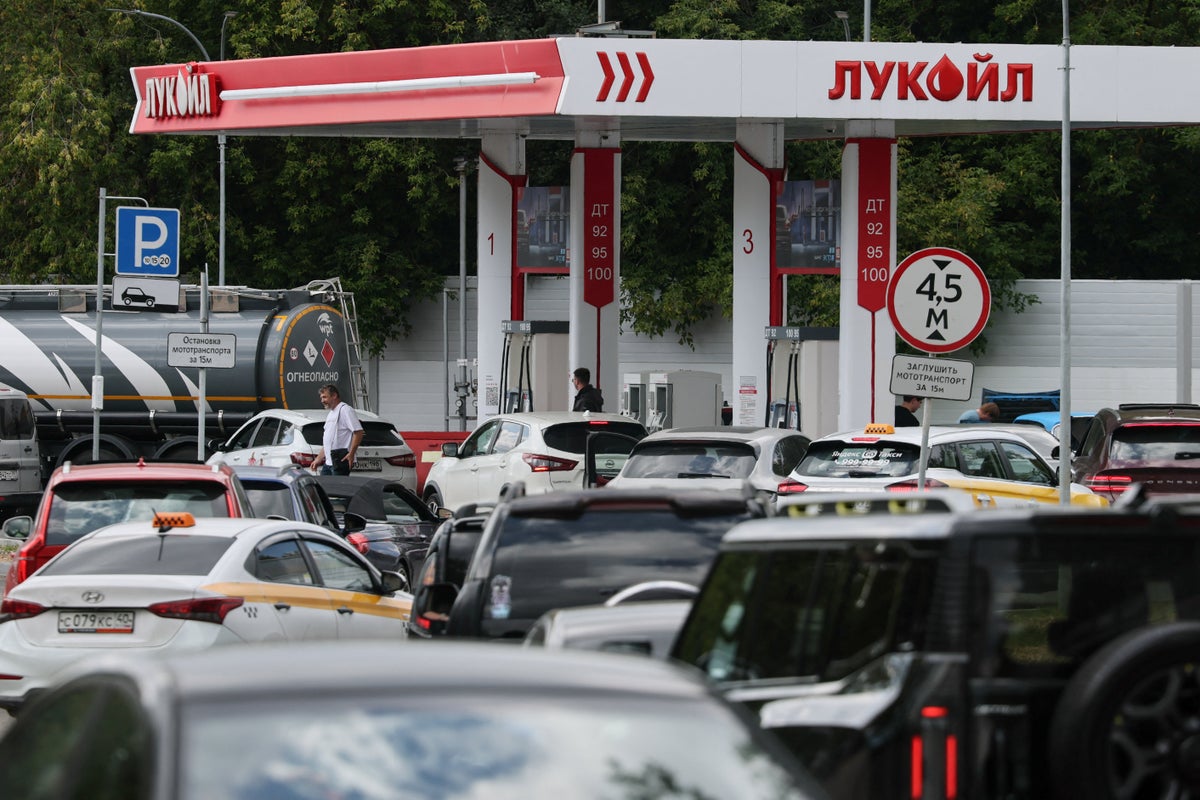
The standard headline flashes across Western screens like clockwork. Dictator clamps down. Citizens riot at the pump. The regime is cracking from within. It is a comforting narrative, wrapped neatly in the familiar boxes of democratic wishful thinking.
It is also largely nonsense.
When reports surfaced regarding arrests in Russia over fuel complaints and localized queues at petrol stations, media outlets rushed to apply a 20th-century template to a 21st-century commodity market. They assumed a supply crunch meant structural collapse. They looked at a localized logistical bottleneck and diagnosed a terminal systemic failure.
I have watched analysts misread energy logistics for two decades. They mistake temporary administrative friction for existential panic. They look at a nation swimming in hydrocarbons and assume a distribution hiccup signals the end of the state.
Stop looking at the retail pump. Start looking at the refinery margin and the export vector.
The Myth of Retail Panic
The lazy consensus argues that civilian discontent over gasoline prices will fracture domestic stability. This ignores how centralized energy economies actually operate.
In a market-driven system, a supply dip triggers immediate price spikes, public outcry, and political liability. In a state-managed economy with near-infinite domestic extraction capabilities, a retail shortage is rarely a problem of absolute lack. It is a problem of administrative sequencing, seasonal agricultural demands, and refinery maintenance timing.
When Ukrainian drone strikes targeted Russian refining capacity over the past year, Western commentators predicted immediate paralysis. The reality was far more mundane and far more stubborn. Russia did not run out of fuel; it shifted allocation priorities. Agricultural harvest needs took precedence over urban commuting convenience. Refineries adjusted output streams.
Arresting citizens for public agitation over fuel is not a sign of a regime on the brink of overthrow. It is a sign of a wartime government enforcing strict resource triage. Equating local friction with impending revolution is a catastrophic analytical error.
The Logistics Reality Check
Let us look at the mechanics. Russia produces roughly ten million barrels of oil per day. Its domestic consumption absorbs only a fraction of that output.
When you sit on the world's most geographically diversified extraction base, a localized gasoline queue does not mean the well has run dry. It means the bureaucracy is moving slower than the demand curve.
- Refining Bottlenecks: Modern cracking units require precise maintenance schedules. When external actors target these facilities, temporary offline periods force regional distributors to scramble.
- Logistical Re-routing: Shifting fuel transit from pipelines to rail or truck takes time. During peak harvest seasons, agricultural demand spikes precisely when logistics networks are stretched.
- State Intervention: Moscow does not panic; it mandates. Price caps and export bans are deployed to force domestic supply compliance, often creating artificial localized pinches while the macro-system stabilizes.
The mistake analysts make is viewing Russia through the lens of a Western retail consumer who treats a thirty-minute wait at a Shell station as a crisis. In a mobilized state economy, civilian inconvenience is an acceptable externality of state survival.
The Flawed Premise of Energy Isolation
People ask why citizens continue to comply if shortages are biting. The premise is flawed. It assumes the average Russian views a local fuel shortage through the same political framework as a London or New York commuter.
They do not.
Decades of historical memory have conditioned the population to accept supply friction as a baseline condition of geopolitical confrontation. When external sanctions and internal re-allocations pinch the consumer, the reaction is not a sudden conversion to liberal democracy. It is adaptation, grumbling, and a hardening of internal resilience.
Western strategists keep waiting for the economic lever to snap the political spine. It has not happened because the economic levers are being pulled by people who fundamentally misunderstand Russian economic shock-absorption.
The Real Vulnerability
If you want to understand where the pressure points actually lie, ignore the retail petrol stations. Look at high-value industrial feedstock and international maritime logistics.
Russia's vulnerability is not a lack of crude in the ground or gasoline for Ladas. It is the long-term degradation of complex Western-component-dependent refining technology. Over years, the inability to import specialized catalysts and proprietary software updates will bite deep into output quality and volume.
That is a slow bleed, not a sudden cardiac arrest.
The next time a headline screams about riots at a Russian gas station, remember what you are actually looking at. You are watching a massive, brutish, resource-heavy machine grinding its gears under pressure, prioritizing war over comfort, and crushing any internal noise that disrupts the machinery.
The system isn't breaking. It is hardening.