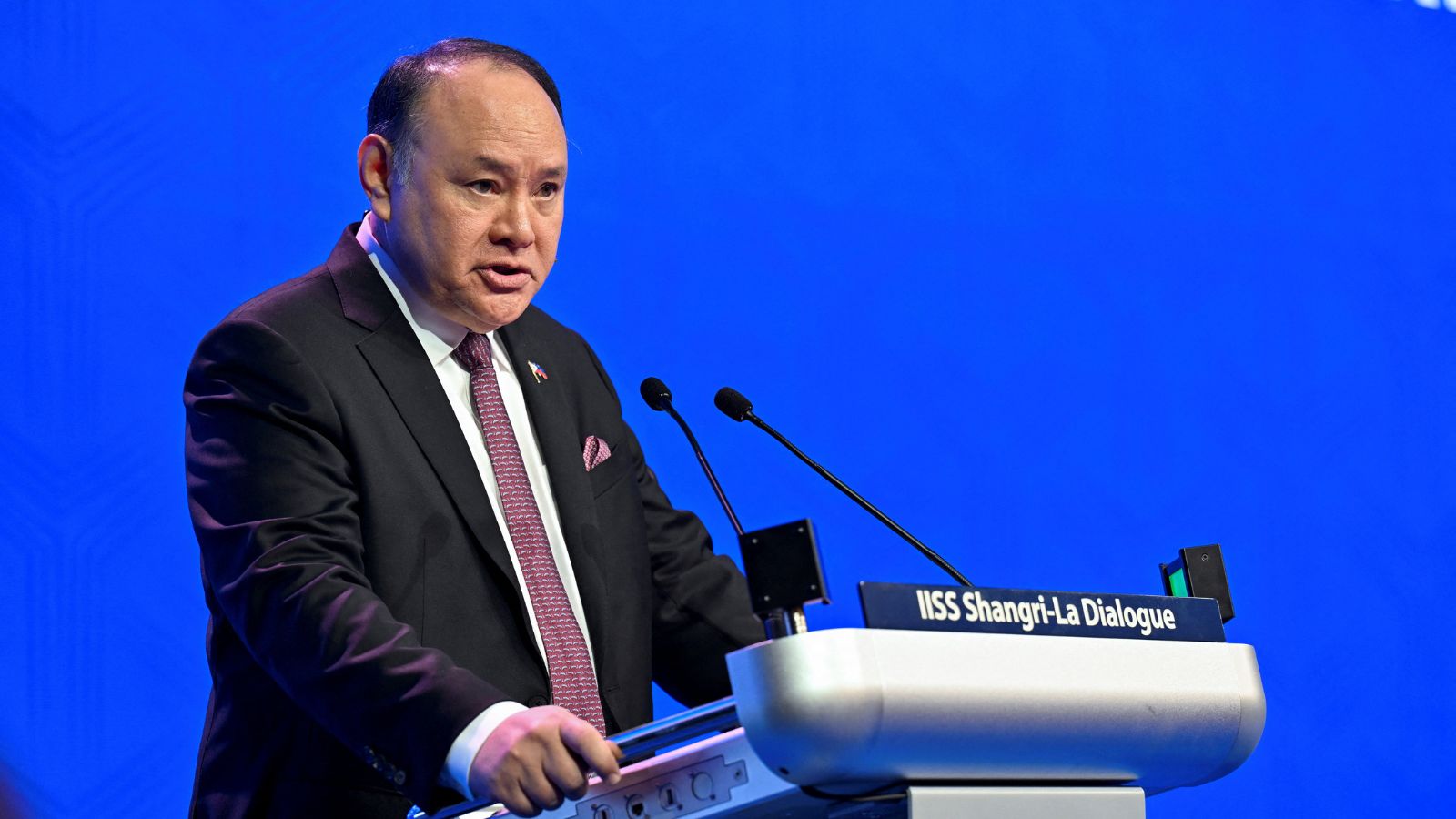
The signing of the Charter on Comprehensive Strategic Partnership between the United States and Armenia on May 26, 2026, functions as a high-stakes geopolitical inoculation strategy. Executed by US Secretary of State Marco Rubio and Armenian Foreign Minister Ararat Mirzoyan during a compressed, one-hour airport stopover in Yerevan, the timing is deliberately calculated. With Armenia’s pivotal parliamentary elections scheduled for June 7, 2026, the current administration of Prime Minister Nikol Pashinyan requires an immediate, quantifiable counterweight to intense Russian economic coercion.
By deconstructing this agreement beyond superficial diplomatic rhetoric, a clear operational architecture emerges. The partnership rests on a tri-pillared framework: commercial transit infrastructure, critical mineral supply chain integration, and immediate electoral asset deployment. However, this realignment introduces severe structural vulnerabilities, exposing a stark asymmetry between long-term Western infrastructure investments and immediate, existential Russian economic levers.
The Three Pillars of the US-Armenia Alignment
To evaluate the durability of Armenia's strategic pivot, the bilateral agreements must be parsed into distinct operational vectors. The United States is not offering an abstract security guarantee; it is anchoring its presence through hard asset ownership and resource integration.
1. The Infrastructure Anchor: The TRIPP Framework
The core economic vehicle of the partnership is the framework agreement governing the Trump Route for International Peace and Prosperity (TRIPP). This 43-kilometer (27-mile) transit corridor traverses southern Armenia’s Syunik province, establishing a direct transport link between mainland Azerbaijan, its Nakhchivan exclave, and Turkey.
The capitalization and governance structure of TRIPP reveal a highly calculated mechanism designed to insulate the asset from regional political shifts:
- Equity Split: A US-backed entity, the TRIPP Development Company, commands a 74% controlling stake in the rail, road, energy, and digital infrastructure. Armenia retains a 26% share alongside formal territorial sovereignty.
- Duration: The concession framework establishes an initial 49-year term, projecting American commercial interests in the South Caucasus past the mid-21st century.
- Operational Control: By controlling the digital and physical infrastructure, the US-led consortium minimizes the risk of sudden nationalization or regulatory interference by future, less Western-friendly Armenian administrations.
2. Supply Chain Integration: Critical Minerals and Rare Earths
The second pillar is the Framework for Securing Supply in the Mining and Processing of Critical Minerals and Rare Earths. This memorandum transitions the bilateral relationship from a traditional donor-recipient dynamic to an industrial supply chain dependency. Armenia possesses significant unexploited deposits of copper, molybdenum, and potential rare earth elements. By integrating Armenian extraction into the Western tech-supply ecosystem, the US secures alternative sourcing channels while providing Yerevan with a highly diversified, non-Russian export revenue stream.
3. Electoral Asset Deployment: The June 7 Liquidity Injection
The immediate tactical objective of the Rubio visit is to provide Pashinyan’s Civil Contract party with concrete, US-backed deliverables to present to a deeply anxious electorate. The administration faces a polarized domestic environment. The May 2026 International Republican Institute (IRI) polling tracks Civil Contract at 32% support, while a concurrent Gallup/MPG poll places the combined pro-Russian opposition forces (Strong Armenia, Armenia Alliance, and Prosperous Armenia) at a consolidated 35.7%.
The strategic partnership acts as an electoral liquidity injection, attempting to prove to the median voter that a Western alignment yields tangible economic infrastructure, transit access, and international relevance, rather than merely provoking Russian aggression.
The Strategic Bottleneck: Asymmetric Coercion and the Gas Function
The fundamental limitation of the US strategy is a temporal mismatch: Western infrastructure projects require years to yield economic dividends, whereas Russian retaliatory mechanisms operate instantaneously.
Moscow’s coercive leverage is best expressed as a direct economic cost function applied to the Armenian state budget. Immediately preceding the US signing, the Kremlin issued an explicit warning regarding the "very attractive" price Armenia pays for Russian natural gas. Armenia remains almost entirely dependent on Russian state-owned Gazprom for its primary energy inputs.
$$\text{Sovereign Premium} = \Delta P_{\text{gas}} \times V_{\text{import}} + R_{\text{tariffs}} - I_{\text{Western}}$$
Where:
- $\Delta P_{\text{gas}}$ represents the delta between the subsidized Russian gas price and the global market spot price.
- $V_{\text{import}}$ is the total annual volume of Armenian gas consumption.
- $R_{\text{tariffs}}$ represents trade penalties or agricultural bans applied through the Eurasian Economic Union (EAEU).
- $I_{\text{Western}}$ is the annualized inflow of Western capital or TRIPP transit fees.
If Moscow alters the variable $\Delta P_{\text{gas}}$ to reflect market rates or triggers trade blockages at the upcoming EAEU summit in Astana on May 28-29, the immediate fiscal shock to Armenia would far outweigh the near-term capital inflows from the TRIPP Development Company. The second structural limitation is institutional. A weak performance or a loss by Pashinyan’s party on June 7 would immediately paralyze the implementation of the 49-year TRIPP concession, leaving the US with a signed framework agreement but no viable domestic partner to execute it.
The Structural Realignment Blueprint
For this strategic pivot to survive the immediate electoral cycle and subsequent Russian economic retaliation, the current policy framework must shift from symbolic partnership to rigorous economic insulation.
- Accelerate the 123 Agreement for Civil Nuclear Cooperation: Following up on the joint statement signed by Vice President J.D. Vance in February 2026, the US must rapidly finalize the civil nuclear framework. Replacing the aging, Russian-built Metsamor nuclear power plant with American small modular reactors (SMRs) is the only viable mechanism to permanently reduce the energy dependency component ($\Delta P_{\text{gas}}$) of the Russian cost function.
- Deploy Direct Financial Backstop Facilities: To neutralize immediate EAEU trade blockages or gas price hikes, the US and its EU allies must establish a dedicated macro-financial stabilization fund. This fund must be structured to temporarily absorb the fiscal shock of localized energy inflation, ensuring that the Armenian electorate does not experience immediate economic degradation as a direct consequence of Western integration.
- Institutionalize TRIPP Sovereignty Guarantees: The TRIPP Development Company must legally insulate its operations from local political volatility. By utilizing international arbitration clauses and multilateral financing structures (involving the World Bank or EBRD), the corridor can be insulated against sudden policy reversals if pro-Russian opposition forces capture a significant share of the Armenian parliament on June 7.
The US-Armenia strategic partnership is a high-risk venture in sovereign realignment. If left unsupported by immediate energy and financial backstops, the agreement risks collapsing under the weight of immediate Russian economic reprisal. The definitive test of this strategy will not be the signing ceremony in Yerevan, but the structural resilience of the Armenian economy when Moscow tests the financial costs of Yerevan's Western turn.