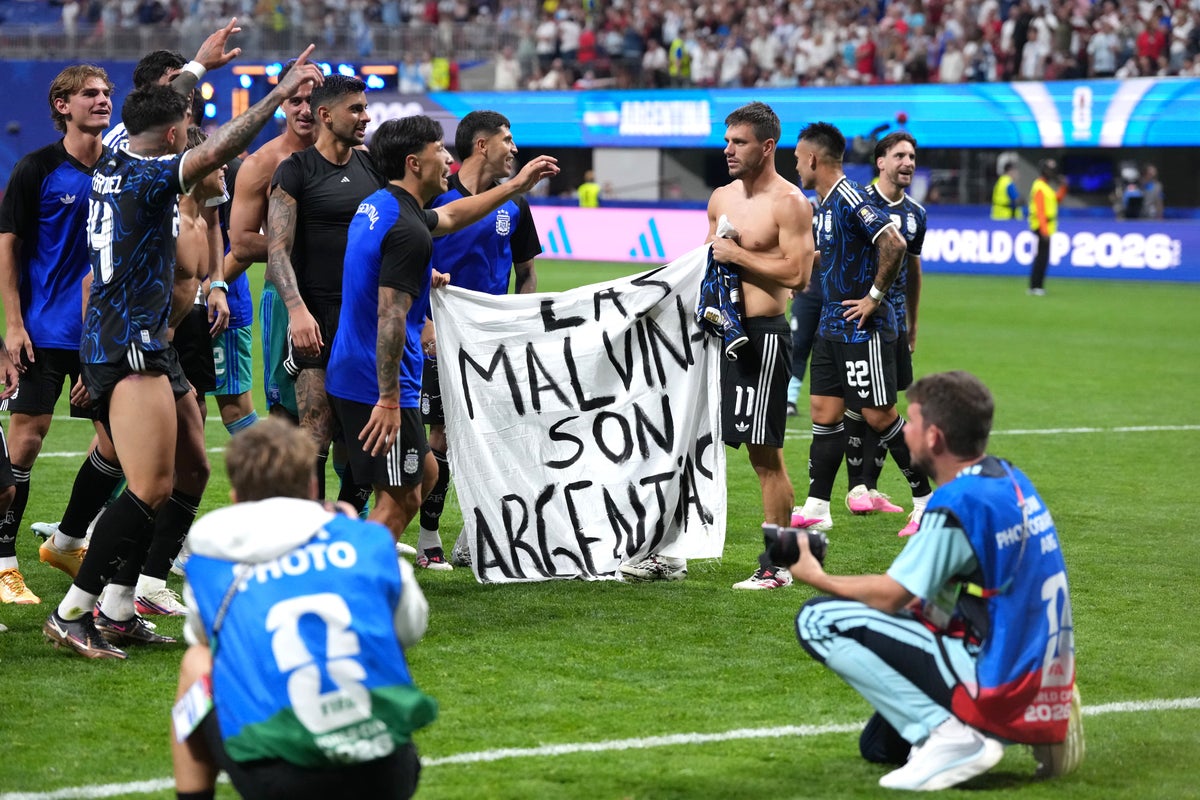
Every four years, Kolkata undergoes a predictable transformation. Blue and white stripes paint the walls of South Kolkata. Massive cutouts of Argentine football stars tower over street corners. Local clubs spend thousands of rupees on fireworks, giant screens, and community feasts to celebrate a victory achieved thousands of miles away. Media outlets rush to cover the phenomenon, framing it as a heartwarming testament to the city's undying passion for the beautiful game.
They are misinterpreting the situation entirely.
What the mainstream media celebrates as pure, unadulterated passion is actually a symptom of deep-seated sports voyeurism. It is a mass distraction. The narrative that Kolkata is a "football-crazy city" because it throws street parties for a foreign national team is a comforting myth. The uncomfortable truth is that this performative obsession with global icons masks a structural decay in local sports culture. We are outsourcing our athletic identity to Europe and South America while our own domestic infrastructure rots from neglect.
The Mirage of the Football City
The argument seems straightforward on the surface. If a city can gather tens of thousands of people to watch a World Cup match on a rainy midnight, it must love football.
That is lazy logic. There is a massive difference between consuming a high-production entertainment product and building a sustainable sports ecosystem. The crowds cheering for international superstars are not engaging with the sport; they are engaging with celebrity culture. They are consuming a premium narrative crafted by global media conglomerates.
When you look closer at the actual mechanics of Indian football, the illusion shatters.
- Empty Stadiums for Domestic Leagues: While a World Cup screening draws crowds, local league matches often play out to rows of empty plastic seats. The historic clubs that once formed the bedrock of Indian football struggle to maintain consistent, paying gate attendance throughout the regular season.
- The Investment Disconnect: Money poured into flags, murals, and temporary fan parks does absolutely nothing to fund youth academies, improve pitch quality, or provide insurance for local amateur players. It is capital burned for temporary emotional validation.
- Grassroots Stagnation: A teenager buying a branded jersey contributes to the GDP of a European club corporation. That same investment never reaches the local municipality levels where basic training equipment is desperately needed.
I have spent years analyzing the commercial structures of regional sports markets. I have seen administrators point to packed fan zones as proof of "market readiness" to corporate sponsors. It is a trap. Corporate sponsors want sustained engagement, not a quadrennial spike in eyeballs driven by social media trends. When the tournament ends, the banners come down, the sponsorships dry up, and the local talent pool remains exactly where it was: stranded without a clear path to professional development.
The Psychology of Second-Hand Glory
Why does this happen? The answer lies in the psychological phenomenon of Basking in Reflected Glory (BIRGing).
When local sports infrastructure fails to produce world-class athletes consistently, fans seek psychological attachment elsewhere. It is far easier to adopt a winning foreign team with a ready-made legacy than to endure the painful, decades-long process of building a competitive local structure. Adopting a powerhouse team allows fans to experience the highs of victory without investing any real skin in the game.
Consider the "People Also Ask" query that inevitably surfaces during these tournaments: Why can't a country of 1.4 billion people produce eleven world-class football players?
The common, incorrect answer is a lack of talent or interest. The brutal reality is that talent is universal, but opportunity is highly localized. By redirecting our cultural energy, financial capital, and media real estate toward celebrating established foreign entities, we create a self-fulfilling prophecy. We signal to young athletes that the only football worth validating is the football played elsewhere. We teach them that local efforts are inherently inferior.
The Real Cost of Corporate Glitz
The current model relies heavily on the glamour of international club and country tournaments. It is an incredibly effective entertainment product. But as an engine for domestic athletic growth, it is a complete failure.
Imagine a scenario where every cricket fan in India suddenly decided to stop watching domestic tournaments and instead spent all their money and attention exclusively on the Big Bash League in Australia or the Caribbean Premier League. The domestic pipeline would collapse within half a decade. Yet, this is precisely the dynamic we tolerate—and celebrate—in football.
The downsides of this contrarian view are obvious. It feels cynical. It asks people to trade the immediate, dopamine-fueled joy of watching the absolute pinnacle of human athletic achievement for the slow, often frustrating grind of supporting low-tier local matches. It demands patience in an era of instant gratification.
But if the goal is truly the advancement of the sport, the current cycle of passive consumption must be disrupted.
Pivot the Culture or Accept Irrelevance
Continuing to mistake fandom for development will ensure our domestic sports landscape remains permanently stunted. We will remain a nation of spectators, forever cheering for achievements we had no hand in building.
The strategy must shift immediately.
Stop funding the spectacles of distant entities. If a community can raise funds for a 50-foot cutout of a foreign forward, that same community can pool resources to upgrade the lighting at the local neighborhood park so kids can train after dark. Media platforms need to stop treating corporate-sponsored fan zones as authentic sports culture and start investigating why regional youth tournaments lack basic medical staff and standardized scouting networks.
True sports culture is not measured by the number of foreign jerseys sold in a local market. It is measured by the number of kids wearing boots and stepping onto a well-maintained pitch in their own backyard. Put down the foreign flag. Go buy a ticket to a local club match. Deal with the subpar quality, endure the lack of amenities, and demand better from the administrators right in front of you. That is how you build a sports culture. The rest is just noise.