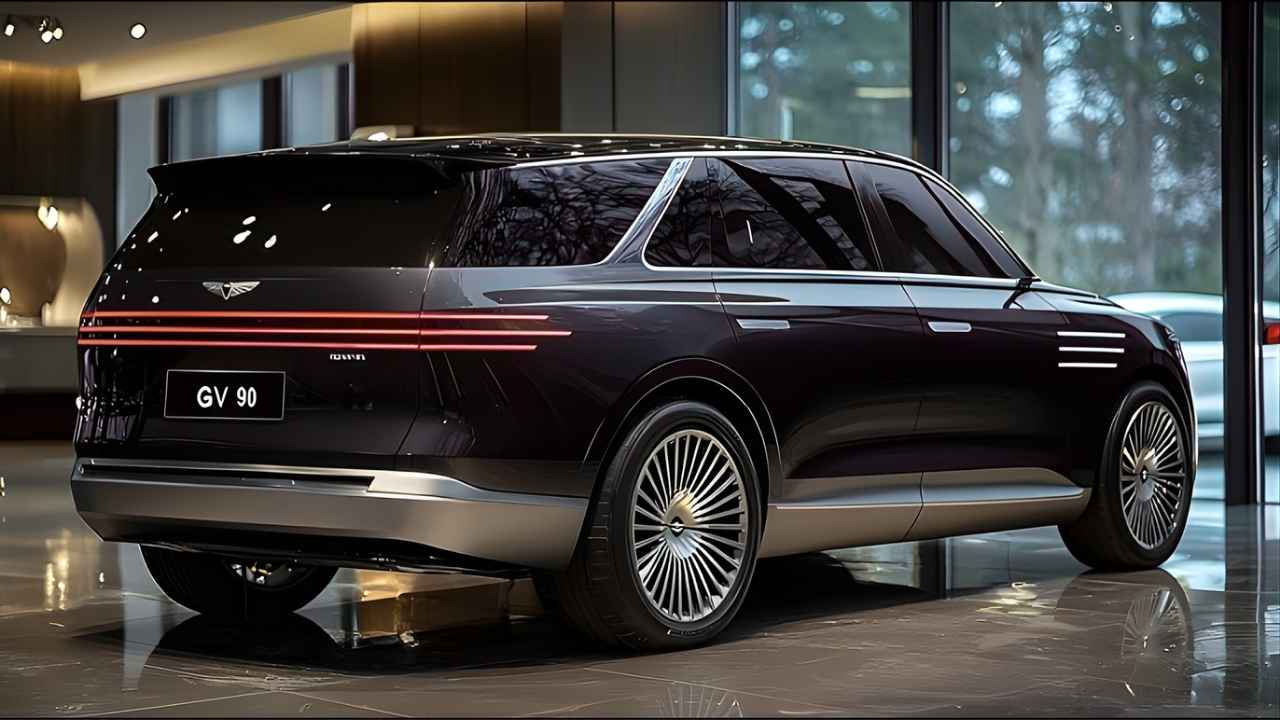
We've watched traditional luxury carmakers stumble through their electric vehicle transitions for years. They either slapped batteries into existing platforms or built overly sterile pods that lacked soul. Genesis just skipped past all of that awkward trial-and-error.
The brand's new flagship SUV, the GV90, arrives with a clear mission. It wants to make legacy European ultra-luxury brands sweat. This isn't just another oversized electric family hauler. It's a rolling lounge built on an exclusive architecture that redefines what a high-end Hyundai Motor Group vehicle can achieve.
The Platform Difference That Matters
Most electric vehicles compromise because they share bones with internal combustion models. Genesis avoided that trap entirely. The GV90 rides on the new eMP platform built specifically for flagship electric vehicles.
That dedication shows in the sheer physical scale and packaging efficiency. You get a massive 123.5-kWh battery pack tucked into the floor. That is the largest high-voltage pack ever fitted to a Hyundai Group EV.
Range anxiety gets a healthy dose of reality relief here. Genesis estimates a driving range of roughly 310 miles on a single charge for the three-row configuration. When you finally need to plug into a 350-kW DC fast charger, the car handles a 10% to 80% refill in about 22 minutes.
Power Meets Mechanical Sophistication
Numbers on a spec sheet are easy to inflate. Delivering usable, refined power in a heavy three-row luxury vehicle is entirely different. Dual electric motors churn out 657 horsepower and 590 lb-ft of torque.
All-wheel drive comes standard, backed by dual electronic limited-slip differentials on both axles. That means the car actively vectors torque to individual wheels without needing a clumsy quad-motor setup.
Weight is inevitable when you combine seven seats with a battery this large. Genesis counteracts that mass with serious hardware. A multi-chamber air suspension system handles the ride quality, while active rear-wheel steering turns the back wheels up to five degrees. That rear steering capability shrinks the effective turning radius down to something resembling a mid-size sedan. Parking a massive luxury flagship in tight urban garages suddenly stops feeling like an extreme sport.
Inside the Neolun Arch Gate
Buying a standard luxury SUV gets you conventional rear doors and a practical six or seven-seat interior layout. Opting for the headline-grabbing GV90 Neolun version unlocks something entirely different.
Genesis introduced what it calls the Neolun Arch Gate. These are hidden B-pillar coach doors that open independently with a dual-motion hinge mechanism. Pulling the handle reveals an unobstructed entry point reminiscent of vehicles costing three times as much. Safety concerns vanish thanks to a concealed roll cage and reinforced frame structures engineered specifically to compensate for the missing traditional B-pillar.
The four-seat Executive Suite transforms the cabin into an actual private lounge. Front seats swivel backward. Real wood veneer floors feature an integrated radiant heating system inspired by traditional Korean ondol underfloor warmth. You also get a built-in refrigerator, retractable privacy blinds, and a massive 24.6-inch pop-up cinematic display screen.
Tech That Actually Works
Cabin software often frustrates buyers who just want a responsive smartphone experience. The GV90 fixes this by running on the Android Automotive Operating System through the new Pleos Connect interface.
An in-car AI companion handles natural voice commands for vehicle settings and media search. Remote Smart Parking Assist 3 lets the vehicle park itself while you stand outside. Memory Reversing Assist records the final yards of your drive to autonomously back you out of cramped dead-ends or narrow driveways.
What to Look Out For Next
Pricing details will finalize closer to the official market launch, though estimates place the vehicle between $110,000 and $160,000 depending on trims and packages. If you are shopping for a high-end electric vehicle, wait to see how real-world efficiency figures match up against factory estimates. Take a close look at local charging infrastructure availability before committing to a 123.5-kWh battery pack. Schedule an extended test drive to experience how the air suspension manages rough pavement in your specific daily commute.