The red light of a studio microphone has a strange gravity. It turns an empty room into an audience, a quiet Tuesday morning into a public square, and a stray thought into an anchor dropped across the internet. When you sit behind that glass, day after day, whispering into the ether of podcast feeds, something inside you begins to shift. You start to believe that because you are speaking, you are part of something massive. You start to believe that your words are weightless, until the morning the heavy boots arrive at your door.
This is the story of a Christian podcaster whose voice crossed the invisible border where rhetoric ends and a federal crime begins. But it is also something larger. It is an exploration of how ordinary people inside ordinary rooms lose their footing in the modern digital storm, trading the quiet stewardship of faith and community for the toxic adrenaline rush of viral outrage.
To understand how a man who speaks in the name of grace and redemption ends up in handcuffs for allegedly calling for the assassination of a former president, we have to look closely at the architecture of modern digital attention.
Imagine a man sitting in a modest home studio. Soundproofing foam lines the walls, absorbing the echoes of his daily broadcast. He adjusts his headphones. He looks at his analytics dashboard. The numbers are flat. The algorithm demands fuel. In the ecosystem of online commentary, moderation is a whisper and extremism is a megaphone. If you say something measured, people scroll past. If you scream into the void, the machine notices.
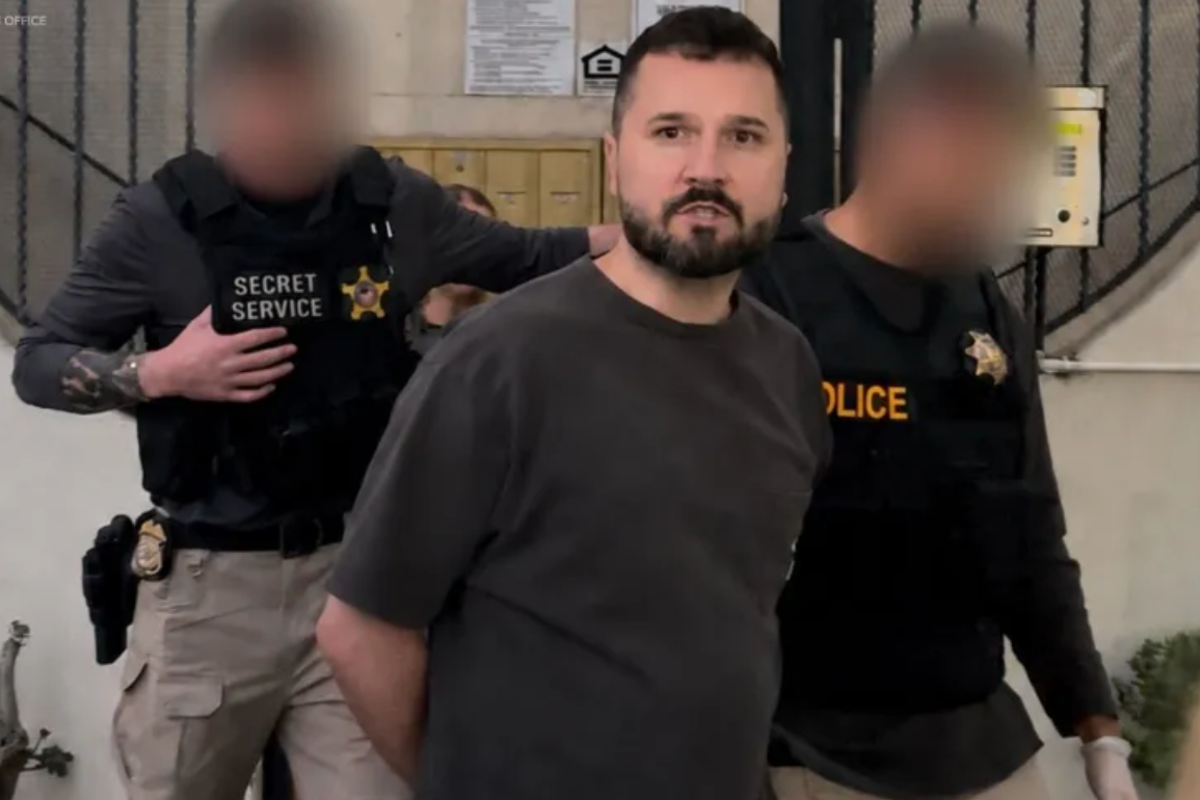
The federal complaint filed against this podcaster paints a stark picture. This was not a poorly phrased political critique or a piece of hyperbole lost in translation. Investigators allege that the broadcasts featured explicit, direct calls for violence against Donald Trump. Words that were once unthinkable to utter out loud in a civilized society were broadcast to listeners across the country. And then, the system reacted. The Federal Bureau of Investigation does not ignore direct threats against political figures, regardless of whether the speaker is broadcasting from a corporate media headquarters or a spare bedroom with a USB microphone.
Arrested. Booked. Photographed in an orange jumpsuit. The studio silence that followed must have been deafening.
There is a profound dissonance at play here. How does a person reconcile a worldview centered on the teachings of Jesus Christ—who preached turning the other cheek, loving enemies, and pursuing peace—with the deliberate incitement of murder?
Human beings are remarkably adept at compartmentalization. When you spend hours every day consuming toxic digital content, your internal moral compass recalibrates. You begin to view political opponents not as fellow citizens with different ideas, but as existential monsters threatening everything you hold dear. Once that mental pivot happens, violence stops looking like a crime and starts looking like self-defense. The podcaster likely did not wake up one morning intending to destroy his life. He slid down a moral incline, inch by inch, cheered on by an invisible digital audience that rewarded his escalation with likes, shares, and donations.
We have all felt the pull of this gravity to some degree. We scroll through our feeds and feel our blood pressure rise. We encounter headlines engineered to make our skin crawl. The digital environment is deliberately designed to hijack our evolutionary wiring, keeping us in a perpetual state of fight-or-flight.
When you mix this digital furnace with deep religious conviction, the stakes become infinite. Political disagreements are no longer about tax rates or zoning laws; they are framed as cosmic battles between absolute good and absolute evil. And when you believe you are fighting a cosmic war, normal rules stop applying. Moderation looks like cowardice. Compromise looks like treason.
Yet, the law remains stubbornly tethered to reality. Free speech is one of our most cherished constitutional pillars, but it has never protected true threats of violence or incitement to assassination. The Supreme Court has drawn a bright, unyielding line between robust political debate and speech intended to provoke imminent lawless action. Crossing that line does not make you a dissident martyr; it makes you a defendant in a federal courtroom.
The microphone is still sitting in that empty room. The red light is dark.
What remains in the wake of this arrest is a cautionary tale about the seduction of the digital age. It reminds us that our words have weight, even when they are spoken into a plastic box and transmitted digitally across miles of fiber-optic cable. It forces us to ask uncomfortable questions about the media we consume and the way we talk about those who disagree with us.
We live in a culture that rewards the loudest voice in the room, constantly tempting us to trade our humanity for an extra dozen views. But the price of that bargain is steep. Sometimes, the bill comes due in the form of federal agents at your door, the snapping of handcuffs, and the sudden, jarring realization that the digital world cannot protect you from the very real consequences of your own voice.
The silence in the studio is absolute now. The only question left is whether anyone else is listening.