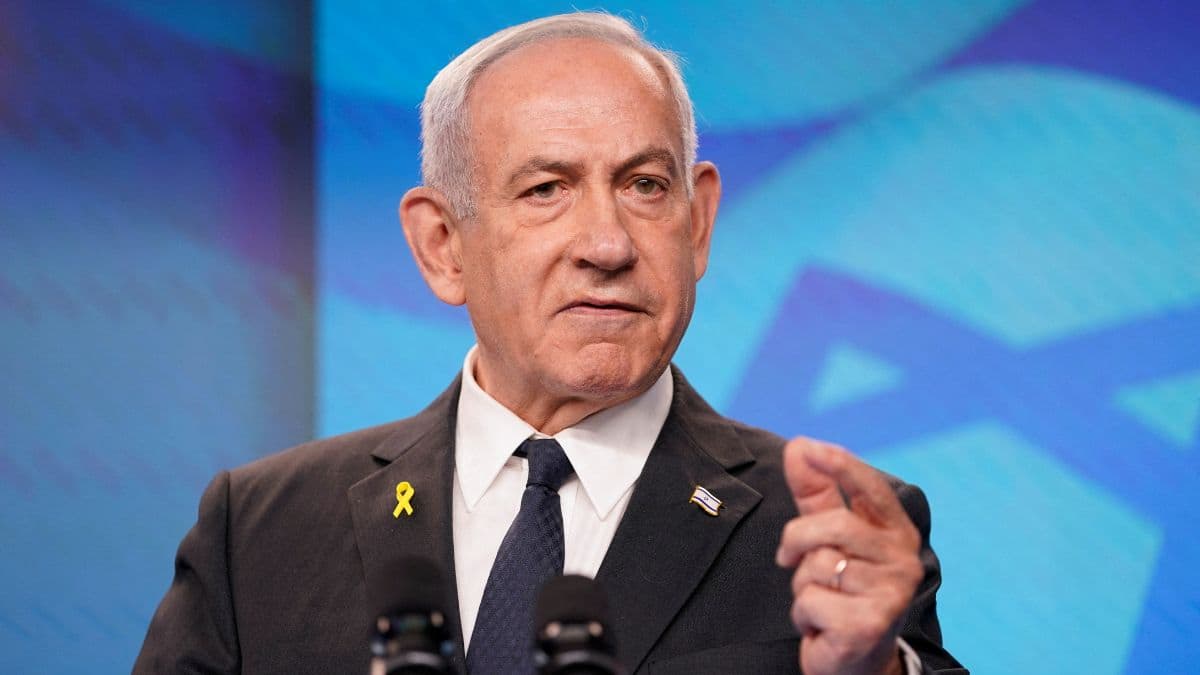
The screen flickered with a grainy, digital afterlife. In the dark corners of the encrypted internet and across the rapid-fire feeds of social media, Benjamin Netanyahu was already dead. The rumors had the specific, jagged detail that makes a lie feel like a memory. Some whispered of a sudden cardiac event in a bunker deep beneath the Kiryat; others spoke of a precision strike that had finally found its mark. For a few feverish hours, the world watched a ghost story unfold in real-time.
Then the ghost spoke.
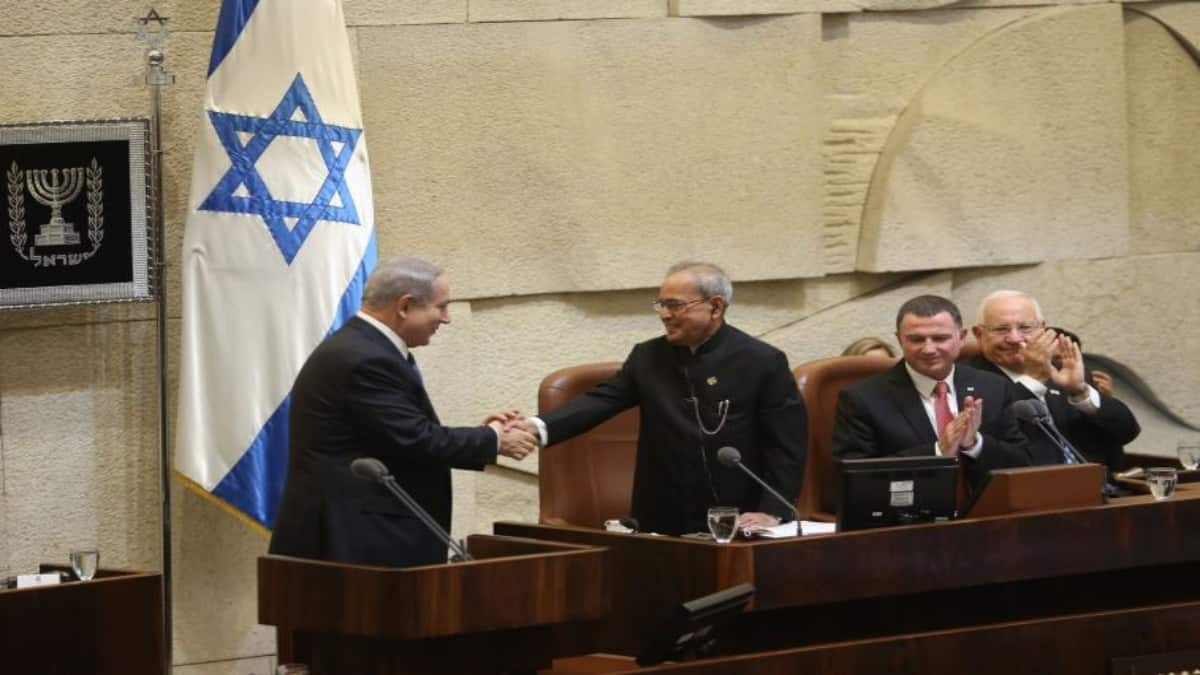
He didn't just speak. He laughed. It was a sharp, tactical sound, the kind of noise a man makes when he knows his enemies have spent their emotional capital on a fantasy. Standing before a camera, draped in the usual dark suit that has become a sort of civilian armor, the Israeli Prime Minister looked into the lens and dismantled the fiction of his own demise. He looked remarkably un-dead. He looked, in fact, like a man who was busy.
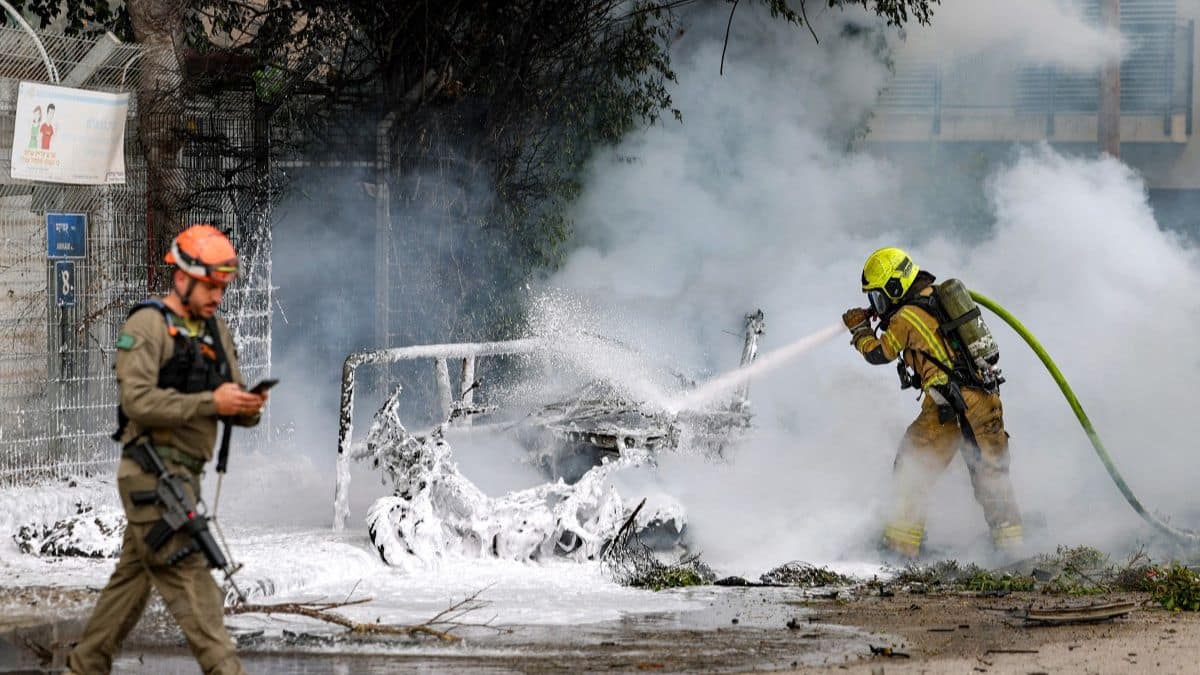
While the digital world was debating his pulse, the physical world was shaking. This is the strange duality of modern warfare. On one side, there is the "kinetic" reality—the roar of F-35s over the Bekaa Valley, the bone-shaking thump of interceptors over Haifa, and the silent, terrifying precision of intelligence operations. On the other side, there is the war of perception, a psychological theater where a single tweet can carry as much weight as a missile, provided enough people believe it.
Netanyahu knew that to ignore the rumors was to let them harden into a weapon. In the Middle East, a leader’s perceived vitality is a strategic asset. If you are thought to be weak, or worse, absent, the vacuum is filled instantly by chaos. By stepping into the light to mock the reports of his death, he wasn't just correcting the record. He was asserting a continued, aggressive presence. He was telling the region that the hand on the lever was still firm.
The timing of the rumors wasn't accidental. They surfaced precisely as Israel intensified its multi-front campaign, a sprawling, violent chess game that spans from the scorched hills of Southern Lebanon to the industrial heartlands of Iran. To understand the gravity of that moment, you have to look past the political theater and into the cockpit of a fighter jet or the basement of a family in Beirut.
The Weight of the Sky
Consider a hypothetical family in a village near Tyre. For them, the conflict isn't a headline or a "death rumor." It is the sound of the air breaking. It is the vibration in the soles of their feet that tells them a strike has landed three miles away. When Israel says it is striking Hezbollah targets, that abstract phrase translates into a very concrete reality: the erasure of a warehouse, the collapse of a tunnel, or the sudden, violent end of a command post nestled in a residential grid.
The stakes are invisible until they are deafening.
Israel’s strategy has shifted into a gear that many observers didn't think existed. For years, the doctrine was "mowing the grass"—short, sharp bursts of violence intended to delay the inevitable. That era is over. Now, the objective is the dismantling of an entire architecture of threat. This is why the strikes in Lebanon have become so relentless. It is an attempt to surgically remove the teeth of an organization that has spent decades sharpening them.
But as the bombs fall in Lebanon, the eyes of the Israeli security establishment remain fixed on the horizon, toward the east. Toward Tehran.
The relationship between Israel and Iran has long been a "shadow war," fought with computer code, assassinations in the streets of Tehran, and proxy battles in the Levant. But the shadows are retreating. When Netanyahu addressed the rumors of his death, he pointedly mentioned that Israel was striking back at the source. This is a fundamental shift in the narrative. The proxy is no longer the only target; the patron is being called to account.
Imagine the tension in a military briefing room in Tel Aviv. It is a space defined by the hum of cooling fans and the glow of high-resolution satellite imagery. On those screens, the movement of a single convoy in the Iranian desert is analyzed with the intensity of a forensic investigation. Every decision made in that room ripples outward, affecting the global price of oil, the stability of European borders, and the lives of millions who will never know the names of the people behind the maps.
The Mirage of Digital Certainty
Why do we believe the rumors? Why did the news of a leader's death travel faster than the truth?
We live in an age of profound information fatigue. We are so used to the "unthinkable" happening—the global pandemics, the sudden invasions, the technological leaps—that our filters have broken. When a rumor appears that fits a specific emotional need, our brains treat it as a foregone conclusion. For those who oppose Netanyahu, the rumor of his death was a shortcut to a different future. For his supporters, it was a terrifying omen.
This is the "human element" that data points often miss. A war is not just a series of strikes; it is a psychological state. When the Prime Minister stands up and says, "I am here," he is attempting to stabilize that psychological state for his people while destabilizing it for his enemies. It is a performance of resilience.
But the performance has a cost. The bravado masks a reality that is increasingly precarious. Israel is fighting on multiple fronts, its economy is strained, and its social fabric is pulled taut by internal divisions that haven't disappeared just because there is a war. The "death rumors" were a symptom of that tension. They were a manifestation of a world waiting for the next shoe to drop.
The complexity of the current operations in Lebanon cannot be overstated. Unlike the flat terrain of Gaza, the geography of Southern Lebanon is a nightmare of limestone ridges and deep ravines. Hezbollah has spent nearly twenty years turning this landscape into a fortress. Every hillside is a potential launch site; every village has a basement filled with hardware.
When the Israeli Air Force strikes these positions, they aren't just hitting targets. They are attempting to rewrite the security map of the north. They are trying to make it safe for sixty thousand displaced Israelis to go home. That is the human stake for the residents of Kiryat Shmona—not a geopolitical victory, but the simple, profound ability to sleep in their own beds without the fear of a cross-border raid.
The Iranian Calculus
Across the border, and across the desert, the leadership in Tehran faces its own existential math. For decades, their "Ring of Fire" strategy—surrounding Israel with well-armed proxies—provided a layer of deniability and protection. But as Israel systematically degrades Hamas and puts Hezbollah on its heels, that ring is beginning to fray.
If the proxies fail, what is left?
This is the question that keeps diplomats in Washington and London awake at night. If Iran feels its primary deterrent is being erased, the pressure to act directly increases. We saw a glimpse of this with the massive missile barrages earlier in the year. The shadow war is becoming a daylight war, and the rules of engagement are being written in real-time with live ammunition.
The rumors of Netanyahu's death were perhaps a reflection of this volatility. In a world where anything can happen, people begin to believe that everything is happening.
I remember talking to a veteran journalist who had covered the region for forty years. He told me that the most dangerous moments aren't when the bombs are falling, but when the communication stops. "When you don't know if the man on the other side is alive or dead, or if he's lost his mind, that's when you make mistakes," he said. Uncertainty is the fuel of escalation.
By appearing on screen, mocking the "fake news" with a smirk, Netanyahu was attempting to end the uncertainty. He was reclaiming the narrative. He was asserting that the strikes in Lebanon and the operations against Iranian interests were not the desperate gasps of a leaderless nation, but the calculated moves of a steady hand.
Beyond the Headlines
The conflict is often presented as a series of binary choices. Right or wrong. Aggressor or victim. But the reality on the ground is a spectrum of gray.
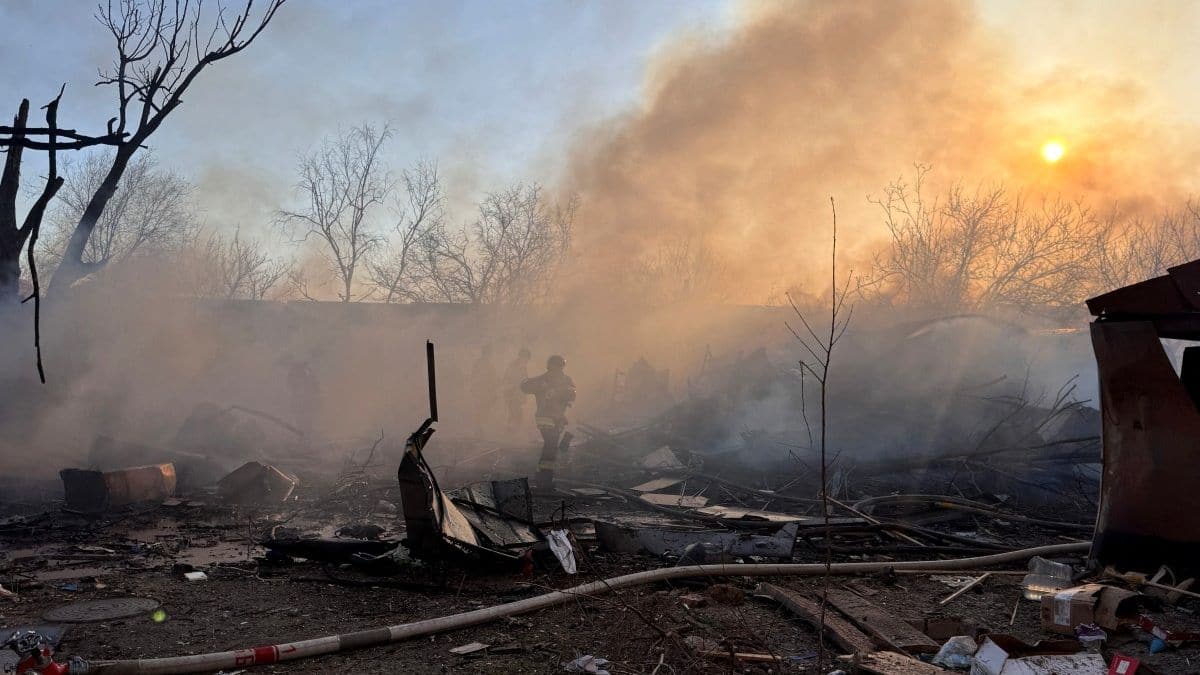
It is the gray of the dust that hangs over a collapsed apartment building in Beirut. It is the gray of the smoke rising from a rocket impact in the Galilee. It is the gray of the moral ambiguity that comes when a nation decides that its survival justifies any cost.
We often look for a "game-changer"—a single event that will tilt the scales and bring the story to a close. A death, a treaty, a decisive battle. But history rarely works that way. It is a slow, grinding process of attrition and adaptation. The rumors of a leader's death are just a footnote in a much longer, much more painful chapter.
The real story isn't the rumor. It’s the fact that we are living in a time where such a rumor is even plausible. It’s the fact that the architecture of the modern Middle East is being dismantled and rebuilt before our eyes, one airstrike at a time.
As night falls over Jerusalem, the city feels deceptively still. The stone walls of the Old City catch the amber glow of the streetlights, looking much as they have for centuries. But the stillness is an illusion. Somewhere in the dark, the planes are refueling. Somewhere in a bunker, the next list of coordinates is being verified.
Netanyahu’s rebuttal of the rumors was a moment of political theater, yes. But it was also a reminder of the brutal, unyielding nature of the path Israel has chosen. There is no going back to the way things were before. The bridges have been burned, the "grass" is no longer being mowed—it is being uprooted.
The man is alive. The war is expanding. And the world is left to wonder which rumor will turn out to be true tomorrow.
When the cameras turned off and the Prime Minister returned to the work of directing a multi-front war, the digital chatter didn't stop. It just moved on to the next conspiracy, the next grainy video, the next half-truth. In the vacuum of the internet, reality is a choice. But in the hills of Lebanon and the streets of Israel, reality is a physical force that cannot be muted or refreshed.
It is a world where the living and the dead are often separated by nothing more than a few seconds of warning and the thickness of a concrete wall. In that environment, the only thing more dangerous than a lie is a truth that no one is ready to hear.
The sirens will likely sound again tonight. People will retreat to their shelters, checking their phones for updates, looking for some sign of what comes next. They will see the maps, the statistics, and the defiant faces of their leaders. They will look for certainty in a landscape defined by its absence.
But the most haunting image of the day isn't the map or the missile. It is the image of a leader laughing at his own obituary, while the engines of war hum loudly in the background, indifferent to whether he is a ghost or a man.