The headlines wept. Human rights groups hyperventilated. Editorial boards across Europe reached for their favorite stock phrases about the death of the rule of law, the collapse of democracy, and the total impunity of the powerful.
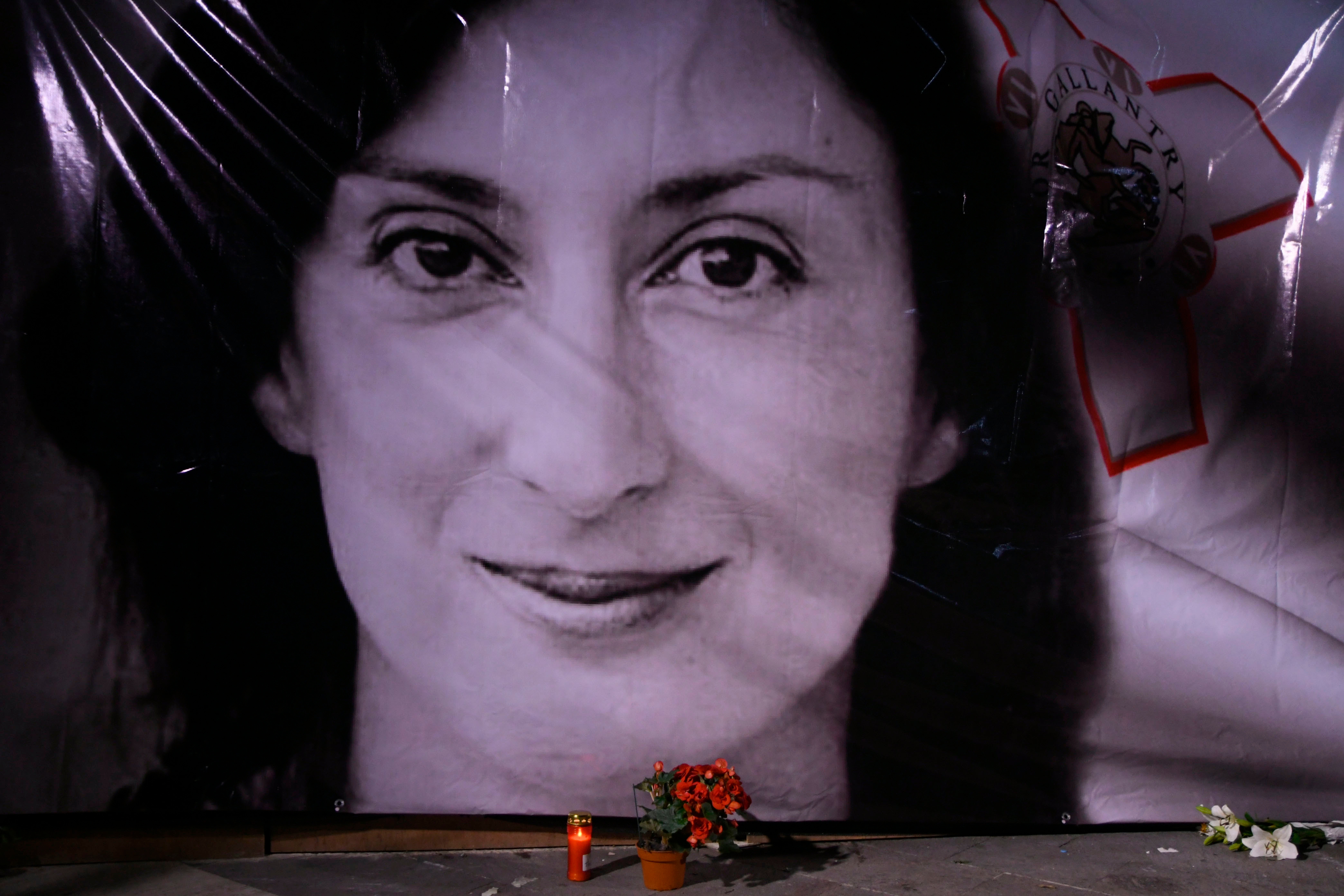
A Maltese jury acquitted a prominent businessman in the assassination of investigative reporter Daphne Caruana Galizia, and the global media reacted with predictable, lazy outrage. The narrative wrote itself before the ink on the verdict was dry: a corrupt state protects its own, the fix was in, and justice is dead on a Mediterranean island.
Except that narrative is a comforting lie.
It lets everyone off the hook. It allows journalism organizations to pretend that a reporter's safety is solely a matter of courtrooms convicting hitmen, while ignoring the systemic rot that actually gets journalists killed. Worse, it treats a legal acquittal as a systemic failure rather than what it often is under adversarial Anglo-Saxon and Maltese jurisprudence: a failure of prosecution, a victory for the standard of proof beyond a reasonable doubt, and a glaring spotlight on how modern media organizations misunderstand power.
Let us state the uncomfortable truth right out of the gate. I have spent years advising risk analysts and investigative teams operating in high-threat jurisdictions across Southern Europe and the Balkans. I have seen newsrooms throw young reporters into the teeth of transnational organized crime with nothing more than a press pass and a prayer, only to weep and demand EU sanctions when the inevitable happens.
The Malta verdict is not proof that the system is broken. It is proof that the system of modern investigative journalism is built on a foundation of professional malpractice, and until we fix how we protect and back up reporters, verdicts like this will keep happening.
The Lazy Consensus of the Courtroom Trap
The mainstream media's obsession with criminal trials as the ultimate moral scorecard is a category error of massive proportions.
When a jury returns a not-guilty verdict, journalists act as though the jury has endorsed the defendant's character. That is not how criminal law works. A jury decides whether the state met its burden of proof. If prosecutors build a case on circumstantial inferences, compromised informants, and political pressure rather than airtight forensic chains, the jury has a constitutional duty to acquit.
Blaming the jury or the judge for a weak prosecution is the refuge of editors who do not understand criminal procedure. Worse, it distracts from the institutional failures that occurred long before anyone pulled a trigger or planted a bomb.
Daphne Caruana Galizia was not murdered because Malta lacks laws against car bombs. She was murdered because she was isolated, exposed, and operating in an ecosystem that weaponized the legal system against her while failing to provide the institutional armor required for deep investigative work.
When a journalist goes after the intersection of political power and transnational money laundering alone on a small island, they are stepping into a cage with tigers. Handing them a notebook and telling them to be brave is not bravery. It is reckless endangerment disguised as romantic crusading.
The Myth of the Smoking Gun
Let us address the technical reality of high-level corruption and assassination cases.
People assume that proving a conspiracy to commit murder at the highest levels of wealth and government is like an episode of a crime drama, where a whispered wiretap or a signed check seals the deal. In the real world of sophisticated white-collar syndicates, the architecture of deniability is engineered by expensive lawyers and corporate fixers.
When investigators look for the link between a billionaire businessman and a car bomb, they are looking for a trail that professional criminals take extreme measures to erase. If the state relies on the testimony of confessed middlemen seeking reduced sentences, defense attorneys will systematically dismantle that testimony in front of a jury. That is not corruption; that is the adversary system functioning exactly as intended.
To pretend that an acquittal means the businessman is innocent in the court of public opinion is foolish. But to pretend that a guilty verdict would have magically solved the structural vulnerability of independent journalism is equally naive.
We are treating the symptom while ignoring the disease. The disease is the economic fragility of investigative reporting and the fantasy that moral outrage is an adequate substitute for operational security and institutional backing.
Why This Verdict is a Wake-Up Call
The reason this acquittal is paradoxically good for the long-term survival of investigative journalism is that it forces a brutal reckoning.
As long as the industry believes that justice is served simply by putting a few low-level triggermen and a beleaguered businessman through a courtroom wringer, newsrooms will continue to operate with zero operational security. They will continue to rely on individual heroism instead of collective defense infrastructure.
Imagine a scenario where investigative reporting is treated like high-stakes intelligence work rather than a romantic crusade for the front page. In that reality, a reporter uncovering state-corporate collusion does not drop stories piece by piece onto a lonely blog while living in an unprotected house. Their data is distributed across decentralized, encrypted nodes internationally before a single word is published. Their physical security is managed by professionals who understand counter-surveillance, and their legal backing is institutionalized, deep-pocketed, and unyielding.
When you rely on the state's criminal justice system to protect journalists retroactively, you have already lost. The state is frequently the entity the journalist is investigating. Expecting the apparatus of the state to cleanly prosecute its own power brokers is a child's understanding of realpolitik.
The Actionable Pivot
If we want to honor Daphne Caruana Galizia, we need to stop writing weeping editorials about court verdicts and start changing how reporting is funded, secured, and executed.
Here is what actually works, stripped of sentimentality:
- Decentralize Everything: Never let a single reporter hold the keys to an active investigation. If a story dies with the journalist, the incentive structure for violence remains intact. Make the knowledge public, redundant, and indestructible the moment danger escalates.
- Treat Security as Infrastructure, Not an Overhead Cost: Newsrooms must stop treating physical and digital security as optional line items to be slashed when budgets tighten. If you cannot afford to protect your reporters, you cannot afford to run the investigation.
- Move Beyond the Courtroom Obsession: Stop measuring the impact of journalism by whether a billionaire ends up in a cell. Measure it by whether the illicit networks, shell companies, and political patronage systems exposed by the reporting are permanently dismantled by economic and regulatory pressure.
The Malta verdict stings because it shatters the comforting illusion that the world has a neat, predictable mechanism for punishing those who kill truth-tellers. Good. That illusion was getting people killed.
Stop mourning the verdict. Fix the vulnerabilities.