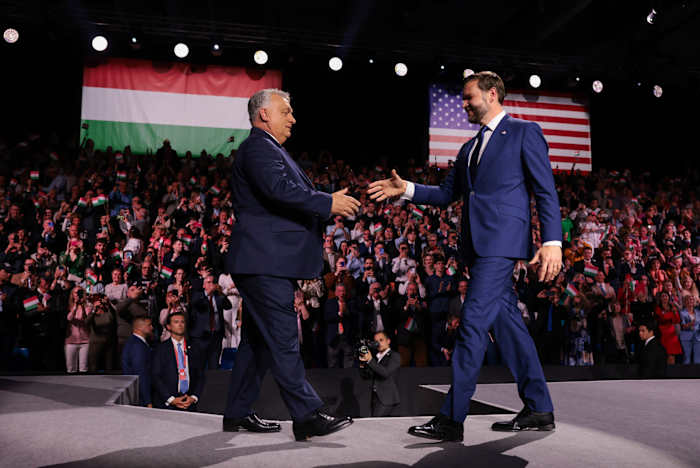
Donald Trump thought he had a lock on the European right. For years, the narrative was simple: a populist wave was sweeping both sides of the Atlantic, fueled by a shared hatred of "globalist" elites and open borders. Figures like Marine Le Pen, Matteo Salvini, and Viktor Orbán were seen as the European vanguard of the MAGA movement. But the reality of 2026 has shattered that illusion. Trump’s military campaign against Iran hasn't just ruffled feathers in Brussels; it’s created a massive, potentially permanent rift with the very nationalists he once called his closest allies.
You have to understand the core contradiction here. European nationalists aren't just "Trump fans" who happen to live in France or Italy. They’re nationalists. That means they put their own country's interests first. When Trump’s war started driving up energy prices and threatening to send a new wave of refugees toward European shores, those "shared values" suddenly mattered a lot less than the price of gas in Milan or the security of the French border. For a different view, read: this related article.
The Myth of a United Populist Front
For a long time, it looked like a match made in heaven. Trump provided the blueprint for winning, and European leaders like Orbán happily adopted the rhetoric. They shared a stage at CPAC. They tweeted support for one another. It felt like a new international order was being built on the ruins of the old liberal consensus.
But foreign policy is where the "America First" and "France First" ideologies inevitably collide. You can't have two countries putting themselves first at the same time without hitting a wall. Trump’s war with Iran is that wall. While the MAGA base in the U.S. might view strikes on Tehran as a necessary show of strength, European nationalists see it as a reckless American adventure that leaves Europe holding the bag. Related insight on the subject has been provided by TIME.
The fallout has been fast and remarkably public. Take Giorgia Meloni in Italy. She was supposed to be the bridge between the old-school conservatives and the new populist right. Yet, when the U.S. asked to use airbases in Sicily for strikes on Iran, she said no. It wasn't a "maybe" or a "let’s talk." It was a firm refusal. For Meloni, the risk of Italian assets becoming targets for Iranian retaliation was simply too high. It’s a classic case of national interest trumping ideological kinship.
Why the Iran War Changed Everything
It’s not just about military bases. The economic reality of this conflict is hitting Europe in a way it isn't hitting the United States. While the U.S. has significant domestic energy production, Europe is still incredibly vulnerable to price shocks.
- Energy Costs: The effective closure of the Strait of Hormuz has sent oil prices into a tailspin. For a country like Germany, which is already struggling with a hollowed-out industrial base, these costs are a death sentence for local businesses.
- Security Blowback: European intelligence agencies are terrified of asymmetric retaliation. They aren't worried about Iranian tanks; they're worried about cyberattacks on power grids and "lone wolf" attacks in European cities.
- The Refugee Crisis: Any massive conflict in the Middle East eventually leads to people fleeing toward Europe. For nationalists whose entire platform is built on stopping migration, Trump’s war is literally creating the problem they’ve promised to solve.
Marine Le Pen has been uncharacteristically blunt about this. She’s called Trump’s goals "erratic." Think about that. The woman who was once seen as the French version of Trump is now calling his foreign policy unstable. She knows that if a new migrant crisis hits France because of an American war, her voters will blame the person who stood by and let it happen.
The Greenland Grudge and the NATO Ultimatum
It didn't help that Trump decided to revive his demand for Denmark to hand over Greenland right as the Iran crisis was peaking. He basically told NATO allies that if they didn't help him in the Middle East, he wouldn't care what happened to them in Europe. He even posted on social media that NATO "wasn't there when we needed them."
This kind of "protection racket" diplomacy has backfired. Instead of bullying European nationalists into falling in line, it’s pushed them to talk more about "strategic autonomy." You now have right-wing politicians in Germany and France arguing that Europe needs its own military capabilities precisely so it doesn't have to follow Washington into every fight.
The only real outlier remains Viktor Orbán in Hungary. He’s still playing the long game, trying to frame himself as the "peace broker" who can talk to both Trump and Putin. But even Orbán is looking lonely. Most of his peers have realized that being a MAGA ally in 2026 means being a junior partner in someone else's war. They aren't interested in that job description.
The New Reality for Transatlantic Populism
The "Bannon Effect" — the idea that a unified global nationalist movement could upend the world — is effectively dead. What we’re seeing instead is a return to traditional, cold-blooded national interest.
If you’re watching this play out, don't expect a reconciliation anytime soon. The rift isn't based on a misunderstanding; it’s based on fundamental differences in geography and economy. Trump wants a coalition of the willing to project power in the Middle East. European nationalists want a quiet neighborhood, cheap energy, and secure borders. You can't have both.
Moving forward, expect European right-wing parties to keep their distance. They’ll still use the "anti-woke" rhetoric because it wins votes, but when it comes to the "hard power" of war and trade, they’re going to act a lot more like the "globalists" they claim to despise. They’ll prioritize the European Union's stability because, frankly, they have no other choice. The MAGA honeymoon is over, and the divorce is getting messy. Keep an eye on the upcoming elections in France and Germany; the candidates who successfully distance themselves from Washington’s Middle East policy are the ones who will likely survive the fallout.


