Silence in a stadium is never actually quiet. It is a heavy, pressurized vacuum that sucks the air out of your lungs and leaves you standing alone on a patch of painted grass while seventy thousand people watch you fail.
I have stood on the sidelines of professional football games when a franchise begins to crack, and the sound is always the same. It is not the roar of the opposing crowd. It is the sudden, collective intake of breath from the visiting bench—a sharp, involuntary gasp that tells you everyone in the building just realized the armor has finally rusted through.
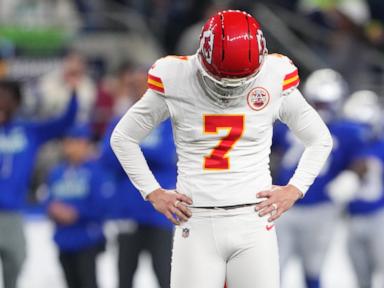
On a damp, unforgiving afternoon in Seattle, the Seahawks did not merely beat the Kansas City Chiefs. They dismantled a myth. While the box score will dutifully record a lopsided rout, and the morning headlines will fixate on Harrison Butker pushing two more kicks wide of the uprights, the real story happened in the spaces between the plays. It happened in the drooping shoulders of a dynasty that suddenly looks mortal, and in the quiet, agonizing isolation of a specialist whose muscle memory has turned against him.
The Weight of Three Inches
To understand what happened to Harrison Butker in Seattle, you first have to stop thinking of kicking as a mechanical act and start seeing it as a psychological high-wire walk.
Consider a hypothetical scenario to grasp the razor-thin margin of this profession. Picture yourself standing at the end of a sixty-yard hallway, trying to throw a paper airplane through a doorway while eleven massive men sprint toward you with the explicit intention of flattening you into the floorboards. You have 1.3 seconds from the moment the ball touches the holder’s fingers to the moment your cleat strikes the leather. If your plant foot lands half an inch too close to the ball, your hips lock. If your head lifts a fraction of a second too early to watch the flight, your torso rotates, and the ball sails wide right.
For years, Butker was the human metronome of Kansas City. When games tightened into fourth-quarter suffocation, the Chiefs operated with the casual arrogance of a team that knew three points were guaranteed the moment they crossed the thirty-five-yard line. That certainty was not a luxury; it was the structural foundation of their offensive play-calling.
But certainty is fragile. When Butker missed his first kick against Seattle, it felt like an anomaly—a gust of Puget Sound wind, a slick patch of turf, a minor calibration error. When he missed the second, the atmosphere shifted entirely.
You could see it in the way the Chiefs' huddle broke on their subsequent drives. Suddenly, fourth-and-four at the opponent's thirty-two was no longer a comfortable decision. It became an existential crisis. Do you trust a kicker whose mechanics have visibly unraveled, or do you force an already battered offense to convert low-percentage downs against a Seattle defense that smells blood? By missing twice, Butker did not just leave six points on the field; he robbed his quarterback of margin for error.
Seattle’s Violent Symphony
While Kansas City was busy wrestling with its own ghosts, the Seattle Seahawks were executing a masterclass in controlled chaos.
Sports history is full of moments where a younger, hungrier roster realizes that the reigning heavyweight champion can no longer take a punch. Think back to the great defensive shifts in NFL history—the 1985 Bears, the 2000 Ravens, or Seattle's own Legion of Boom a decade ago. Those teams did not just win on tactics; they won by imposing a physical tax on every yard gained.
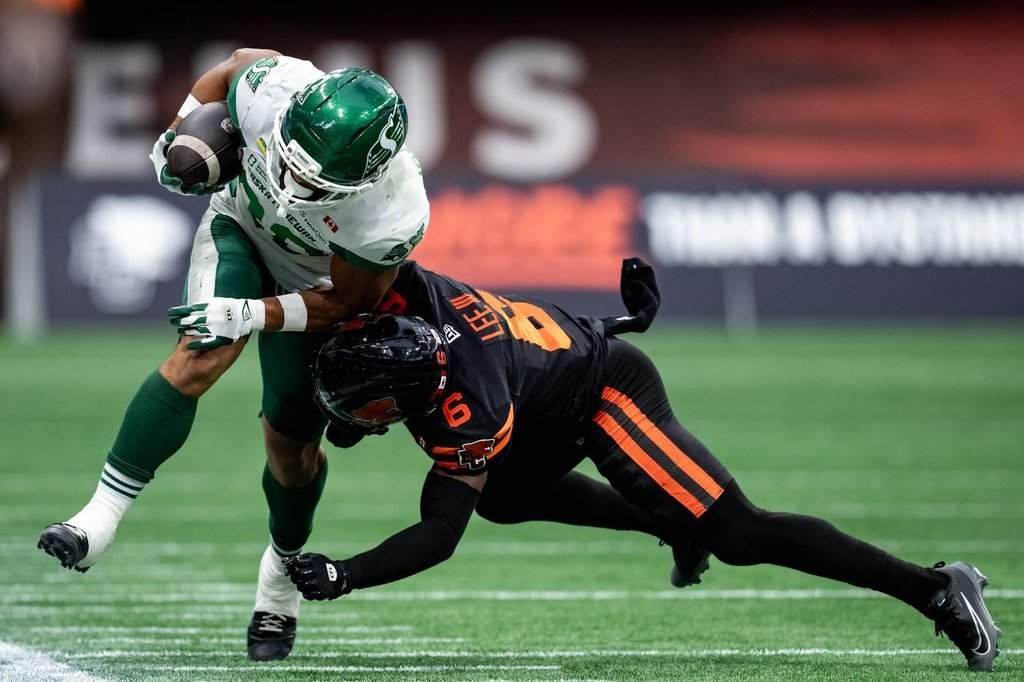
In this rout, Seattle’s front seven played with that exact brand of suffocating violence. From the opening series, they collapsed the interior of the Chiefs' offensive line, turning a pocket that used to be a sanctuary into a collapsing mine shaft. Every drop-back became a frantic scramble. Receivers who normally glide into open zones were jammed at the line of scrimmage, thrown off their timing, and forced to fight for every inch of turf.
The Seahawks’ offense, meanwhile, operated with ruthless efficiency. They did not need miracle throws or reckless gambles. They simply leaned on a punishing ground game that chewed up the clock, battered Kansas City’s defensive front, and kept the Chiefs' offense freezing on the sideline. By the third quarter, the game had ceased to be a contest of strategy and had devolved into a test of will. Seattle wanted the physical contact; Kansas City looked like a team counting down the seconds until the flight home.
When the Magic Runs Out
Why does a dismantling like this feel so shocking, even when the warning signs have been flashing for weeks? Because human beings are wired to believe in permanence. When a team dominates a league for years, we subconsciously rewrite the rules of probability in their favor. We assume the late-game comeback is inevitable. We assume the missed kicks are temporary. We assume the coaching staff has a secret lever left to pull.
Watching this dismal all-around showing from Kansas City forced a painful reckoning with reality. Dynasties rarely end with a single catastrophic explosion. Instead, they erode.
They erode when a left tackle loses half a step of lateral quickness. They erode when a defensive coordinator has to blitz six men just to generate the pressure four used to create. And they erode when a reliable kicker stares at the uprights and sees not a target, but a trap.
I remember speaking once with a former All-Pro punter who spent twelve years in the league before developing a sudden, inexplicable hitch in his drop. He told me that the hardest part wasn't the fans booing or the coaches glaring at him on the practice field. The hardest part was walking into the locker room afterward and realizing that his teammates were avoiding eye contact—not out of anger, but out of fear that whatever he had was contagious.
That is the invisible contagion spreading through the Chiefs' facility right now. When every phase of the game fails simultaneously—when the offense stalls, the defense leaks explosive plays, and the special teams unit misfires—finger-pointing is never far behind. Trust, which takes years of shared sweat and championship parades to build, can evaporate in a single afternoon in the Pacific Northwest.
The Long Walk Back
What happens next for Kansas City is not a matter of schematic adjustment. You cannot draw up a play on a whiteboard to cure the yips, nor can you scheme around a roster that is simply getting out-hit at the point of attack.
The Chiefs are now staring at the hardest challenge any champion ever faces: learning how to be an underdog again. They have to strip away the muscle memory of entitlement and rediscover the desperation that made them dangerous in the first place. For Harrison Butker, that means spending the next week alone on a practice field, kicking hundreds of balls into an empty net, trying to quiet the noise between his ears until the motion becomes unconscious once more.
For Seattle, however, this victory is pure oxygen. Beating a struggling opponent proves nothing; humiliating a gold-standard franchise announces your arrival to the rest of the conference. The Seahawks walked off that field knowing that their physical brand of football can break the best teams in the sport.
Late in the fourth quarter, with the outcome long decided and the rain beginning to fall in a cold, steady mist, the television cameras briefly caught Harrison Butker sitting alone at the far end of the Chiefs' bench. His helmet was off. His eyes were fixed on the turf between his cleats. A few yards away, the Seattle crowd was roaring as their defense forced another meaningless punt, celebrating a rout that will echo through the standings for months. Butker didn't look up at the scoreboard, and he didn't look at the uprights—he just sat there in the rain, staring at the ground, waiting for the clock to finally hit zero.