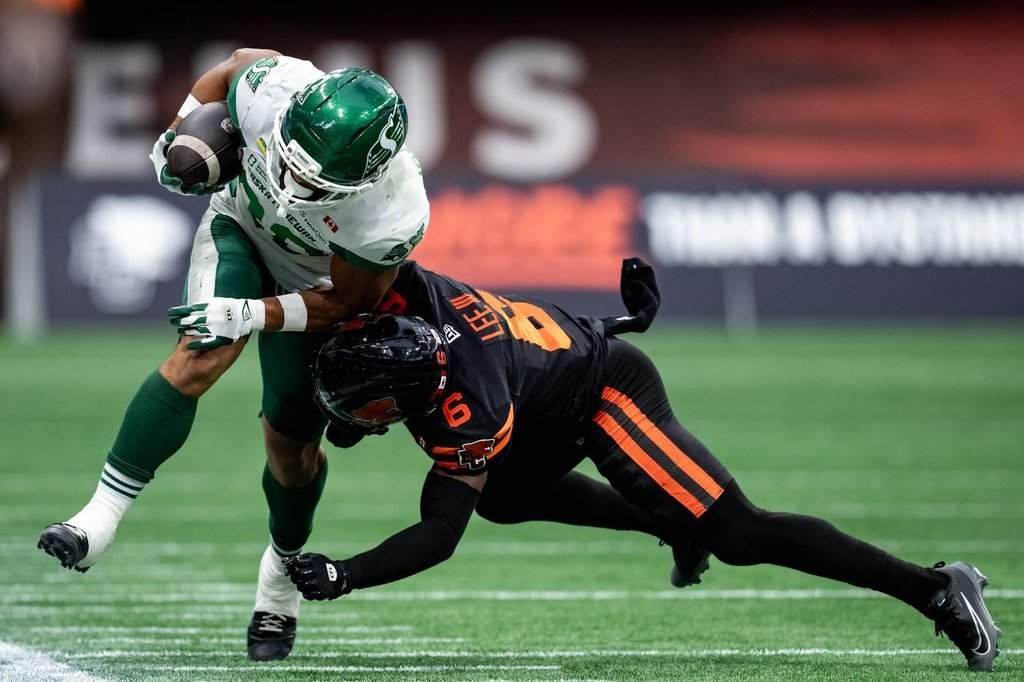
Familiarity in postseason football is rarely the comfort blanket casual observers make it out to be. As the BC Lions prepare to face a familiar divisional rival in the CFL West Semifinal, the surface narrative revolves around predictability, comfort, and revenge, yet the real story lies in the brutal tactical attrition that occurs when two coaching staffs know every tendency on the opposing call sheet. When teams meet three or four times before November arrives, the playoff rematch stops being a contest of pure talent and mutates into a psychological war of counter-adjustments, disguised coverages, and roster health.
Standard sports coverage loves the phrase "familiar foe" because it requires almost zero heavy lifting. Writers lean on box scores from July and August, dust off quotes about mutual respect, and frame the upcoming clash as a simple rubber match. That framing misses how professional football actually operates once the regular season ends. By the time a CFL West Semifinal kicks off, neither locker room is surprised by the other's base personnel, offensive line protections, or blitz packages. The advantage belongs entirely to the coaching staff willing to break its own habits without confusing its own players.
The Illusion of Regular Season Tape
Film study becomes a double-edged sword in late autumn. During the first half of the season, coordinators build game plans around what an opponent does best, attempting to take away primary reads and force secondary options. By the third or fourth meeting, both sides have already exhausted their standard counters.
Consider how offensive coordinators operate in a divisional rematch. If the Lions relied on specific boundary concepts or heavy motion sets to attack single-high safety looks earlier in the year, the opposing defensive coordinator has spent weeks installing checks specifically designed to jump those routes. Running the same plays with better execution rarely works against a prepared professional defense. Instead, the offense has to present the exact same pre-snap picture while running an entirely different post-snap concept.
This is where veteran quarterbacks and offensive linemen earn their salaries, and where young rosters quietly unravel.
A defensive front that has already played sixty or seventy snaps against the same offensive tackles knows every tell. They know how a tackle sets his outside foot on a pass drop versus a zone run. They recognize the slight shift in weight a guard makes before pulling. Eliminating those tells in a single week of practice is nearly impossible, which means the Lions' offensive staff must use formation shifts, tempo changes, and quick-game passing to neutralize pass-rush timing before those tells can be exploited.
The Trap of Over-Adjusting
While failing to adapt guarantees stagnation, changing too much invites disaster. Every season, at least one playoff contender walks into a semifinal having installed twenty percent more playbook than its roster can execute under maximum stress.
When the crowd noise peaks and the play clock drops below five seconds, players revert to muscle memory. If a receiver has to think about a brand-new sight adjustment against a disguised zone blitz, he loses the half-step of separation required to complete the throw. If a defensive back hesitates for a fraction of a second while processing a newly installed coverage rotation, a routine ten-yard gain turns into a sixty-yard touchdown.
The sharpest staffs in Canadian football understand this tension. They keep the core rules identical for the players while altering the presentation for the opponent. A hypothetical example illustrates the difference clearly. Suppose the Lions frequently motion a slotback across the formation to trigger man coverage and create a natural pick on a shallow cross. In the semifinal, they run the exact same motion, triggering the exact same defensive communication, except the slotback never crosses the field—he stops, pivots, and takes a tunnel screen behind an extra pulling lineman. The defense reacts to three months of muscle memory, and the offense exploits the overreaction without asking its players to learn a foreign scheme.
Trench Attrition and the November Reality
Football in the West Division is won or lost along the line of scrimmage long before a receiver ever makes a catch. Regular season games in summer heat reward speed, vertical spacing, and explosive perimeter plays. Playoff football in November demands physical durability, ball security, and short-yardage efficiency.
When two familiar West Division opponents collide in the semifinal, the physical toll of their previous meetings lingers in the training room. Offensive linemen remember the exact bull-rush moves that gave them trouble in September. Defensive tackles remember which interior linemen struggled to anchor against double teams late in the fourth quarter.
| Phase of Play | Regular Season Dynamic | West Semifinal Reality |
|---|---|---|
| Pass Protection | Base slide protections handle standard four-man rushes | Exotic simulated pressures target identified protection weaknesses |
| Secondary Coverage | Standard quarters and cover-three shells dictate tempo | Pattern-matching and post-snap rotations bait quarterbacks into turnovers |
| Special Teams | Field position trades rely on coverage lane discipline | Trick formations and directional punts target specific returner habits |
| Fourth Quarter | Depth rotations keep front-seven defenders fresh | Fatigue exposes conditioning gaps and forces reliance on top starters |
The hidden variable in any divisional rematch is roster attrition at non-marquee positions. Fans track the health of starting quarterbacks and star receivers, yet semifinal outcomes routinely hinge on whether a backup boundary cornerback or a rotational defensive end is forced into forty snaps. Familiar opponents know precisely where those weak links sit on the depth chart. They do not wait until the third quarter to test them; they attack the replacement on the opening drive to force the opposing coordinator into protective adjustments that weaken the rest of the unit.
Quarterback Discipline Under Maximum Pressure
Nothing tests a quarterback's processing speed quite like facing a defensive coordinator who has already seen his worst habits up close. Over the course of a regular season, every passer develops subtle crutches under duress. Some drift backward in the pocket when interior pressure arrives, giving edge rushers a clean angle to strip the ball. Others lock onto their primary read against certain blitz looks, allowing lurking linebackers to undercut intermediate throws.
In a familiar matchup, the defense spends the entire week practicing how to manufacture those exact stress points.
If the Lions' quarterback tends to bail out of clean pockets when his first progression is covered, the opposing front will deliberately collapse the middle while keeping edge rushers disciplined in their contain lanes, funneling him directly into sacks or hurried throwaways. Breaking those instincts requires ruthless self-scouting. The quarterback has to trust his protection, step up into traffic, and take the boring five-yard checkdown rather than hunting for the home-run ball that worked back in August.
Why Turnover Margin Overrides Yardage
Stat sheets from playoff games frequently look backwards to people who only watch highlights. A team can pile up four hundred yards of total offense, control the clock for thirty-four minutes, and still lose by ten points because of two catastrophic mistakes.
Familiarity breeds anticipation, and anticipation breeds turnovers.
When a defensive back has watched forty targets to a specific receiver on identical route combinations, he no longer waits for the receiver to break before planting his foot. He reads the quarterback's shoulder tilt, jumps the route, and turns a routine third-down conversion into a momentum-shattering interception. Avoiding those traps requires the offense to punishes aggressive defenders early. Double moves, pump fakes, and vertical shots off play-action keep secondary defenders honest, reminding them that guessing wrong carries an immediate scoreboard penalty.
The Coaching Chess Match Nobody Sees on Broadcasts
Television broadcasts inevitably frame playoff games around star players trading blows, largely because cameras follow the football. Yet the real decisive moments in a West Semifinal happen on the sidelines between series, written in dry-erase marker on battered whiteboards.
Because the Lions and their opponent know each other's foundational philosophies, the opening fifteen scripted plays carry enormous weight. Those initial drives are rarely just about scoring points; they are diagnostic tests. Coordinators call specific formations simply to see how the opponent aligns, which defenders travel with motion, and whether the front seven checks out of a blitz when the offense shifts into an empty backfield.
Once those answers appear on the sideline tablets, the true game begins.
A veteran coordinator will sacrifice a punt early in the first quarter if it gives him certainty about how the defense plans to bracket his top receiver on third-and-medium. Later in the third quarter, facing a game-defining third down, he returns to that exact same formation, waits for the defense to declare its bracket, and attacks the vacated space with a secondary target. That level of strategic patience separates coaches who survive November from coaches who spend the winter explaining what went wrong.
Special Teams as the Decisive Tiebreaker
In tightly contested divisional playoff games where both offenses and defenses neutralize each other's primary strengths, special teams inevitably tilt the field. Kickers, punters, and returners operate under suffocating pressure, and the margins shrink to inches.
Familiarity plays a massive role here as well. Special teams coordinators dissect every directional punt, every kick-return blocking angle, and every gunner release from the previous meetings. If the Lions' punt coverage unit showed a slight tendency to over-pursue toward the wide side of the field during an earlier matchup, the opponent will have a boundary return wall waiting to spring a forty-yard gain at the worst possible moment. Conversely, a single blocked kick or a perfectly pinned punt inside the five-yard line forces an opposing offense to operate with zero margin for error while backed up against its own end zone.
Psychological Weight of the Rematch
Beyond schemes, injuries, and weather lies the messy human element of facing a team you already know inside and out. Regular season losses can be brushed aside as bad nights, scheduling quirks, or early-season growing pains. Postseason losses carry finality, and that reality alters how players approach contact, risk, and adversity.
If the Lions defeated this opponent comfortably during the regular season, the danger is subtle complacency—assuming that simply matching their previous effort will yield the same result. In professional sports, the team that lost the previous meeting almost always enters the rematch with sharper urgency and a clearer blueprint of what needs to be fixed. On the other hand, if the Lions suffered a lopsided defeat in their most recent encounter, the coaching staff has to prevent scar tissue from dictating play-calling. Playing timidly to avoid past mistakes is the fastest way to lose a playoff game before halftime.
True postseason toughness means treating the prior meetings strictly as data, stripping away the emotional baggage, and executing with cold precision when the stadium is loudest.
What Actually Decides the West Semifinal
Strip away the pregame hype, the rivalry narratives, and the regular season standings, and the outcome of this West Semifinal reduces to a handful of non-negotiable truths. The Lions cannot win by simply being the team they were in July. Their opponent knows that version of the roster too well, has cataloged every strength, and has spent months preparing traps for every weakness.
Victory demands tactical evolution without self-inflicted chaos. It requires winning early downs to avoid predictable third-and-long passing situations where familiar pass rushers can pin their ears back. It requires ruthless discipline in the turnover battle, refusing to force throws into windows that closed three months ago. Most of all, it demands that the coaching staff stay half a step ahead in the adjustment cycle, using the opponent's own preparation against them when the fourth quarter arrives and season survival hangs on a single drive.