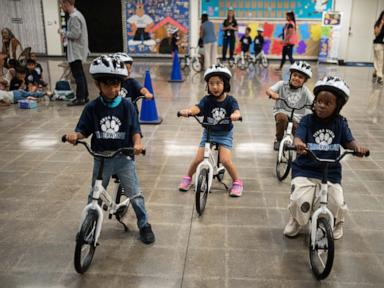
Kindergarten bicycle safety education is moving indoors into school gymnasiums, transforming how young children learn foundational motor skills. Young children are trading traditional playground structures for balance bikes inside climate-controlled school gymnasiums, sparking a fundamental shift in early childhood physical education.
For decades, learning to ride a bicycle was an informal rite of passage relegated to weekend driveways, neighborhood cul-de-sacs, and local parks, typically dependent on parental availability and suburban real estate. Today, forward-thinking school districts are bringing kindergarten bicycle training directly into the curriculum. By utilizing fleet-based balance bike programs indoors during the school day, educators are eliminating the equity gap that historically left apartment-dwelling children or students with working parents behind on two wheels.
The physical education landscape in public schools has endured years of budget cuts, reduced recess times, and increased emphasis on standardized testing metrics. Yet, physical literacy remains the bedrock of cognitive development in early childhood. When a five-year-old straps on a helmet in a gymnasium and steps astride a pedal-free balance bike, they are not merely playing. They are engaging in complex vestibular stimulation, bilateral coordination, and spatial awareness exercises that directly impact neural pathway formation.
The Mechanics of Indoor Bike Training
Traditional training wheels have long been recognized by pediatric occupational therapists and physical education experts as a crutch that impedes proper balance acquisition. Training wheels teach children to lean the wrong way during turns, fostering a false sense of security that crumbles the moment the stabilizers are removed.
Indoor kindergarten programs solve this structural flaw through the universal adoption of balance bikes. These low-slung, pedal-free apparatuses allow children to propel themselves forward with their feet while learning to lift their legs and coast. By removing the immediate distraction of pedals and chains, children focus entirely on the physics of center of gravity management.
Gym floors provide a controlled, predictable surface devoid of gravel, traffic, variable inclines, and distracted drivers. Instructors can systematically introduce obstacle courses using cones, poly spots, and low-profile noodles. This setup turns the gymnasium into a controlled laboratory for gross motor skill acquisition.
A child learns to brake using their own feet or hand brakes before ever experiencing the momentum of a downhill descent. Muscle memory forms in an environment where failure results in a gentle tip onto a hardwood or rubberized gym floor rather than a harsh scrape on asphalt.
Equity and Access in the School Yard
The transition of bicycle education into the school day addresses a quiet socio-economic divide that has persisted for generations. Not every family possesses the financial resources to purchase a bicycle, a properly fitted helmet, and protective gear. Not every home sits adjacent to a safe, low-traffic area where a child can practice without anxiety.
When schools fund or partner with organizations to bring turnkey bicycle fleets into physical education classes, access becomes universal. The child living on the twentieth floor of an urban high-rise gets the exact same opportunity to master balance as the child with a sprawling suburban backyard.
Public schools function as the great equalizer in American society. By embedding bicycle training into the mandatory school day, districts ensure that physical literacy is no longer determined by zip code or household income. This democratization of skill-building lays the groundwork for lifelong active transportation habits, reducing reliance on motorized transit for short trips as these students age into adolescence and adulthood.
Pushback and Practical Hurdles
Bringing two-wheeled apparatuses indoors is not without operational friction. School administrators face legitimate logistical hurdles when attempting to integrate bike fleets into existing physical education schedules.
Storage is an immediate bottleneck. A fleet of twenty to thirty balance bikes requires dedicated square footage, which is a scarce commodity in aging school buildings where closets are already packed with tumbling mats, basketballs, and jump ropes. Furthermore, school insurance policies and liability concerns require meticulous safety protocols. Every helmet must be inspected, every bike frame checked for loose handlebars, and every instructor certified in specific curriculum guidelines.
Critics within school boards sometimes question the allocation of tight physical education budgets toward specialized equipment when basic athletic gear is overdue for replacement. Proponents counter that the investment yields compounding returns across multiple developmental domains. Fine motor control, emotional regulation through physical exertion, and peer socialization all improve when children engage in structured group riding sessions.
Beyond the Gymnasium Walls
The ultimate measure of these indoor programs lies in their transferability to the outside world. Mastering a balance bike in a gymnasium does not automatically make a child safe on an open neighborhood street, but it removes the primary physiological barrier to riding.
Once a child achieves confident coasting balance indoors, transitioning to a standard pedal bike outdoors typically takes a matter of hours rather than weeks of frustrating parental intervention. Parents frequently report that their kindergarteners spontaneously shed training wheels at home after participating in school gym bike units.
As school districts continue to rethink physical education in the face of sedentary lifestyles and digital saturation, the indoor bicycle curriculum offers a tangible, effective antidote. It converts the school gymnasium from a space of disorganized dodgeball games into a precision training ground for lifelong mobility. The rite of passage has moved indoors, and the foundation of childhood independence is stronger for it.