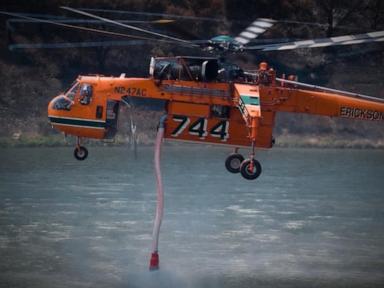
When a heavy-lift Sikorsky S-64 Skycrane helicopter crashed on Friday morning near Richfield, Utah, while battling the massive Widemouth 2 wildfire in the Fishlake National Forest, it did more than claim two lives. It exposed the absolute fragility of aerial firefighting in an era of hyper-aggressive, erratic mega-fires. The aircraft, contracted by the U.S. Forest Service, went down in steep, remote terrain, immediately igniting a secondary blaze that blocked ground rescue teams for more than 24 hours. This tragedy is not an isolated piece of bad luck. It is the predictable outcome of an aviation strategy stretched past its breaking point.
For decades, aerial firefighting has been romanticized as the cavalry arriving over the ridge. Huge water drops look magnificent on television. They provide a psychological boost to ground crews fighting a wall of flames. Yet, veteran pilots and safety analysts have long whispered about the hidden ledger of operating heavy iron in smoke-choked canyons.
The Physics of Low-Altitude Risk
Flying a multi-ton helicopter over a wildland fire means navigating a compounding nightmare of physics.
When a wildfire burns hot, it creates its own weather. Thermal updrafts, erratic wind shears, and dense columns of smoke reduce visibility to near zero while violently tossing aircraft around. A pilot flying a Skycrane or a converted military surplus machine is balancing microscopic margins of error.
Consider the operational environment in central Utah. Temperatures have hovered at extreme highs, following months of severe drought and low winter snowpacks. Hotter air is less dense. Reduced air density means reduced lift.
When an aircraft loses lift performance while heavy with water or retardant, the pilot has seconds to dump the load or risk stalling into the canopy.
Yet, command structures continue to push aviation assets to the limit. Ground crews need water drops to buy time. Communities demand immediate structure protection. The pressure on contract pilots to fly right up to the ragged edge of red flag warning conditions is immense.
The Equipment Gap
A glaring issue in modern wildfire suppression is the aging fleet. Many of the heavy-lift helicopters and fixed-wing air tankers currently contracted by federal and state agencies hail from previous generations of aerospace manufacturing.
While retrofitted with modern avionics, these airframes endure grueling stress cycles. Flying low-level grid patterns through corrosive smoke, abrasive ash, and violent thermal columns accelerates structural fatigue in ways standard commercial operations never experience.
Maintenance windows during peak fire season are razor-thin. Mechanics work through the night under floodlights to keep birds in the air.
When a crash happens, the immediate reaction from federal agencies is a brief pause in operations, followed by a return to the skies once the smoke clears enough for the National Transportation Safety Board to begin mapping coordinates. But an operational pause does nothing to fix the structural dilemma. We are fighting twenty-first-century climate megafires with mid-twentieth-century tactical doctrine.
The Human Toll Behind the Statistics
Public attention spikes when a helicopter goes down or a bulldozer operator is cut off by sudden flames, as happened in Oregon during the same frantic week. Then the news cycle shifts.
The pilots, mechanics, and support contractors who populate the private companies fulfilling these government contracts operate in a high-risk, high-turnover ecosystem. Many are former military aviators who transitioned to firefighting out of a sense of mission. They understand the danger.
However, familiarity with risk breeds its own form of systemic blindness. When every single summer brings a longer fire season, a wider footprint of burned acreage, and an expectation of perpetual crisis, burnout becomes institutionalized.
The math of modern wildfire management is brutally simple. We cannot drop enough water from the sky to outmatch a landscape desiccated by long-term drying trends and choked with decades of suppressed undergrowth.
Aerial assets are a tactical thumb holding back a collapsing dam. Until land management shifts from reactive suppression to massive, systemic prevention, aviation units will continue to fly into impossible conditions.
The wreckage near Richfield remains a stark monument to what happens when bravery is forced to substitute for a sustainable strategy.