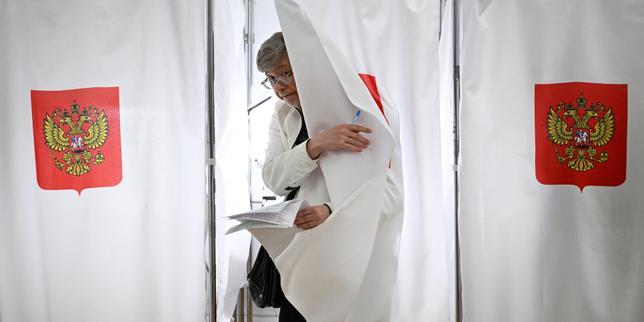
When the polling stations opened across Russia for the State Duma elections, the ritual was outwardly familiar. Ballots were cast over three days, electronic voting systems hummed in major urban centers, and election officials reported steady participation rates. Yet this was the first parliamentary vote held since the invasion of Ukraine, transforming a standard administrative exercise into an authoritarian stress test. The real objective of the 2026 ballot was not a contest of ideas, but a state-managed mobilization designed to project absolute domestic consensus during an ongoing military campaign.
The Architecture of Managed Consensus
Elections in a tightly controlled political ecosystem function differently than open democratic contests. They do not measure shifts in public opinion. Instead, they serve as a logistical demonstration of administrative capacity. The ruling United Russia party, operating as the political arm of the presidential administration, went into the contest with institutional advantages that rendered independent competition structurally impossible.
The mechanics of this dominance rely on three pillars: electronic voting oversight, extended multi-day voting windows, and the complete elimination of organized political opposition. Multi-day voting, originally introduced under the guise of pandemic safety protocols, has evolved into a permanent mechanism that significantly complicates independent observation and audit procedures. By stretching the voting period over seventy-two hours, election monitors face insurmountable hurdles in securing ballot boxes and verifying turnout figures.
Furthermore, the expansion of remote electronic voting in key regions creates a data environment entirely opaque to outside inspection. The Central Election Commission, headed by Ella Pamfilova, framed the high turnout metrics as an unmitigated endorsement of Kremlin policies. Behind these figures, however, lies a system of mandatory mobilization affecting state employees, corporate workers in government-linked enterprises, and regional administrative networks.
Managing the Domestic Front
Wars are expensive, disruptive, and socially fraught. Autocratic regimes holding elections during prolonged military conflicts face a distinct political hazard: the potential crystallization of hidden discontent. To neutralize this risk, the domestic political bloc within the presidential administration preemptively dismantled any space for anti-war expression.
Independent candidates were barred long before petitions could be filed. Figures attempting symbolic protests, such as minor opposition leaders writing anti-war slogans on ballots, were quickly isolated or prosecuted under wartime censorship laws. The political calculus was stark. The ballot was reframed not merely as a choice of parliamentary deputies, but as a loyalty referendum on the state's geopolitical trajectory.
To inject fresh legitimacy into the legislative branch, the Kremlin sought to integrate a select cohort of veterans and participants from what official rhetoric terms the special military operation. These candidates were designated to populate party lists, offering a visual symbol of patriotic renewal within the halls of the State Duma. Yet their actual representation remained heavily curated. The political machine wanted the aesthetic of frontline endorsement without introducing unpredictable actors into the legislative chamber.
The Reality on the Ground
While state television broadcast images of orderly queues and patriotic displays, the broader social reality remained defined by economic adaptation to Western sanctions and the steady toll of mobilization. Inflation, labor shortages, and the psychological weight of a war with no immediate endpoint form the backdrop of everyday Russian life.
Yet structural dissatisfaction does not automatically translate into electoral resistance. Decades of political centralization have engendered a pervasive public cynicism. Many citizens view the parliamentary vote as an arena reserved entirely for the elite, where outcomes are predetermined long before the first vote is counted. Participation, for a large segment of the population, is an act of compliance rather than enthusiasm. It is a way to signal loyalty to the employer or local administration to avoid administrative scrutiny.
The final results, cementing United Russia's overwhelming majority alongside docile systemic opposition parties like the Communists and nationalists, surprised no one. The parliament remains what it was designed to be: a rubber-stamp institution devoid of independent legislative initiative, engineered to translate executive decrees into formal law with minimal friction.
The Horizon of Autocratic Stability
Elections in systems like Russia's are designed to provide a veneer of constitutional continuity while insulating the executive from accountability. By successfully staging these legislative contests amidst an active wartime economy, the Kremlin demonstrated that its administrative apparatus retains its grip.
The true test of such a political model, however, is not whether it can manufacture a parliamentary majority through managed procedures. The real challenge lies in its long-term rigidity. When all legal avenues for political feedback are sealed, and when every public ritual is forced to mimic absolute consensus, the system loses its ability to measure actual societal pressures.
The ballots are counted, the new deputies have taken their seats, and the administrative machinery moves forward. Beneath the surface of choreographed stability, the unresolved tensions of a nation locked in a permanent wartime posture continue to accumulate out of sight.